Glaucoma care has seen great transformation over the years. We still see eye drops and laser procedures at the fore, and while the traditional surgeries play out a large role in advanced disease they still do so. Also some patients may now benefit from a more non-invasive approach. MIGS glaucoma procedures aim to lower eye pressure while causing less disruption to the eye than many traditional operations.
The term MIGS stands for minimally invasive glaucoma surgery. This includes procedures which use minimal incisions, microscopic tools or the eye’s natural drainage systems to improve fluid outflow. They may be a good option for some people with mild to moderate glaucoma.
What Is MIGS Glaucoma Surgery?
In glaucoma we see that the optic nerve is damaged which in turn leads to permanent vision loss. High intraocular pressure is a very large issue for many patients. As a result, treatment is aimed at reducing eye pressure to save what vision is left. MIGS glaucoma is a group of procedures rather than a single treatment. The ophthalmologist will choose a procedure based on the type of glaucoma, drainage angle, target eye pressure and also other clinical reports.
In terms of traditional glaucoma surgeries which we are used to, minimally invasive glaucoma surgery we see to be a more minimal approach. What they do is improve the natural drain or create a new route for the aqueous fluid to leave the eye.
Types of MIGS for Glaucoma
Different MIGS glaucoma present pressure reduction in various ways. Some which improve flow via the trabecular meshwork and Schlemm’s canal. Others which direct fluid to alternative outflow pathways.
| MIGS approach | How it may help |
| Trabecular bypass | Helps fluid move through the natural drainage pathway |
| Trabeculotomy-based MIGS | Opens or treats the trabecular drainage tissue |
| Canal-based procedures | Improve drainage through Schlemm’s canal |
| Subconjunctival procedures | Create an alternative route for aqueous fluid drainage |
The choice of minimally invasive glaucoma surgery procedure to use is based on the patient’s eye anatomy and the stage of the disease. Also we see that past treatment and the pressure level the ophthalmologist wishes to achieve play a role. Therefore it must be that MIGS procedures are not put forth as trade off options.
What Are the Benefits of MIGS Glaucoma Treatment?
One reason ophthalmologists may consider MIGS glaucoma is its less invasive surgical approach. The National Eye Institute reports that we may see MIGS recommended for some patients with mild glaucoma.
For certain patients we see minimally invasive glaucoma surgery to be a benefit in reducing intraocular pressure and at times in reducing the need for glaucoma medication. The results are very much a variable issue between patients and procedures.
ASG Eye Care also identifies MIGS glaucoma as an option which may suit those with early to moderate glaucoma. For more advanced or uncontrolled cases we may require other procedures like trabeculectomy or glaucoma drainage devices.
| Potential benefit | What it may mean for the patient |
| Smaller surgical approach | Less tissue disruption than many traditional operations |
| Eye-pressure reduction | May support long-term glaucoma control |
| Medication reduction | Some patients may need fewer drops after treatment |
| Recovery | Recovery may be shorter with certain MIGS techniques |
These benefits are not guaranteed. MIGS glaucoma controls eye pressure; it does not restore vision already lost because of optic nerve damage.
Who May Be Eligible for MIGS?
Doctors tend to use minimally invasive glaucoma surgery for patients that have mild to moderate open angle glaucoma although it is a case by case issue. In which eye drops are not effective enough, cause issues like dryness or other side effects, or a patient has trouble using them as prescribed, a patient may be a candidate for MIGS. Also in cases where a patient is due for cataract surgery the ophthalmologist may bring up MIGS as a choice since some of these procedures may be done at the same time.
Before performing minimally invasive glaucoma surgery the ophthalmologist has to first complete some evaluations which we at ASG Eye Care report are key to the glaucoma diagnosis and treatment plan.
MIGS glaucoma is not necessarily the right treatment for advanced disease. Patients who require a very low target pressure may need conventional glaucoma surgery instead.
What Happens During MIGS Glaucoma Surgery?
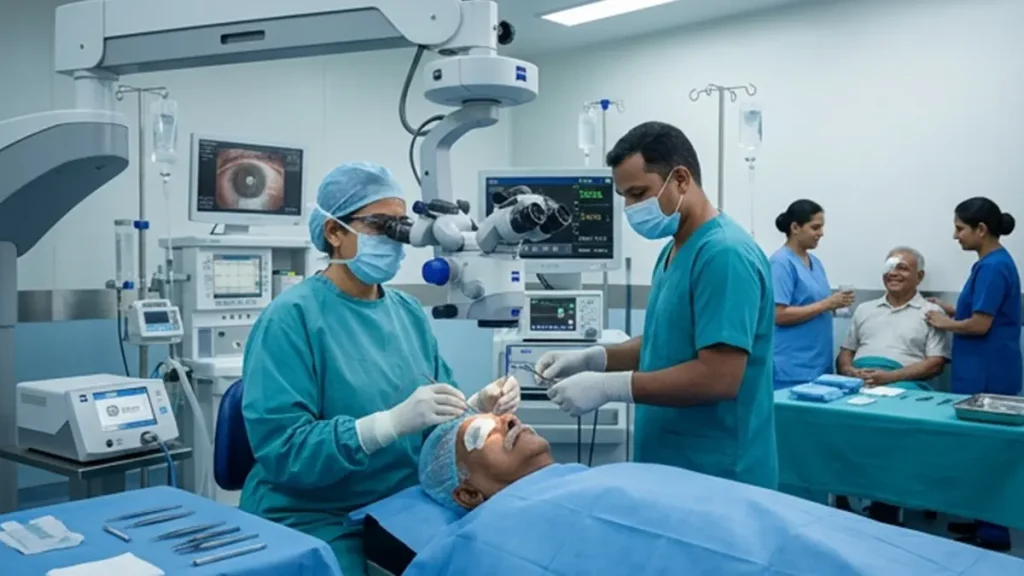
The steps to take are based on the MIGS glaucoma technique which is chosen. The surgeon usually accesses the drainage system via a small incision. As per the procedure which is to be performed the surgeon may put in a micro implant, open up part of the drainage tissue or improve the natural outflow pathway.
Some minimally invasive glaucoma surgery procedures can also be performed at the time of cataract surgery. Your glaucoma specialist will go over why a certain approach is best for your eye and what results you can expect.
Recovery After MIGS
Recovery from MIGS glaucoma is a variable thing based on the procedure used and the patient’s overall eye health. Patients usually require follow up visits which are for the doctor to check eye pressure and healing.
After undergoing minimally invasive glaucoma surgery patients must take their prescribed meds exactly as directed. Also they should attend all follow up visits even when the eye is at ease. Glaucoma is a disease that requires long term care as we do not have a cure which in turn means that we only have treatments to manage the disease which in turn protect the optic nerve from more damage.
Conclusion
MIGS glaucoma we have seen an expansion of surgical options. For appropriate patients it may lower eye pressure with a more non-invasive approach and at the same time preserve options for the future.
However in all cases minimally invasive glaucoma surgery is not right for all types of glaucoma. We do require a full assessment before determining which treatment is best. At ASG Eye Care our glaucoma specialists will do a full exam of your eye pressure, optic nerve health, visual fields and drainage anatomy which in turn will allow us to recommend the best treatment plan.
Frequently Asked Questions
1. What does MIGS mean in glaucoma treatment?
MIGS is a term for minimally invasive glaucoma surgery. This is a group of procedures which use a more subtle approach in comparison to many traditional glaucoma operations.
2. Is MIGS glaucoma suitable for everyone?
Also MIGS may be suitable for some patients which include those with mild to moderate disease. The glaucoma type, eye pressure, drainage anatomy and extent of optic nerve damage play a role in what patients are put into this category.
3. Can MIGS cure glaucoma?
Also MIGS glaucoma does not reverse existing optic nerve damage. What it does is lower eye pressure and in that way reduce the risk of further damage.
4. Can MIGS reduce the need for glaucoma drops?
Some patients may see a reduction in the number of medications they are on post surgery but results are variable. Patients should not stop their prescribed glaucoma drops without first speaking to their ophthalmologist.
5. How long does recovery take after MIGS?
We also do not recommend that patients discontinue their medication. Post surgery care varies depending on the specific procedure and if the surgeon performs it at the same time as cataract surgery. Your ophthalmologist will go over this in detail and give you a follow up schedule.