
ASG Eye Hospital

Narrow Eye Angles: How Gonioscopy Helps Assess Angle-Closure Glaucoma Risk

Understanding narrow eye angles

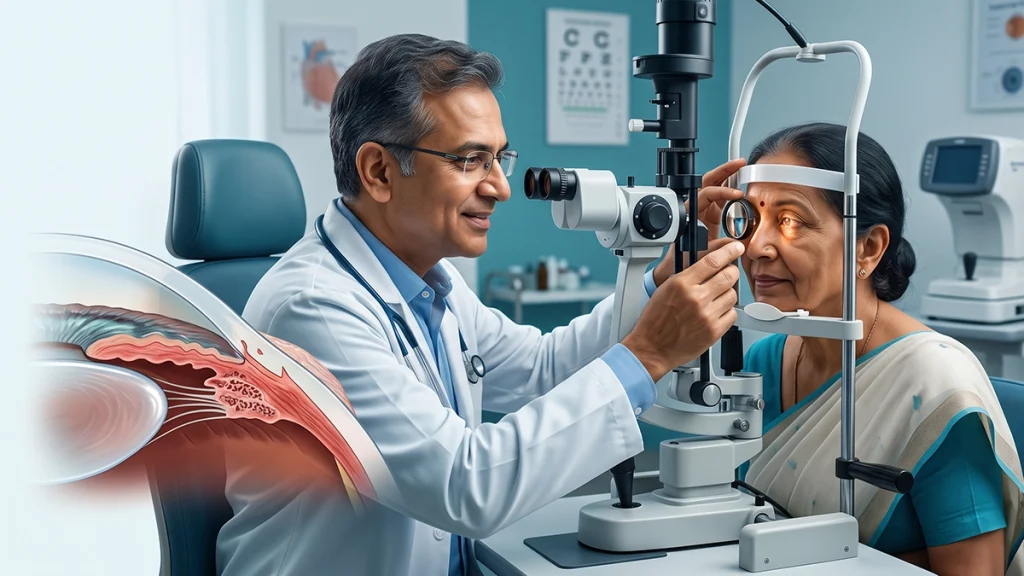
Gonioscopy narrow angle assessment is what ophthalmologists do to see if the eye’s drainage angle is out of the ordinary. This area is at the point where the iris and the cornea meet. Fluid which is supposed to pass through this point for proper eye pressure regulation usually is. If the iris ends up blocking the drain we see a rise in pressure which in turn may damage the optic nerve.

The anterior chamber angle which is the space between the iris and cornea through which fluid leaves the eye. A diagnosis of gonioscopy narrow angles does not in itself mean glaucoma but does put one at a higher risk for closure. Also since early glaucoma may present with no clear symptoms, it is important to have regular eye exams.

How does gonioscopy work?

A gonioscopy eye test is performed to view the drainage angle with a special lens. An anesthetic is applied before the doctor gently places the lens on the eye. The exam which only takes a few minutes may cause a slight pressure. 

During gonioscopy narrow angle assessment the specialist looks at various sections to see if they are open, if they are narrow or if they have closed. Gonioscopy narrow angles is also reported with eye pressure measurement and an optic nerve exam.

What can the results show?

Gonioscopy narrow angles which is a tell tale sign to distinguish open angle from a narrow or closed one. A narrow anterior chamber angle is a risk factor but in practice we look at the full picture. Angle closure risk is a play of eye anatomy and other clinical variables.

Gonioscopy findingWhat it may mean
Open angleFluid can reach the drainage pathway.
Narrow angleThe iris may block drainage in certain circumstances.
Closed angleThe iris obstructs part of the drainage pathway.
Adhesions in the angleTissue changes may suggest previous or ongoing closure.

A gonioscopy eye test does not in and of itself diagnose all forms of glaucoma. The ophthalmologist also will look at pressure, optic nerve health and visual field. They use this info to determine treatment and monitoring.

Who may need gonioscopy?

An ophthalmologist may put forward that gonioscopy narrow angles be done if a routine exam points out a shallow anterior chamber or narrow outflow field. Also people with a family past of angle closure glaucoma may in for more in depth evaluation. The angle closure risk varies from person to person which is why follow up schedules will vary.

The natural variation of the anterior chamber angle between individuals, and symptoms do not by themselves reliably indicate if it is narrow. A gonioscopy eye test provides the ophthalmologist with a direct view which in turn guides the next step. Ask about follow up timing.

What happens if the angles are narrow?

Care of the eye depends on what stage the angle is at is it just narrow, beginning to close, or has it caused glaucoma. Also some patients require regular eye pressure and optic nerve checkups. In some cases a doctor may recommend laser peripheral iridotomy. This is a procedure which creates a small opening in the iris which in turn allows for better flow of fluid. It isn’t a universal requirement.

Clinical situationPossible next step
Narrow angle without other concerning findingsMonitoring and scheduled eye checks
Narrow angle with additional risk factorsPersonalised discussion of preventive options
Confirmed angle closure or glaucomaPrompt specialist-led treatment
Sudden symptoms of acute angle closureEmergency eye care immediately

Discuss angle closure risk and present treatment options to your ophthalmologist. Gonioscopy narrow angles is one piece of the puzzle which also includes medical history and other test results. Do not alter eye medication without professional advice. 

Conclusion

Gonioscopy narrow angle assessment is a tool which eye specialists use to look at the drainage system and to identify which patients require more attention. A narrow angle is not the same as a diagnosis of glaucoma and care should be individualized. See an ophthalmologist at ASG Eye Hospital for the right examination.

Frequently asked questions

1. Is gonioscopy painful?

A very common reaction to gonioscopy eye test is tolerance. Anesthetizing drops which we put in the eye to numb the tissue do reduce pain which is experienced, although for some there is report of minimal pressure from the lens. If you do feel pain tell your health care provider.

2. Do narrow angles always cause glaucoma?

No. While a narrow anterior chamber angle may lead to closure it is also true that many people with narrow angles do not go on to develop glaucoma. Your specialist will review the results before putting forth a treatment.

3. Does everyone with narrow angles require laser treatment?

No. Some people do better with close monitoring, while others may from preventive laser. The decision is based on the exam results and the clinician’s assessment of the angle closure risk.

4. Which symptoms need urgent attention?

Sudden, intense eye pain with redness, blurred vision, a headache, nausea, or vomiting can signal acute angle-closure glaucoma. Get emergency medical help right away if these symptoms appear abruptly, particularly in combination.

Reference Links


1. National Eye Institute — Explains narrow-angle and angle-closure glaucom –
https://www.nei.nih.gov/eye-health-information/eye-conditions-and-diseases/glaucoma/types-glaucoma

2. Explains how fluid drainage affects eye pressure and how blockage can lead to angle-closure glaucoma –
https://www.nei.nih.gov/eye-health-information/eye-conditions-and-diseases/glaucoma/glaucoma-and-eye-pressure

3. MedlinePlus — Describes glaucoma testing and how blocked drainage can increase pressure and threaten vision.
https://medlineplus.gov/lab-tests/glaucoma-tests/
Overview

Job Title: Consultant Ophthalmologist

Location: Pan India
Job Category: Medical Healthcare

Work Employment:  Full time

What you work:

  • Diagnose and treat patients with a focus on Ophthalmologist.
  • Collaborate with senior doctors and multidisciplinary teams.
  • Ensure patient-centric care and follow clinical protocols.
  • Contribute to research, training, or hospital initiatives (if applicable).

Mandatory skills:

  • Relevant medical degree / certification.
  • Strong knowledge of ophthalmology practices / healthcare protocols.
  • Excellent communication and patient-handling skills.
  • Ability to work in fast-paced healthcare environments.

Preferred Qualifications:

  • Experience: 3 to 6 years of experience
  • Prior experience in eye care / multi-speciality hospitals.
  • Fellowship or advanced training in Ophthalmologist.
  • Familiarity with advanced diagnostic tools and surgical techniques.
  • Passion for innovation, patient care, and continuous learning.

Apply For This Positions

This will close in 0 seconds

Overview

Job Title: Optometrist

Location: Amritsar, Punjab 

Job Category: Optometry

Work Employment:  Full time

What you work:

  • Conduct comprehensive eye examinations and vision assessments for patients of all ages.
  • Prescribe and fit spectacles, contact lenses, and low-vision aids.
  • Perform diagnostic tests including refraction, tonometry, perimetry, and OCT imaging.
  • Support consultant ophthalmologists in pre-operative and post-operative patient workups.
  • Counsel patients on eye care, lens hygiene, and follow-up schedules.
  • Maintain accurate clinical records and adhere to hospital protocols.

Mandatory skills:

  • Bachelor’s or Master’s degree in Optometry (B.Optom / M.Optom) from a recognised institution.
  • Valid registration with the relevant state or national optometry council.
  • Proficiency in refraction, slit-lamp examination, and contact lens fitting.
  • Working knowledge of autorefractors, tonometers, fundus cameras, and OCT equipment.
  • Strong communication skills in English, Hindi, and Punjabi.
  • Ability to manage high patient volumes in a fast-paced clinical setting.

Preferred Qualifications:

  • Experience: 1 to 5 years of clinical optometry experience.
  • Prior experience in an eye care or multi-speciality hospital in Punjab.
  • Exposure to paediatric optometry, binocular vision, or low-vision rehabilitation.
  • Familiarity with advanced diagnostic imaging and dry-eye management.
  • Passion for patient care, community eye-health camps, and continuous learning.

Apply For This Positions

This will close in 0 seconds

Overview

Job Title: Optical In-charge 

Location: Panjim, Goa / Mumbai-Worli (Lower Parel) 

Job Category: Optical

Work Employment:  Full time

What you work:

  • Manage day-to-day operations of the optical outlet, including sales, dispensing, and inventory.
  • Guide customers on frame selection, lens options, and coatings based on their prescription and lifestyle.
  • Take accurate frame measurements and ensure precise fitting, adjustments, and after-sales service.
  • Drive optical sales targets and monitor daily, weekly, and monthly business performance.
  • Maintain optimum stock levels, coordinate with vendors, and control shrinkage through periodic audits.
  • Supervise and train optical staff on product knowledge, dispensing standards, and customer service.
  • Coordinate with optometrists and consultants to ensure smooth prescription-to-delivery flow.
  • Ensure visual merchandising, display hygiene, and adherence to brand and hospital standards.

Mandatory skills:

  • Diploma or Bachelor’s degree in Optometry (D.Optom / B.Optom) or equivalent optical dispensing qualification.
  • Minimum 3 years of experience in optical supervisory or in-charge role.
  • Sound knowledge of lens types, coatings, frame materials, and dispensing principles.
  • Hands-on experience with edging, fitting, and basic optical workshop equipment.
  • Proven ability to achieve sales targets and manage inventory and billing systems.
  • Strong communication and interpersonal skills in English, Hindi, and Konkani or Marathi.
  • Working knowledge of POS / retail software and MS Office.

Preferred Qualifications:

  • Experience: 3 to 7 years in optical retail or an eye care hospital optical division.
  • Prior experience managing an optical outlet in Goa or the western region.
  • Exposure to premium and progressive lens brands and specialty eyewear.
  • Familiarity with contact lens dispensing and after-care support.
  • Team leadership, customer relationship management, and continuous learning mindset.

Apply For This Positions

This will close in 0 seconds

Overview

Job Title: Optometrist

Location: Pan India 


Job Category: Optometry

Work Employment:  Full time

What you work:

  • Conduct comprehensive eye examinations and vision assessments for patients of all ages.
  • Prescribe and fit spectacles, contact lenses, and low-vision aids.
  • Perform diagnostic tests including refraction, tonometry, perimetry, and OCT imaging.
  • Support consultant ophthalmologists in pre-operative and post-operative patient workups.
  • Counsel patients on eye care, lens hygiene, and follow-up schedules.
  • Maintain accurate clinical records and adhere to hospital protocols.

Mandatory skills:

  • Diploma / Bachelor’s or Master’s degree in Optometry (D.Optom / B.Optom / M.Optom) from a recognised institution.
  • Valid registration with the relevant state or national optometry council.
  • Proficiency in refraction, slit-lamp examination, and contact lens fitting.
  • Working knowledge of autorefractors, tonometers, fundus cameras, and OCT equipment.
  • Ability to manage high patient volumes in a fast-paced clinical setting.

Preferred Qualifications:

  • Experience: 1 to 5 years of clinical optometry experience.
  • Exposure to paediatric optometry, binocular vision, or low-vision rehabilitation.
  • Passion for patient care, community eye-health camps, and continuous learning.

Apply For This Positions

This will close in 20 seconds