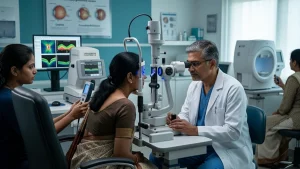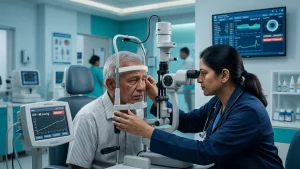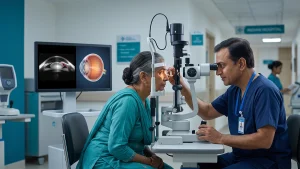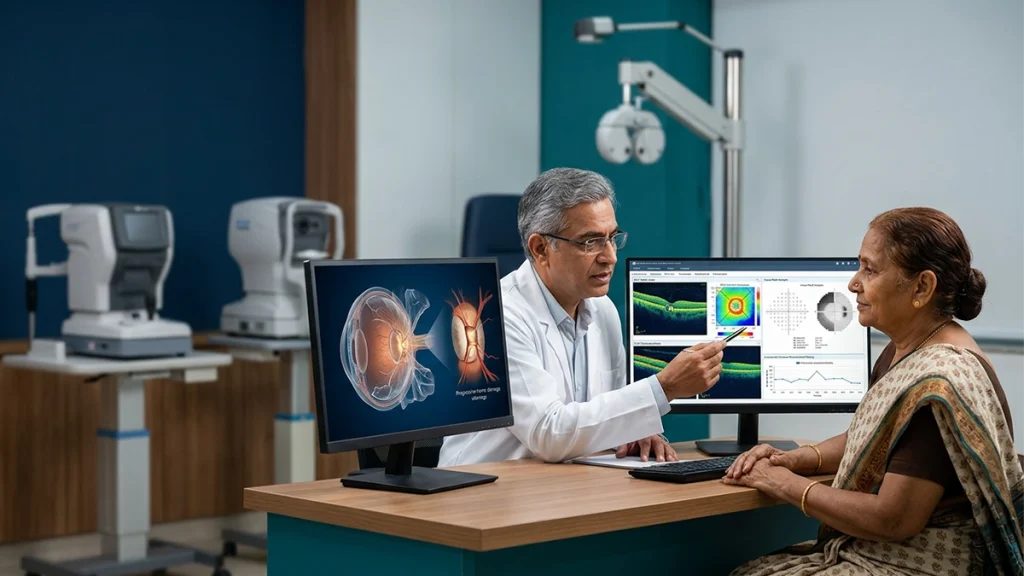
Glaucoma is a collection of diseases that affect the optic nerve which transmits visual info from the eye to the brain. It usually presents very slowly which means loss of sight may be present before a person is aware of a problem. We see that what glaucoma causes, what its glaucoma symptoms are, and what glaucoma treatment options there are to begin at the first sign is key in preserving what vision is left.
High eye pressure is a factor but it is by no means the full picture. We have reported cases of raised pressure which did not progress to nerve damage, also we see glaucoma in people with what is considered to be normal pressure. Thus eye specialists look at the optic nerve, drainage angle and visual field instead of just a single reading.
What Happens Inside an Eye With Glaucoma?
In the front of the eye we have aqueous humour which is a clear fluid that usually drains at the point where the iris and cornea meet. If drainage lessens or becomes impaired pressure will build up. In terms of what glaucoma causes, also note that each optic nerve has a different tolerance to pressure..
These variations in the glaucoma causes we see in different patients. When there is damage to the optic nerve fibers some areas of periphery vision may be lost. The brain is able to compensate for these missing areas for a while which is why early glaucoma symptoms may be present but go unnoticed. Damage is usually not repairable but in the case of glaucoma treatment may reverse eye pressure and put the break on further loss. The National Eye Institute reports that at the first sign of glaucoma treatment is often very successful at putting damage on hold and in some cases improving what is left of vision.
What Are the Main Glaucoma Causes?
Primary open angle glaucoma which in most cases develops when the outflow of fluid from the eye is reduced. In many cases there isn’t a single identified glaucoma causes which is why we see a range of factors put forth which include pressure in the eye and hereditary predisposition to optic nerve damage.
Angle closure glaucoma is that which results from the iris’ action to block the drainage angle which may happen gradually or suddenly. Secondary glaucoma causes are eye injury, inflammation, certain retinal conditions, prior procedures and corticosteroid exposure in prone individuals. Childhood glaucoma may present when the drainage structures fail to develop properly.
Family history is important. Also at play are age, thin corneas, high intraocular pressure, large refractive error, diabetes and some vascular issues. They don’t glaucoma causes but do help the doctor determine how closely a person should be watched.
| Type of glaucoma | How it generally develops | Typical clinical pattern |
| Primary open-angle glaucoma | Fluid drains too slowly through an apparently open drainage angle | Usually gradual and painless, with no obvious early warning |
| Angle-closure glaucoma | The iris narrows or blocks the drainage angle | May be gradual, but an acute attack can cause pain, redness, blurred vision and nausea |
| Normal-tension glaucoma | Optic nerve damage develops despite pressure readings that are not unusually high | Often detected through nerve imaging and visual-field changes |
| Secondary glaucoma | Another eye condition, injury, medicine or procedure affects pressure or the optic nerve | Presentation depends on the underlying cause |
| Congenital or childhood glaucoma | Drainage structures develop abnormally | May cause watering, light sensitivity, cloudy cornea or enlarged eyes in a child |
Glaucoma causes is an issue that we must look at in terms of eye anatomy. What we see may be the same intraocular pressure but it may be due to different causes of glaucoma causes, associated nerve issues and future health risks.
Glaucoma Symptoms: Why Early Disease Is Easy to Miss
In the silence of glaucoma symptoms the absence of discomfort is a poor indicator that your eyes are in good health. In open angle glaucoma which is the most common form early glaucoma symptoms are a rare thing. As the damage progresses what you may notice is the loss of side vision, running into objects, missing steps, having trouble in dim light or that you have become less confident behind the wheel. It may be that your central vision will stay clear until a later stage which is why routine exams are so important.
An acute attack of angle closure is a different picture. Sudden severe eye pain, redness in the eye, blurring of vision, colored halos around lights, headache, nausea and vomiting is what you may see in cases of acute glaucoma. If this set of glaucoma symptoms presents in anyone they should go to the emergency room instead of waiting for a routine visit. The National Eye Institute and MedlinePlus report that sudden pain, redness, blurred vision and nausea are warning signs which require immediate evaluation.
Recognising glaucoma symptoms in children can be difficult because they present differently. Excessive watering, unusual sensitivity to light, frequent eyelid squeezing, a cloudy-looking cornea or an eye that appears larger than expected requires prompt paediatric eye evaluation. These findings are not always caused by glaucoma, but they should never be ignored.
How Eye Specialists Diagnose Glaucoma
A glaucoma evaluation is a more in depth process than a quick eye test. The specialist will go over your medical and family history, take note of pressure and look at the optic nerve. In some cases they will also perform dilated exam, optical coherence tomography, visual field testing, gonioscopy and corneal thickness measurement. Repeating the tests will help determine if the condition is stable or progressive.
A careful patient history will identify secondary glaucoma causes which in turn these tests will distinguish glaucoma from other conditions that present like optic nerve damage. Diagnosis may require multiple visits as a single report of normal eye pressure does not rule out disease. The National Eye Institute reports that a comprehensive dilated exam along with visual field testing is the base of detection.
Glaucoma Treatment Is Designed to Protect Remaining Vision
Identifying the glaucoma causes may help to determine if any other disease should be treated also. Mainly we have proved that which pressure reduction is right for the individual optic nerve is the key. Thus Glaucoma treatment is based on the eye’s assessed risk of damage and not just symptoms.The issue at hand does not pertain to the same issue for all patients. It varies by disease severity, rate of progression, age, general health, pressure pattern and the condition of the other eye. In terms of glaucoma treatment we may use eye drops, laser procedures, an operation or a combination of the methods.
Even in the case of secondary glaucoma which doctors are able to treat the glaucoma causes of, they are not able to reverse nerve fiber loss which has already taken place. What they can do is stop further damage to what vision is left. It is a fact that patients may not notice an immediate improvement once they begin using the eye drops because the medication is meant to prevent future damage as opposed to improving sight. Consistency is key, and patients should not discontinue use of the medicine without first speaking to their ophthalmologist.
Prescription Eye Drops
Eye drops also are the first line of glaucoma treatment. We see that different medicines either do away with the production of aqueous humour or they improve the outflow of it. What is given is based on what pressure reduction is needed, how convenient the dosing is, any other health issues present, what the side effects may be and the drug’s price in the long term.
Proper technique is key. Do not get the bottle tip near the eye, and use drops at the time prescribed. Gently pressing near the inner corner may help reduce drainage into the nose. The National Eye Institute reports that drops must be used daily to prevent progression, not for reversing present damage.
Laser Procedures
Laser care is a glaucoma treatment option for some glaucoma patients. Also other laser procedures may be used to reduce production of fluid in eyes that have difficulty controlling pressure.
Laser is a temporary solution. Over time its results may fade out and in some cases patients require eye drops. The National Eye Institute reports that laser may help in reducing fluid build up and lowering intraocular pressure, but that ongoing care is required to see the outcome
When Is Glaucoma Surgery Considered?
In some cases we discuss an operation when a patient has raised pressure which is not brought down by standard treatments and laser intervention, when there is ongoing damage to the optic nerve, or when a patient is non compliant with the medication. In some situations glaucoma surgery may be performed earlier due to the disease’s advanced stage or because the intraocular pressure is very high.
Trabeculectomy creates a new path for fluid to exit the eye. For drainage-device procedures we put in a small tube or implant to redirect fluid. Minimal access procedures are of a smaller scale and what we term MIGS. Which procedure for glaucoma surgery will be done depends on the type of glaucoma, stage of the disease, what previous operations have been performed, eye anatomy and the degree of pressure reduction required.
| Management approach | Main purpose | Important patient consideration |
| Prescription drops | Reduce fluid production or improve drainage | Daily adherence and review of side effects are essential |
| Laser treatment | Improve drainage or address an angle-related blockage | The response must be checked, and additional care may still be required |
| Trabeculectomy | Create a new drainage pathway to achieve a substantial pressure reduction | Requires careful postoperative visits and wound monitoring |
| Drainage implant | Direct fluid through a small tube to a reservoir | Often considered in complex or previously operated eyes |
| MIGS | Lower pressure through a less invasive internal procedure | Suitability depends on disease severity and the target pressure |
Before undergoing glaucoma surgery patients should have a detailed discussion of what the benefits are and what the risks may include. Although we can lower intraocular pressure with the glaucoma surgery it will not bring back vision that has already been lost. Complications may include infection, bleeding, inflammation, pressure that goes too low or which is left too high, cataract growth and the need for a repeat procedure. The National Eye Institute reports on the main surgical categories of trabeculectomy, drainage implants and MIGS and notes that the goal of the surgery is to protect what vision is present, rather than to cure glaucoma.
Recovery from and follow up for each procedure is different. Post glaucoma surgery patients may require anti-inflammatory and antibiotic drops, rest and frequent pressure checks. Symptoms of new pain, increased redness, discharge or acute vision loss are to be reported right away.
Living With Glaucoma
Regular follow up is key even when vision appears the same as its pressure and tests may have changed pain free. Patients keep a current medicine list, inform other health care providers of the condition and get guidance before use of steroids. Genes play a large role in glaucoma causes, which means that first degree relatives may benefit from full eye exams.
If there is a reduction in peripheral vision, better lighting, contrast markers, removal of trip hazards and vision rehabilitation support can improve safety. These measures do not take the place of glaucoma treatment but they do help patients use what vision they have left more effectively.
When Should You Visit ASG Eye Care?
Perform an ophthalmic exam if you have a family history of glaucoma, raised intraocular pressure, past eye injury, long term use of steroids or unexplained changes in side vision. A full evaluation will determine the glaucoma causes, we will document the condition of your optic nerve and to determine if we should put you on a monitoring or active treatment plan.
Present to the emergency with sudden eye pain, redness, blurred vision, halos, headache, nausea or vomiting. These may be acute glaucoma symptoms which also may present in clusters. Timely evaluation is key as pressure may increase very fast.
At ASG Eye Care our ophthalmology team will do an assessment of eye pressure, drainage anatomy, optic nerve structure and visual function before we present you with a custom plan. What we find will determine which care option we recommend which may include medications, laser procedures or glaucoma surgery. We aim to preserve what sight is left through early diagnosis, regular follow up and glaucoma treatment tailored to your eyes.
Frequently Asked Questions
1. What is the most common cause of glaucoma?
There isn’t a single cause for which we can point to and in glaucoma causes it varies in primary, secondary and childhood disease. In primary open angle disease what we see is that the fluid drains less well and the optic nerve may be at the risk of pressure related damage. When we talk of glaucoma causes, specialists also take into account family history, age, corneal thickness and other eye or health conditions.
2. Can glaucoma occur when eye pressure is normal?
Yes. Some people will present with damage to the optic nerve even when the pressure levels report within normal parameters. This is which pressure alone can’t be a stand alone indicator for the diagnosis and which is why we also use optic nerve imaging, visual field testing and a dilated exam.
3. What are the first glaucoma symptoms?
Many of the early glaucoma symptoms go by unnoticed. As the disease progresses side vision may fade out. Suddenly you may experience pain, redness, blurred vision and nausea which is a sign of acute angle closure and requires emergency care.
4. Can glaucoma be cured permanently?
Glaucoma is at present more of a managed than a cured condition. What we see in terms of damaged optic nerves is for the most part permanent, but with consistent glaucoma treatment we are able to reduce eye pressure and in turn slow or even stop further damage in many patients.
5. Does every patient need glaucoma surgery?
No. Many of our patients we put on medicine and/or laser care. We do Glaucoma surgery in cases where we aren’t achieving the right pressure, damage is progressing, medicines are not tolerable by the patient or the clinical picture requires greater pressure reduction.
6. How often should a person with glaucoma be examined?
The schedule of care based on glaucoma causes, type, severity, pressure control and progression. In terms of what glaucoma causes, also the doctor determines which other tests are required. A stable patient may require routine monitoring, while a newly diagnosed or advanced case may require more frequent visits. The interval is set by the treating ophthalmologist.