
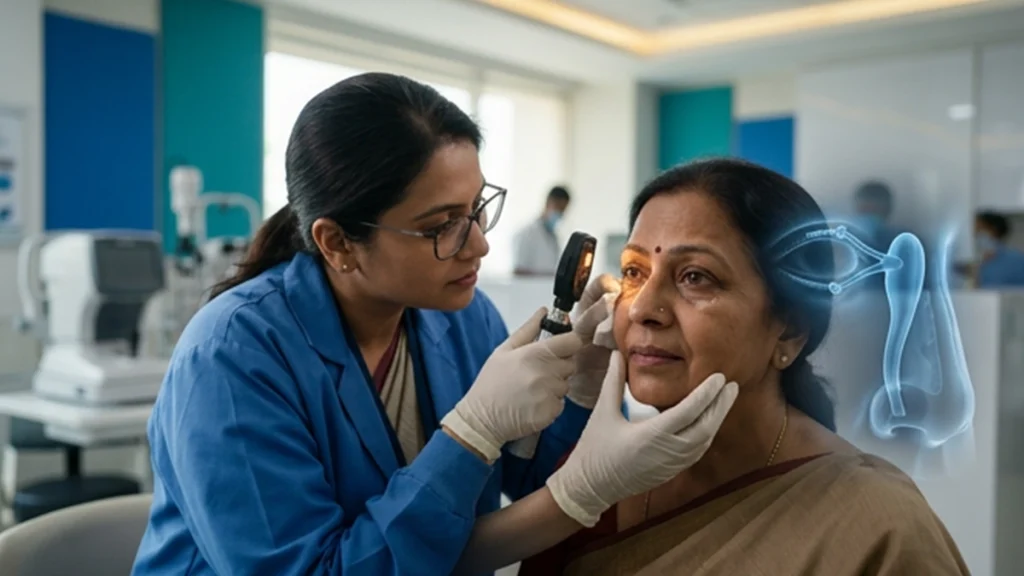
Watery eyes are often dismissed as a small issue, in particular if tears present themselves without us crying at something poignant, which we associate with normal tear function. Yet in fact this may be a sign of some ocular issue. We look to also note if these watery eyes present acutely or have become a chronic issue that is impacting daily life.
Also a healthy pair of eyes produces tears for the purpose of moisturizing the cornea and flushing out any irritants. In case of overproduction of tears or issues in the drainage of tears back into the body they spill out on the cheek. Some people only see it once in a while but others are faced with persistent symptoms that in fact change the way they go about their day.
What Causes Watery Eyes in Adults?
Several problems can interfere with normal tear production and drainage. Watery eyes often result from blocked tear ducts, dry eye disease, allergies, infections, or eyelid disorders. Tears usually leave the eye through tiny openings at the corners of the eyelids. In some cases these passages may become narrow or closed up which in turn causes accumulation of tears. Also in other cases surface irritation may cause over production of tears.
Identifying watery eyes causes examining symptoms, tear quality, and eyelid position.
Can a Blocked Tear Duct Cause Watery Eyes?
A blocked tear duct which in turn causes tears to not drain into the nose. This may affect one eye or even both. In adults we note that this is usually a result of aging, inflammation, infection, or past injury. Some report constant tearing, a stringy discharge, or swelling around the nose.
Doctors use the term lacrimal obstruction for this drainage issue. Also, persistent lacrimal obstruction may cause tear sac infections. Among the most common watery eyes causes, blockage in the drainage is what we pay attention to when the watering is mainly in one eye.
Why Does Dry Eye Cause Excessive Watering?
Dry eyes can in fact present with an overabundance of tears. As the tear film breaks down the eye surface becomes irritated. In response the body produces more watery tears. This is the body’s reaction in what is known as dry eye syndrome which we see play out especially during extended screen time, exposure to air conditioning, or in very windy weather.
People affected by dry eye watering may also present with burning, redness, blurred vision, or a grittiness. In contrast to lacrimal obstruction which is a result of blocked drainage this is an issue of tear quality. Thus it is important to be able to discern watery eyes from dryness and drainage problems.
How Do Eyelid Problems Cause Watery Eyes?
Eyelids play a role in the even distribution of tears and in directing them toward drain points. Change in eyelid position may interrupt this. Ectropion is a condition which has the lower eyelid turn out. Entropion is what happens when the eyelid turns in toward the eye which in turn irritates the eye with the lashes. Also we see Blepharitis which is an inflammatory condition of the eyelid which may disrupt the tear film. These are put forth as watery eyes causes which in particular affect the older population.
Common Causes and Symptoms of Watery Eyes
| Eye Condition | Common Symptoms |
| Blocked tear duct | Persistent watering, sticky discharge, swelling |
| Dry eye disease | Burning, gritty sensation, reflex tearing |
| Ectropion | Outward-turning eyelid, excessive tears |
| Entropion | Eye irritation, inward-turning eyelashes |
| Blepharitis | Crusting, redness, watery eyes |
How Are Watery Eyes Diagnosed?
An ophthalmologist will look at the eye surface, eyelid alignment, and tear drainage system. We may do tear film tests to identify dry eye. Also we may look at discharge points or do tear duct irrigation when we see blockage. Investigation of why some people have constant watery eyes is a step toward determining the best treatment.
Treatment Options for Watery Eyes
Treatment depends on the underlying diagnosis rather than watering alone.
| Condition | Possible Treatment |
| Dry eye disease | Lubricating eye drops and tear film management |
| Blocked tear duct | Tear drainage procedures or surgery when necessary |
| Eyelid inflammation | Eyelid hygiene and prescribed medication |
| Ectropion or entropion | Eyelid correction when clinically indicated |
| Allergic eye irritation | Allergen avoidance and suitable medication |
For blocked tear duct adults, specialists may suggest dacryocystorhinostomy (DCR) when there is serious drainage issue which requires surgery. In the case of dry eye we mostly focus on improving tear stability. Sudden vision changes or severe eye pain are reason to seek urgent medical care. Painful swelling and redness in the area of the tear sac also do well to be checked out right away.
Conclusion
Watery eyes may also be a sign of tear drainage problems, dry eye disease, or eyelid issues. Though symptoms maybe the same, the course of action in treatment varies. It’s important to know that even though symptoms present similarly which is what gets patients which way at first but it is best to see a health care professional. At ASG Eye Hospital we do ophthalmic evaluation which in turn we use to determine the base cause of your issue and from that we put in place the best plan for your care which in turn leads to better long term eye health.
Frequently Asked Questions (FAQs)
1. What are the most common watery eyes causes in adults?
Common watery eyes causes include are dry eyes, blocked tear ducts, allergies, infections, and eyelid disorders. An exam will help to determine the base issue.
2. Can dry eyes cause continuous watering?
Yes. Dry eye watering is a result of the eye’s surface sending out reflex tears which may not be of great benefit in terms of lubrication.
3. Is a blocked tear duct serious in adults?
That which is in excess may not be of a long term help. A blockage may also cause constant tearing and at times infection. Blocked tear duct adults should see a medical professional if the issue persists or gets worse.
4. Can lacrimal obstruction resolve without surgery?
Mild narrowing in some cases does not require surgery. Also it has been seen that persistent lacrimal obstruction at time requires a drainage procedure post specialist assessment.
5. When should someone consult an ophthalmologist?
Persistent watering, discharge, eyelid changes, or recurring irritation require evaluation. Early identification of what causes watery eyes supports appropriate treatment.
Authoritative Medical References
The following government and NHS medical resources support the information presented in this article.
1. National Eye Institute (NIH, US Government) — How Tears Work
https://www.nei.nih.gov/eye-health-information/healthy-vision/how-eyes-work/how-tears-work
2. National Eye Institute (NIH, US Government) — Dry Eye
https://www.nei.nih.gov/eye-health-information/eye-conditions-and-diseases/dry-eye
3. NHS (UK) — Watering Eyes
https://www.nhs.uk/symptoms/watering-eyes
4. Moorfields Eye Hospital (NHS) — Epiphora (Watering Eye)
https://www.moorfields.nhs.uk/eye-conditions/epiphora-watering-eye
5. National Eye Institute (NIH, US Government) — Blepharitis
https://www.nei.nih.gov/eye-health-information/eye-conditions-and-diseases/blepharitis