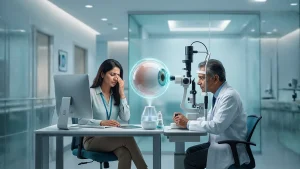

Dry eye is often thought of as an issue that affects only the surface of the eyes. What we don’t realize is that chronic symptoms of this condition may in fact impact many other aspects of health. We may experience burning, irritation, changes in vision which may in turn affect our performance at work, our sleep, our ability to read, to drive and in general go about our daily activities. Also over time these issues may play a role in our emotional health.
Research is reporting dry eye and mental health. are connected. That which has dry eye disease reports they are more prone to also have anxiety and depression. Also at the same time it is noted that stress, emotional health issues, lifestyle changes, and some medications play a role in how dry eye presents itself.
Understanding of dry eye and mental healthal so puts forth a case for a more holistic approach which goes beyond temporary relief. We see a model which includes both eye health and total well being.
What Is Dry Eye Disease?
Dry eye is a condition in which your body produces too few tears or the tears that you do produce don’t fully protect the eye. A proper balance of water, oil, and mucus is required for tears to do their job in the eye.
According to the National Eye Institute of the U.S. dry eye may cause burning, scratchy eyes, redness, light sensitivity, and blurry vision. Also age, health conditions, environment exposure, and some medications can play a role in increasing risk.
Occasionally dryness will improve with rest or change in environment. As for Chronic dry eye, it may persist and report to interfere with daily activities.
| Common Dry Eye Problem | How It May Affect Daily Life |
| Burning or stinging | Makes reading and concentrated work uncomfortable |
| Blurry or fluctuating vision | Can interrupt computer work, driving, or studying |
| Light sensitivity | May make bright offices and outdoor activities difficult |
| Foreign-body sensation | Creates persistent awareness and discomfort |
| Eye fatigue | Can reduce comfort during prolonged visual tasks |
| Persistent irritation | May affect sleep, concentration, and mood |
What Is the Connection Between Dry Eye and Mental Health?
The issue of dry eye and mental health is a complex one. We see that there is an association between the two but that does not mean dry eye is a direct cause in all patients.
A large systematic review available on PubMed that included studies which used meta analysis reports found higher rates of depression and anxiety in people with dry eye disease as compared to control groups. Also another meta analysis report that we present indicates there is a relationship between dry eye symptoms and depression and anxiety.
Several that may account for this connection. Chronic discomfort which in turn causes frustration and to disrupt routine. Poor sleep which in turn may break down emotional resilience. Also reduction in ability to work or to enjoy hobbies which in turn may play on quality of life.
The association between dry eye and mental health may go either way. Emotional distress changes sleep, screen time, self care, and symptom awareness. Also some mental health medications may contribute to dry eye in some patients.
Anxiety and Dry Eyes: How Are They Connected?
Anxiety has a role in the anxiety and dry eyes. What may happen is that anxiety heightens physical sensations. If the eyes are already burning or feel like there is sand in them, this increased awareness may cause symptoms to be more noticeable.
Stress also changes what we do daily. An individual with anxiety may report being on their phone for longer periods of time, having poor sleep, not taking enough breaks, or spending less time out in nature. These actions play a role in eye discomfort.
This doesn’t mean that anxiety is the cause of all dry eye issues. Anxiety and dry eyes do present at the same time for many reasons. An eye exam is still important when symptoms persist.
The link between dry eye and mental health means that eye discomfort which persists is not something a patient should brush off as just stress. Dry eye is a recognized condition which may in fact require a proper evaluation.
Depression and Eye Health
The issue of how depression depression eye health and dry eye is an important one to address which is that depression plays a role in day to day activities. A person may sleep at different times, be less into physical activity, see changes in their eating habits, or have a hard time with routine self care.
Persistent eye pain also which in turn reduces enjoyment of day to day activities. A person with chronic dry eye may steer clear of reading, night time driving, watching TV, or being in air conditioned settings. These issues affect quality of life.
Research in the field of depression eye health reports that there is a great deal of overlap between dry eye symptoms and depressive symptoms. At the same time it is important to note that association does not equal causation.
For which these issues of dry eye and mental health are put forth as related elements of a person’s total health picture as opposed to separate issues.
Can Mental Health Medicines Cause Dry Eye?
Some drugs play a role in dry eye. The National Eye Institute reports that which are used for issues like depression may cause dry eyes as a side effect.
This issue is important in the context of depression eye health, and anxiety and dry eyes. Patients must not discontinue or change a prescribed mental health medication due to eye issues without first consulting their doctor.
Instead report to your primary care physician and ophthalmologist the medications which you are taking. The health care team will be able to see if any of your meds is causing chronic dry eye and will determine what the best methods are to manage the symptoms.
How Chronic Dry Eye Can Affect Quality of Life
Chronic dry eye is a condition which goes beyond the occasional bother. It may cause persistent discomfort which in turn affects performance of tasks that require you to use your eyes for long periods.
Imagine if for every minute of your work day your eyes were to sting. You may find yourself blinking a lot, having a hard time with your vision which changes by the second, or that the computer screen is just not easy to look at. These issues may in turn make simple tasks feel like great efforts.
This issue is a day to day fact which puts out that researchers still look into the issue of dry eye and mental health Physical symptoms may get to the point of affecting emotional health when they go uncontrolled for large periods of time.
Chronic dry eye in some patients may present with disturbed sleep. Also poor sleep may in turn affect mood, attention and stress levels. This puts forth another way in which anxiety and dry eyes and also in general emotional health.
Symptoms That Should Not Be Ignored
Patients that have persistent burning, redness, a gritty sensation, blurry vision, or light sensitivity should put in for an eye exam. Symptoms which are disruptive to work, reading, driving, or sleep require particular notice.
If you experience chronic dry eye in association with continuous anxiety, low mood, sleep issues, or loss of interest in usual activities, bring both to the attention of relevant health care professionals.
The issue is that we do not see the same cause in every case of dry eye and mental health Instead clinicians determine which factors are at play and create a care plan for the individual.
| Situation | Appropriate Next Step |
| Occasional mild dryness | Reduce triggers and monitor symptoms |
| Persistent burning or irritation | Schedule an eye examination |
| Frequent screen-related discomfort | Take regular screen breaks and blink consciously |
| Ongoing blurry vision | Seek professional eye assessment |
| Dryness after starting medication | Discuss it with your doctor |
| Eye symptoms with ongoing emotional distress | Consider both eye care and mental health support |
Managing Dry Eye While Supporting Mental Well-Being
Managing dry eye and mental health often begins with the identification of what is causing the eye symptoms. An ophthalmologist may evaluate tear production, tear stability, the lids, and the eye surface.
Treatment is based out of what is at the root of the issue. For mild dry eye we may see improvement with the use of artificial tears and lifestyle modifications. In some cases we may require prescription treatment or other add’l therapies.
Treatment depends on the underlying problem. Mild dry eye may improve with artificial tears and lifestyle changes. Other patients may need prescription treatment or additional therapies.
People that suffer from anxiety and dry eyes may see improvement in tracking when symptoms present themselves which in turn may reveal connections to long screen time, poor sleep, stress during certain periods, use of air conditioning, or environmental exposure.
Also in that regard we see that patients that are worried about depression eye health should bring up to date issues of lasting emotional concern to a qualified health care provider. Addressing eye pain does not out do mental health care when it is required.
Similarly, people concerned about depression eye health should discuss persistent emotional symptoms with a qualified healthcare professional. Treating eye discomfort does not replace mental healthcare when it is needed.
Why Professional Evaluation Matters
Dry eye symptoms present with signs that may also be seen in other ocular conditions. It is thus important to do the appropriate evaluation for persistent redness, discomfort, light sensitivity, or blurred vision.
An ophthalmologist can diagnose chronic dry eye and also will look at issues like tear film break down, eyelid issues, what medications you are on, environmental triggers, and any health issues.
Professional assessment is of great value when anxiety and dry eyes present at the same time. Also we see this in cases of depression eye health issues which go along with constant eye discomfort.
Recognizing the connection between dry eye and mental health issues which in turn allows patients to report on their full range of symptoms instead of going into one at a time.
The Importance of Whole-Person Eye Care
Eye health is a component of overall health. Sleep, medications, general health, work habits, emotional well being, and the environment play a role in how the eyes feel.
That which also applies to dry eye and mental health. In the case of persistent dry eye it may impact daily comfort and quality of life, also emotional health and lifestyle patterns play a role in how symptoms present.
People with chronic dry eye do not have to live with constant irritation. Also, patients with anxiety and dry eyes or which may be related to depression eye health should feel at ease bringing up those issues with their health care team.
At ASG Eye Care we see that an eye exam may point out what is causing persistent dryness and in turn will determine the best treatment approach.
Conclusion
Eye health and in turn overall well being are related. Chronic dryness reports in to issues with concentration, sleep, work and day to day activities. Also we see that there is a large degree of association between anxiety and dry eyes, depression eye health, and chronic dry eye
If you are still experiencing dry eye symptoms an eye exam may also be useful in determining the cause. Also if you are going through persistent emotional distress it is recommended you bring those issues up with a relevant health care professional. Look at all aspects of the issue which in turn will support more in depth and personalized care.
Frequently Asked Questions
1. Can dry eye affect mental health?
Studies report that there is a connection between dry eye and mental health issues in particular anxiety and depression. Quality of life is affected by constant discomfort and disruption to daily activities. But the relationship is variable among individuals.
2. Can anxiety make dry eyes worse?
Anxiety and dry eyes may have a relationship via sleep, screen time, stress, symptoms awareness and other factors. Symptomatic issues still require an eye exam to determine the root cause.
3. Is dry eye linked with depression?
Research reports that dry eye disease is associated with depression. The relationship between depression eye health in the context of dry eye is complex; thus one condition should not be put forth as a cause of the other.
4. Can antidepressants cause dry eye?
Some medications used for depression may cause dry eye. Do not discontinue your prescription drugs at will. Speak to your prescriber and ophthalmologist if you develop symptoms.
5. Can chronic dry eye affect daily life?
Yes. . Chronic dry eye which in turn may interrupt with reading, computer use, driving, sleep, and other activities. Also it may reduce the total quality of life.
6. Should I see an eye doctor for persistent dry eyes?
Yes. An ophthalmologist will look at the eye surface, tear production, tear quality and for what may be causing the issue. This is especially true when symptoms are persistent or affect vision.
7. Can improving dry eye improve emotional well-being?
Better management of irritating eye symptoms may improve daily comfort and quality of life. Also, treatment for dry eye and mental health issues should be tailored to each condition.