
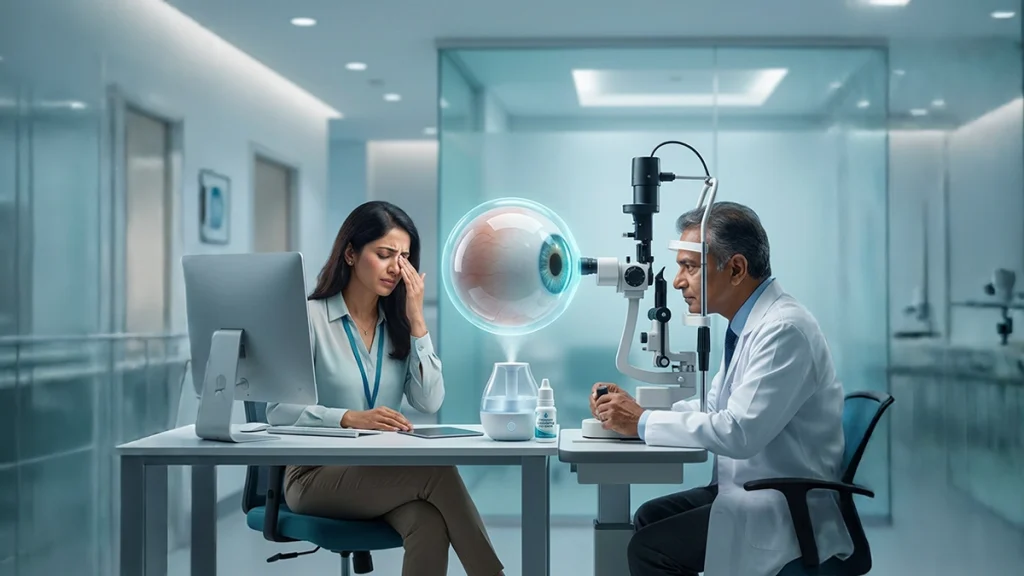
Dry out, burn, or have a foreign body sensation in your eyes may seem to be a minor issue after a long day but in fact persistent discomfort is a sign of a tear film issue which in turn protects the eye surface. We look at dry eye causes, recognize dry eye symptoms, and we put forth the right dry eye treatment which in turn improves comfort, visual clarity and health of the eye surface.
Dry eye syndrome is brought forth by insufficient tear production from the eyes, rapid evaporation of tears, or improper tear film function. It is also a temporary or long term issue. The National Eye Institute reports that dry eyes are a result of tears which do not adequately wet the eyes or do not function right.
At ASG Eye Care we focus on identifying what is causing a patient’s discomfort which in turn may not always mean the same treatment for each and every patient. We know that the dry eye causes are many and may include reduced tear production, rapid evaporation, issues with the eyelid glands, inflammation, use of certain medicines, and an underlying health issue.
What Is Dry Eye Disease?
Every time we blink this thin layer of tear film is spread over the cornea. This film which is smooth in finish supports clear vision and protects the surface from dust and irritants. It’s the oily component at the top which reduces evaporation, the watery component in the middle which moistens the eye, and the mucus base which also aids in the even spread of the tears.
When at any layer of the tear film system the stability is lost dry eye syndrome may present. In some people the issue is producing too little of the watery component of tears, in others the meibomian glands along the eyelids do not produce adequate oil. Without sufficient oil which plays a role in tear film stability, evaporation of tears happens very fast even if production of tears is normal. This is why it is so important to identify what dry eye causes before putting in place long term care.
Tear film instability which in turn irritates the ocular surface, and that irritation may in fact cause inflammation. In terms of dry eye treatment we aim to break this cycle at the same time that we address the dry eye causes.
Common Dry Eye Causes
Tear-film instability can irritate the ocular surface, and continuing irritation may encourage inflammation. Appropriate dry eye treatment aims to interrupt this cycle while managing the relevant dry eye causes.
Long time use of computers, tablets or smartphones is also a factor. We see that people tend to blink less often or not at all while they are on a screen. Reduced blink rate causes tears to evaporate faster which in turn may cause dry eye symptoms like burning, fluctuating blur and heavy eyes. Also air conditioning, ceiling fans, dry weather, dust, smoke and pollution play a role in it.
Contact wear may also play a role in dry eye causes for some people. Lenses interact with the tear film and will cause discomfort when moisture is low. Also we see issues of poor lens hygiene, sleeping in lenses that aren’t meant for it or wearing them beyond the recommended time which adds to the irritation.
Some drugs report dry eye causes which include certain antihistamines, decongestants, antidepressants and blood pressure medicines. Do not discontinue prescription medication without talking to the prescriber. Instead the ophthalmologist and the treating physician may look at which medicine is really necessary and if there is a safer option available.
Health issues also play a role. Diabetes, thyroid disorders, lupus, rheumatoid arthritis and Sjögren syndrome can affect tear production or the eye’s surface. Blepharitis and meibomian gland dysfunction may reduce the oily layer of tears which in turn causes evaporative dry eye syndrome. Also previous eye surgery which includes refractive procedures can bring on temporary dryness. These dry eye causes do indeed overlap.
| Type or Trigger | How It Affects the Eyes | Common Clues |
| Reduced tear production | The lacrimal glands do not supply enough watery tears | Persistent dryness, grittiness and discomfort |
| Excess tear evaporation | Moisture disappears too quickly, often because of inadequate oil | Symptoms worsen with fans, air conditioning or screen use |
| Eyelid-gland problems | Blocked or inflamed meibomian glands reduce tear stability | Crusting, eyelid irritation or recurrent styes |
| Medicines or health conditions | Systemic factors alter tear production or surface health | Symptoms occur with medication changes, dry mouth or joint problems |
| Environmental exposure | Smoke, wind, dust and low humidity speed evaporation | Symptoms are stronger outdoors or in climate-controlled rooms |
A person may present with many dry eye causes at the same time. Mixed diseases are very common which is why a full exam may reveal other dry eye causes in addition to screen exposure.
Signs You Should Recognise
Typical dry eye symptoms present with a burning sensation, stinging, itching, redness of the eye, a sandy or gritty feeling, light sensitivity and intermittent blurred vision. Some report having a foreign body sensation. Symptoms may affect either or both eyes and tend to become more noticeable as the day goes on.
Watery eyes also do occur. In fact it may seem counter to that which is expected but dryness in the eye can bring on reflex tearing. These tears may present in large quantities without the formation of a stable protective tear film. MedlinePlus reports dry eyes to be a common cause of excessive tearing.
Fluctuating vision is a key symptom. Vision may improve with a blink of an eye but then deteriorates again in a short while. Reading, night driving, computer use or contact lens wear may become problematic. If dry eye symptoms are an issue which interferes with daily life, presents very often or does not better with at home remedies, an eye check up is recommended.
Severe pain, redness, sudden vision changes, light sensitivity, eye injury, chemical exposure or a red and painful eye in a contact lens wearer should not be put down to dry eye syndrome. These may be signs of an infection, corneal injury or some other acute condition.
How Dry Eye Is Diagnosed
Diagnosis starts out with a history which includes symptoms, past habits, work environment, contact lens use, what medications are in use, past eye procedures, and also general health. At the ophthalmologist’s office the eyelids, the blinking pattern, tear film, cornea, and conjunctiva will be checked over with a slit lamp.
Tests can determine the volume of tear fluid which is produced by the eyes, the speed at which the tear film breaks up after a blink, and also note dry areas of the corneal surface. Schirmers test is used for measuring tear production and break up time of the tear film is a measure of its stability. Also we use special dyes which bring out the affected areas.
Testing also plays a role in diagnosis of dry eye syndrome which in turn allows for telling between different dry eye causes, assessment of the severity and identification of associated eyelid or surface disease. This in turn allows the ophthalmologist to put forth a more appropriate care plan.
Treatment Options
The best dry eye treatment is based on what is causing it, the degree of your symptoms, your tear film profile and your health history. In mild cases we see improvement with the use of artificial tears and also changing the environment and breaking into better blink habits. We use artificial tears, gels and ointments to add moisture which in some cases may also present with a blurred vision side effect.
Patients which do have frequent use of drops may be put on preservative free options especially when preservatives do in fact heighten irritation. Product choices do vary in terms of consistency, ingredients and also in terms of how long they act which is why choice should be a very individual issue. Redness relief drops are different from lubricants and should not be used repeatedly without that which is professional guidance.
When meibomian glands block up or in case of blepharitis which a dry eye causes, we may see improvement with the use of warm compresses and careful lid hygiene. A health care provider should go over the proper technique with you in particular if you have sensitive skin, recent surgery, or active inflammation.
Prescription for dry eye treatment may go beyond just lubrication when it is found to be insufficient. Based on the evaluation, ophthalmologists may put forward anti-inflammatory eye medications, a short term use of steroid drops under supervision or another treatment which is meant to improve tear production or surface health. Steroid drops must not be started by oneself as improper use may cause serious eye problems.
Punctal plugs may be suggested when tears leave the eyes too quickly. Placed in the drainage openings, these tiny devices help keep tears in place longer. Some patients may also require treatment for eyelid position, incomplete closure, contact-lens intolerance, or an underlying autoimmune condition. Recognised approaches listed by the National Eye Institute include artificial tears, prescription medicines, lifestyle measures, and punctal plugs
| Treatment Approach | Main Purpose | When It May Be Considered |
| Lubricating drops, gels or ointments | Add moisture and reduce surface friction | Mild to moderate discomfort or temporary dryness |
| Preservative-free lubricants | Limit preservative exposure during frequent use | Patients needing drops often or experiencing sensitivity |
| Warm compresses and eyelid care | Support meibomian gland function | Evaporative dryness, blepharitis or gland blockage |
| Prescription anti-inflammatory therapy | Control inflammation and support recovery | Persistent or moderate-to-severe disease under supervision |
| Punctal plugs | Slow tear drainage and retain moisture | Selected cases with poor tear retention |
| Management of associated disease | Address systemic, eyelid or medication-related factors | Autoimmune disease, thyroid disease or eyelid problems |
There isn’t a one size fits all for dry eye treatment. The best approach may be a combination of methods which also may require to be changed out over time, especially in the case of chronic inflammation or gland dysfunction.
Everyday Care and Prevention
There is not a one size fits all for dry eye treatment The best plan may be a combination of many approaches and will also change over time which is the case with chronic inflammation or gland dysfunction.
Contact lens wearers should adhere to the prescribed wearing schedules, use the recommended cleaning solutions and change out of your lenses and case at the times advised. Remove lenses at the first sign of pain, very red eyes or persistent irritation. Wearing them on an inflamed surface may in fact delay a proper diagnosis of a more serious issue.
Sleep, hydration and smoke avoidance may provide some comfort but is not a substitute for diagnosis when dry eye symptoms persist. Dietary supplements should not take the place of an exam, especially for people on blood thinning medication or living with chronic illness.
For eyelid related dry eye syndrome, it is the daily care which usually proves to be more beneficial than treatment only when flares up. An ophthalmologist may recommend which at home measures such as warm compresses and lid cleansing or in clinic procedures are the best.
When Should You Visit an Eye Doctor?
An evaluation is advised when dry eye symptoms present for a few weeks’ time, return repeatedly, affect reading or driving, reduce contact lens tolerance, or require the use of drops several times a day. Also we look at it from a different angle, post surgery, with dry mouth or joint issues, or after a change in medication which may in fact reveal dry eye causes.
Prompt with care in the case of severe pain, sudden loss or reduction of vision, intense redness, injury, chemical exposure, significant discharge or marked sensitivity to light. These issues should not be managed with over the counter dry eye treatment.
Conclusion
Temporary dryness is a known side effect of some eye surgeries which include laser vision correction. What to expect at follow-up is variable and will depend on the type of procedure, how the healing is going along and the persistence of dry eye symptoms.
Persistent dry eye symptoms should be instead of putting them off with random treatments. We do a full exam and put together a personalized dry eye treatment plan which for many patients works great to improve comfort, stability of vision and overall eye health. At ASG Eye Care we assess tear-film function, eyelid health and what is causing the issues before we put together a care plan which is right for that individual patient.
Frequently Asked Questions
1. What are the most common dry eye causes?
Here is a paraphrased version of the text you provided: Common dry eye causes are from reduced tear production, fast evaporation of tears, extended use of screens, wearing contact lenses, dry and smoky environments, abnormal function of the eyelid glands, certain medicines, age and some autoimmune or metabolic diseases.
2. Can excessive screen time cause dry eyes?
Screen time may cause which to happen less which in turn may bring about dry eye symptoms people don’t blink as often and may not complete a full blink. This causes evaporation and in the course of uninterrupted work in air conditioned rooms dry eye issues may present itself.
3. Why do dry eyes sometimes water excessively?
An irritated ocular surface may cause reflex tearing. Also may see overflow of these tears which however don’t have the right balance for in depth lubrication, so it may present as watery eyes in dry eye syndrome.
4. What dry eye treatment is usually recommended first?
For mild cases dry eye treatment may include artificial tears and modifying screen time, blinking and environmental factors. What is done is based on the evaluation, frequency of use and if there is any lid disease.
5. Are all lubricating eye drops the same?
No. Lubricant ingredients, thickness, preservatives and duration of action may differ. An option that is fine for temporary irritation may not do the job for chronic issues or very regular dry eye symptoms.
6. Can dry eye disease affect vision?
Yes. An unstable tear film may present as fluctuating or blurred vision which improves briefly at times. Severe left untreated dry eye syndrome at times may cause damage to the cornea.
7. Is dry eye disease permanent?
Some cases are of short term duration while in other cases a long term management is required. Time frame varies based on the dry eye causes which may be related to environment, medication use, meibomian gland dysfunction, an autoimmune disease, or age related tear change.
8. Can I use steroid eye drops for quick relief?
Steroid drops are for use as prescribed by and while monitored by an ophthalmologist. They do help in certain cases of inflammation but are not meant as a routine at home dry eye treatment.
9. Does dry eye occur after eye surgery?
Temporary dryness is a side effect of some eye procedures which include laser vision correction. Follow up care varies according to the procedure, rate of healing and presence of ongoing dry eye symptoms.
10. When is dry eye an emergency?
Temporary dryness is a known side effect of some eye surgeries which include laser vision correction. What to expect at follow-up is variable and will depend on the type of procedure, how the healing is going along and the persistence of dry eye symptoms.