Varanasi has a richness of senses, like the golden light at the dawn of the Ganga, the brilliant colours of the ghats, and the small details of the historic temples. But for the thousands of locals who are unaware that they have glaucoma, one nerve fibre at a time, this visual universe is being subtly and permanently decreased. The glaucoma usually doesn’t hurt, In its early stages, it does not significantly impair vision. It slowly and patiently does its work until there’s little left. People are losing their sight as a result of the extremely low level of awareness about the glaucoma treatment Varanasi and throughout India.
What Is Glaucoma and Why Is It Dangerous?
Glaucoma is a group of eye diseases that damage the optic nerve, usually due to increased eye pressure. It often develops without pain or noticeable symptoms in its early stages, making it a leading cause of irreversible blindness. Regular eye exams can detect glaucoma early, allowing treatment to slow or stop further vision loss and protect remaining eyesight.
What Glaucoma Actually Does Inside the Eye
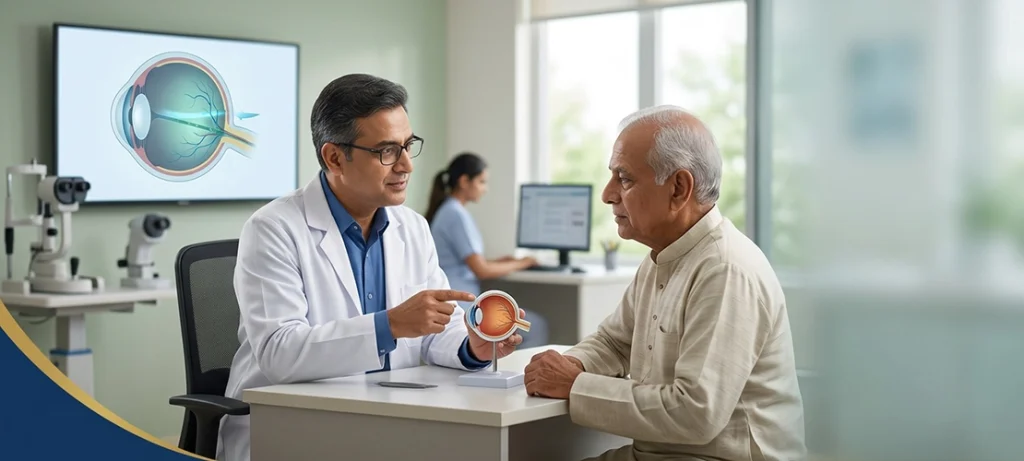
Glaucoma is a family of diseases, not one disease, due to progressive damage to the optic nerve, the tunnel through which visual information flows from the eye to the brain. This injury normally occurs when the eye pressure is high as a result of inadequate drainage of fluid within the eye. As the pressure mounts and continues, optic nerve fibres get crushed and damaged. Once these fibres are lost, they cannot regenerate. An eye surgeon can detect these changes early through advanced eye technology such as optical coherence tomography and visual field testing. Early identification is important as the vision they carry can’t be retrieved.
Why Varanasi’s Population Carries a Particularly High Risk
The people of Varanasi are more susceptible to undiagnosed glaucoma due to a number of causes. The largest risk factor for the development of glaucoma for the city’s sizable elderly population is their age. As per top eye doctor, adults with high rates of diabetes and hypertension are more vulnerable to optic nerve injury. Furthermore, glaucoma often progresses well beyond its early stages before it is ever officially diagnosed due to a cultural tendency to seek medical attention only when symptoms become disruptive and a lack of awareness about routine eye pressure checks in many city communities.
Risk Factors That Every Varanasi Resident Should Know
While glaucoma can affect anyone, some individuals are at a much greater risk to develop the disease and should be screened more often than others should. Adults over 40 years of age, those with a direct family history of glaucoma, South Asians (this is a statistical risk group), high myopia or hyperopia, long-term steroid use, and anyone with a history of eye injuries are at a higher risk. Eye health awareness remains critically low among these vulnerable groups, making timely screening even more essential. A family history of vision loss in an elderly person is often a warning indication for younger members in Varanasi, where multigenerational families are common, but it is rarely effectively evaluated or addressed.
Key Facts About Glaucoma Every Varanasi Resident Should Know
| Glaucoma Fact | Why It Matters |
|---|---|
| Often Has No Early Symptoms | Vision loss can occur without warning signs |
| Damages the Optic Nerve | Lost vision cannot be restored |
| Common After Age 40 | Risk increases with age |
| Family History Raises Risk | Regular screening becomes essential |
| Early Detection Helps | Treatment can slow disease progression |
| Routine Eye Exams Are Important | Helps identify glaucoma before vision loss occurs |
How Glaucoma Is Diagnosed: and Why the Process Is Painless
A number of simple, non-invasive tests are used to diagnose glaucoma, which combined provide a complete picture of the condition of the eye. Intraocular pressure is measured using tonometry. Ophthalmoscopy looks for structural alterations in the optic nerve head. The degree of peripheral vision loss is mapped via visual field tests. In order to identify thinning before it becomes functionally noticeable, optical coherence tomography offers comprehensive imaging of the optic nerve fibre layer. Every practical barrier to getting tested is eliminated by the fact that all of these tests are painless, don’t require any preparation beyond a routine dilated eye care exam, along with being finished in a single clinic visit.
Treatment Options That Slow the Damage and Protect Remaining Vision
Glaucoma is not curable, and once lost, no vision may be regained. It is possible to stop or seriously slow the progression of the condition, however, and when it is caught early enough, it may be done very effectively. Most people need to take the pharmaceutical eye drops regularly for life, though the primary treatment option is to use the drops to reduce intraocular pressure. Eye problems like changes in eye lense clarity can sometimes be an early indicator of increasing pressure, making routine check-ups essential. Selective laser trabeculoplasty (SLP) is a laser treatment that can improve the fluid drainage from the eye when drops alone don’t work. In more resistant or advanced cases, more aggressive pressure control is achieved by surgical procedures like trabeculectomy or placement of drainage devices.
Conclusion
Varanasi is not exempt from the fact that glaucoma is one of the main causes of permanent blindness in India. The majority of glaucoma-related blindness happens in persons who were unaware they had the ailment until it was much too late; the tragedy of this condition is not its severity but rather its preventability. A single eye pressure check by an eye specialist Varanasi from the top eye hospital in Varanasi like ASG Eye Hospital can start a dialogue that eventually preserves a person’s vision. No one should have to silently lose access to a world as vibrant in addition to breathtakingly beautiful as Varanasi.
FAQs
1. What are the early signs of glaucoma?
Most people experience no symptoms initially. As glaucoma progresses, peripheral (side) vision may gradually decrease.
2. Who is at higher risk of developing glaucoma?
Adults over 40, people with a family history of glaucoma, diabetes, hypertension, high myopia, or long-term steroid use are at higher risk.
3. Can glaucoma cause permanent blindness?
Yes. Untreated glaucoma can permanently damage the optic nerve and lead to irreversible vision loss.
4. How is glaucoma diagnosed?
Eye specialists use tests such as eye pressure measurement (tonometry), visual field testing, optic nerve examination, and OCT scans.
5. Is glaucoma treatment available in Varanasi?
Yes. Modern glaucoma treatment options include medicated eye drops, laser procedures, and advanced surgical treatments depending on disease severity.
6. Can lost vision from glaucoma be restored?
No. Vision already lost due to glaucoma cannot be recovered, which is why early diagnosis is critical.
7. How often should I get screened for glaucoma?
Adults above 40 should have comprehensive eye examinations every 1–2 years, or more frequently if they have risk factors.
8. Why is glaucoma called the “silent thief of sight”?
Because it gradually damages vision without causing pain or obvious symptoms until significant vision loss has already occurred.