Understanding Low Tear Break-Up Time
Your eyes require a base of tears for comfort and for clear vision. When that base breaks up too quickly you may notice burning, a foreign body sensation, redness, or blurred vision. A low TBUT dry eye result helps your eye doctor to determine that your tear film is not stable and what may be the cause of your symptoms.
Tear breakup time (TBUT) which is the time the tear film layer is present after you blink, is what we are looking at. Your doctor will compare Tear breakup time with your symptoms. In the process the doctor looks out for the first sign of dryness that appears on the eye’s surface. It is a useful measure but alone does not explain all symptoms.
How Is the Test Performed?
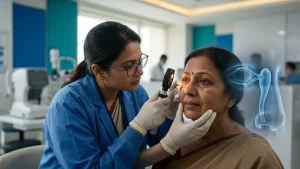
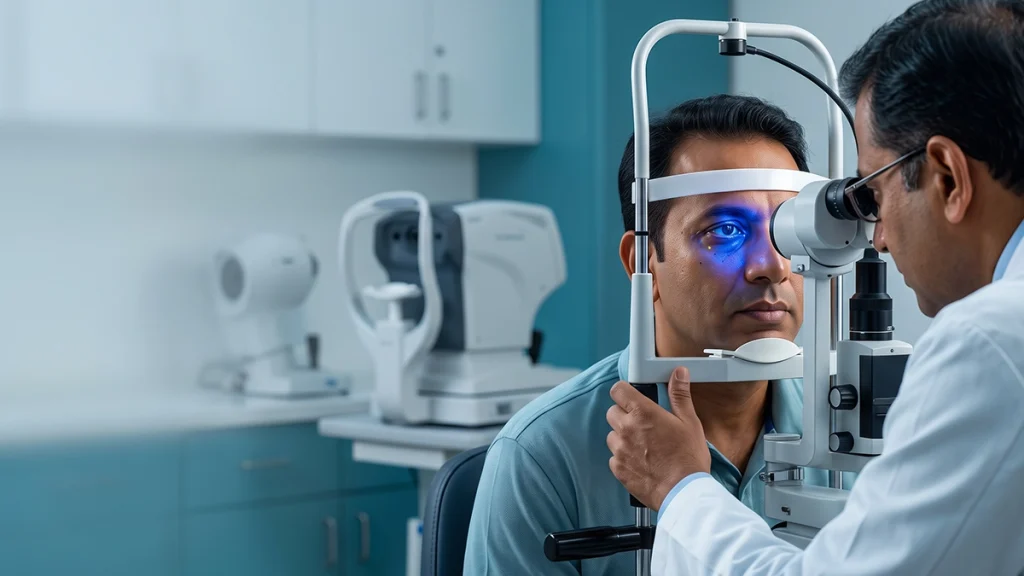
Your physician may put in a little of the fluorescein dye into your eye. You will blink a few times and then keep them open as the physician looks at the tear film with a special blue light. The time which it takes for a dry spot to appear is recorded.
A result below 10 seconds is a sign of tear film instability which is however affected by the test method and other exam results. That said a low TBUT dry eye which is a sign of dry eye does not in and of itself indicate severe disease. Your symptoms, tear production, lid health, and that of the eye surface also play a role in the diagnosis of dry eye.
What Causes Tear Breakup to Occur Early?
A typical reason is evaporative dry eye. The eyelids have meibomian glands which produce oil to reduce tear evaporation. If these glands are blocked or do not function well tears may dry up faster than normal.
Screen use also does so. In the process of reading or working on a computer people tend to blink less. Also air conditioning, fans, dusty settings, contact lenses, and some medicines may play a role. low TBUT dry eye in the case of dry eye may cause your doctor to look at the eyelid edges and oil producing glands more intently.
Not all who present with a short result will have the same issue. Your health care provider may order a repeat of the test or will put it in the context of other symptoms to determine if the issue is evaporative dry eye, reduced tear production, or something else which is at play. This approach puts forward a more accurate dry eye diagnosis.
What Do the Results Mean?
| Finding | What it may suggest |
| Tear film remains stable longer | Tears stay spread across the eye for longer. |
| Short tear breakup time | The tear film may be unstable and needs further assessment. |
| Short result with eyelid gland changes | Evaporative dry eye may be contributing. |
| Short result with surface irritation | Further examination may help identify the cause. |
These are general guides we present here, they are not a diagnosis in and of themselves. You will have to see your eye care professional who will interpret the results in conjunction with your symptoms and other tests.
What Tests May Follow?
A low TBUT dry eye patients may require further evaluation. Schirmer’s test which measures tear production and also ocular surface staining that reveals issues like corneal damage will be performed. Also we may do an evaluation of the lid glands and ask how symptoms are affecting daily life.
| Additional test | Why it may be used |
| Schirmer’s test | Checks how much tear fluid the eyes produce. |
| Ocular surface staining | Looks for surface damage or irritation. |
| Eyelid gland assessment | Checks for problems linked to evaporative dry eye. |
| Symptom questionnaire | Records discomfort and its effect on daily life. |
These reports put forth a full picture of dry eye diagnosis which in turn helps in treatment. As per the cause, we may be to prescribe you lubricating drops, eyelid hygiene regime, breaking time from the screen or a prescription treatment. If you are diagnosed with low TBUT dry eye which is persistent, follow through your care plan and report as advised.
Conclusion
A low TBUT dry eye patient gives your ophthalmologist important info on tear film stability, but it is just a piece of what we look at during an exam. The right treatment depends on the cause of your dry eye, what symptoms you have, and the health of your eye surface. If you are a frequent sufferer of burning, grittiness, redness, or fluctuating vision, in that case come in for an exam which also rules out other causes before trying over the counter treatments.
Frequently Asked Questions
1. Is a low TBUT always the case for dry eye?
No. A low TBUT dry eye which indicates tear film instability is present in dry eye, but your doctor has to look at symptoms and do other tests before diagnosing dry eye disease.
2. Is it painful to take the test?
Usually the test is very comfortable. The dye may cause a brief sensation but we do not use injection or surgery.
3. Can screen time impact tear stability?
Yes. During computer and mobile phone use we tend to reduce our blink rate which in turn causes tears to evaporate faster. To reduce discomfort take frequent breaks and make an effort to blink completely.
4. Can results be improved with treatment?
They can. What we do is address the root cause which in turn improves symptoms and sometimes tear-film stability. Your doctor will determine if repeat testing is needed.
Government and Clinical References
- National Eye Institute — Testing for Dry Eye –
https://www.nei.nih.gov/eye-health-information/eye-conditions-and-diseases/dry-eye/testing-dry-eye - National Eye Institute — Dry Eye –
https://www.nei.nih.gov/eye-health-information/eye-conditions-and-diseases/dry-eye - National Eye Institute — How Tears Work –
https://www.nei.nih.gov/eye-health-information/healthy-vision/how-eyes-work/how-tears-work - TFOS DEWS II — Diagnostic Methodology –
https://www.tfosdewsreport.org/report-diagnostic_methodology/131_36/en/