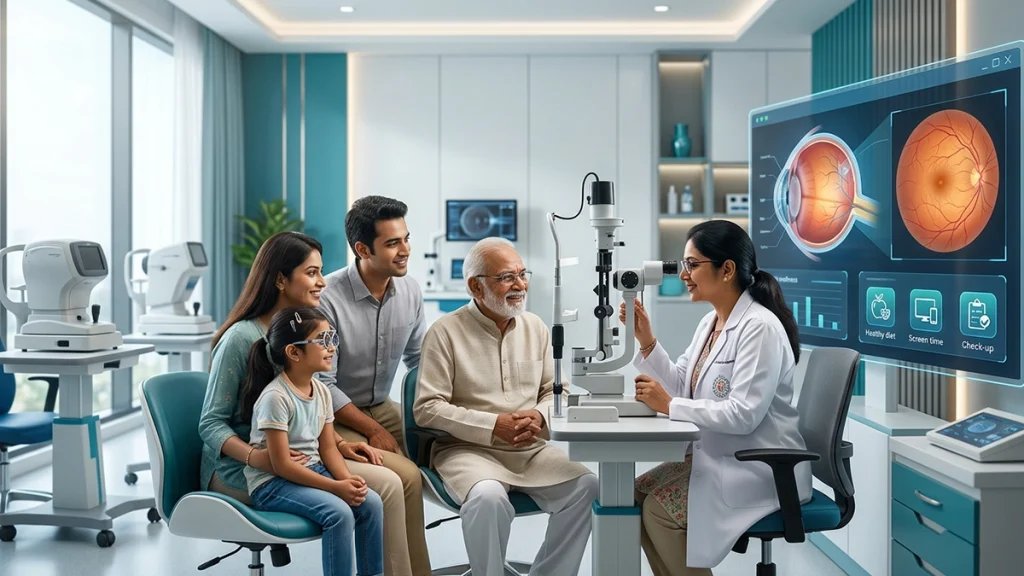
Good eyesight is important for learning, work, mobility, confidence and independence. Also many eye conditions present with no pain or obvious warning signs. Practical eye care tips should therefore become part of everyday healthcare long before vision turns blurry.
A lifelong approach to eye health combines safe daily habits, protection from ultraviolet radiation and injury, control of general health issues, and in time for an eye checkup. The National Eye Institute reports that many eye diseases do not show early signs, also the CDC reports that a comprehensive dilated eye exam can identify glaucoma, diabetic eye disease, and age related macular degeneration before you see any loss of vision.
Eye Health Needs at Every Age
The visual system grows quickly in childhood, is put through great stress from study and screen use during school and work years, and at a later age begins to break down from disease. A child may not notice that one eye is seeing badly, while an adult may only accept that they are losing vision as a part of the aging process.
Following suitable eye care tips at every stage supports eye health, but there is no single examination schedule for everyone.The frequency of an eye checkup is based on age, symptoms, spectacle or contact lens use, presence of diabetes, blood pressure issues, family history of eye disease, past eye surgeries and what the eye doctor recommends which plays into when an eye exam is needed. India’s National Program for Control of Blindness and Visual Impairment reports that main eye care issues are cataract, refractive errors, glaucoma, diabetic retinopathy, childhood blindness, and corneal blindness.
Eye Care From Birth to Five Years
Vision develops at a rapid rate during the first years of life. Parents should note if a baby makes eye contact, follows moving objects, and reaches out precisely. Persistent watering from the eyes, atypical eye movements, a white reflex in the pupil, droopy eyelids, or an eye which repeatedly turns in or out requires evaluation.
One issue of great importance in eye care tips for parents is that they do not wait for a young child to report. Amblyopia, also known as lazy eye, may cause loss of sight in one eye with out any notice. The National Eye Institute reports that early treatment which is usually at an early stage does work well and also that vision screening at least once between the ages of three and five is recommended.
Keep your children away from sharp things, chemicals, medicines, and cosmetics. Don’t put in a child’s eyes kajal, surma, honey, breast milk, rose water, or non-prescribed drops. A child should have a paediatric eye checkup after a failed screening, premature birth, developmental issue, family history of a childhood eye disease, or at note of different visual behavior. Early care for issues supports healthy vision.
Eye Care for School-Age Children
Clear vision is related to reading, writing, doing in the classroom, sports, and confidence.A child with poor vision may sit very close to the TV, keep books very near, report that his eyes are itchy, tilt or turn his head, cover one eye, and report that he gets headaches after study.
Useful eye care tips are for comfortable lighting, regular time spent outdoors, a sensible reading distance, and breaks from close work. The 20-20-20 method looking at something which is 20 feet away for 20 seconds every 20 minutes is put forth by the CDC and National Eye Institute as an easy way to rest the eyes during screen use.
Children are to wear sport specific protective eyewear which is appropriate for the activity which may include impact.Also note that whichever brands we have tested out block out 99 to 100% of UVA and UVB radiation. These tips for eye care tips improve safety, but it is important to still have a full eye checkup when a child shows symptoms, fails a screening, or wears glasses.
Eye Care for Teenagers
Teen young people put in many hours into study, games, and the use of phones and computers. What we are seeing is that being spent in close work may cause tiredness in the eyes, dry out the eyes, produce temporary blurring and headaches. As for what helps take care of your eyes better we see that which reduces glare, which also includes increasing text size instead of standing in very close, fully blink, position the screen a bit below eye level, and to take regular breaks to look into the distance.
Contact lenses which are classified as medical devices require great care. Before handling them, wash and dry your hands. Do not rinse or store them in tap water and usually remove them before going to the pool, in the shower or to sleep which includes overnight wear unless your eye care professional says it is ok. Also poor lens care practices can up your risk for keratitis and other serious infections.
Teen growth and eye health also includes reporting pain, marked redness, light sensitivity, discharge, sudden blur, flashes, new floaters, or injury. A prompt eye checkup is safer than using random redness-relieving or steroid-containing drops.
Eye Care in the Twenties and Thirties
Young adults think that stable vision is a sign that they do not need an eye exam. Also at this stage prescriptions may change, contact lens issues may arise, and diabetes or high blood pressure may affect the eyes. At this stage we recommend that you wear your correct prescription, use protective eye wear, avoid smoking, stay active, and eat a variety of healthful foods.
Good eye health also depends on work habits.Air conditioned rooms, not enough sleep, and reduced blinking which happens with too much screen time may play a role. At a comfortable distance keep the monitor, use larger fonts, take visual breaks often, also avoid directing a fan at your face.
Contact lens wearers are to have eye checkups at the intervals which your health care provider advises even when your lenses are comfortable. Also if you experience discomfort, redness, or blurred vision which may not be common, report to a professional for care. By following this eye care tips advice you can help to maintain healthy vision during the demanding working years.
Eye Care in the Forties and Fifties
From the 40’s many report that they have to hold small print at a greater distance. This common issue which we see is presbyopia which we can usually correct with reading glasses, progressive lenses, contact lenses or some other professional recommendation. Repeated purchase of stronger reading glasses without getting an eye exam may in fact be a sign of a different issue.
In midlife some of the best eye care tips are that you manage diabetes, hypertension, high cholesterol, weight, and smoking. The National Eye Institute reports that healthy food, physical activity, tobacco avoidance, UV protection, and dilated exams are included in protective measures for sight.
Maintaining healthy vision also means to know your family history of glaucoma or inherited eye disease. Share this info during an eye checkup which in turn will allow the ophthalmologist to tailor the testing and follow up.
Eye Care After Sixty
Ageing is a factor which doesn’t bring about serious vision loss, but the risk of cataract, glaucoma, age related macular degeneration, and dry eye does increase with age. The National Eye Institute reports that early detection and treatment of these issues will in fact protect sight even when a disease is asymptomatic.
Important eye care tips include using bright, even lighting, removing trip hazards, wearing prescribed glasses, controlling diabetes and blood pressure, using UV protection, and reporting new symptoms promptly. A regular eye checkup should follow the ophthalmologist’s recommendation.
Families can support eye health by noticing difficulty recognising faces, reading labels, judging steps, or driving at night which may be a sign of eye health issues. Also at the exam they may find out they need new glasses, treatment for cataracts, glaucoma management, retinal care or low vision support. These eye care tips can preserve independence and healthy vision.
Eye Care Priorities at Every Life Stage
| Life stage | Common concerns | Main focus |
| Birth to 5 years | Eye alignment, amblyopia, congenital conditions | Observe visual behaviour and arrange early screening |
| School years | Refractive errors, strain, sports injuries | Correct prescription, breaks, outdoor activity, protection |
| Teen years | Device use, contact-lens misuse | Lens hygiene, UV protection, prompt symptom care |
| Twenties and thirties | Dryness, workplace risk | Ergonomics, safety eyewear, healthy lifestyle |
| Forties and fifties | Presbyopia, glaucoma risk, diabetic changes | Near-vision assessment and systemic disease control |
| Sixty and above | Cataract, glaucoma, macular degeneration | Dilated assessment, good lighting, early care |
Everyday Eye Care Tips That Protect Sight
Some basic eye care tips are a lifetime habit. Wear sunglasses which block out 99 to 100% of UVA and UVB rays. Use safety glasses or goggles for construction, grinding, chemical use, gardening, in the lab, and high risk sports. Before you put in or take out contact lenses or touch your eyes, wash your hands, also don’t share lenses, eye make up, towels, or medications.
Nutrition is key to eye health, we just know that a single food item isn’t the answer for disease prevention. What is more important is a well rounded diet, physical activity, quality sleep, avoidance of tobacco, and management of diabetes, blood pressure, and cholesterol which in the long run will do more for your health than unproven supplements.
Another point in the docket of eye care tips is to bring up with your doctor headaches, glare, night driving issues, what medications you are on, your family health history, and what you are exposed to in your job at the time of your eye checkup. Eye exams also may reveal that you have conditions like diabetes and high blood pressure.
Eye Care Tips for Screen Comfort
Match screen brightness to the room, reduce reflections, increase font size, maintain a relaxed viewing distance, and take brief breaks.
During focused screen use, people tend to blink less, and that can contribute to dryness. Make a point of blinking fully, drink enough water, and avoid air that is excessively dry. If burning, grittiness, watering, fluctuating blur, or intolerance to contact lenses persists, seek an assessment. Eye health depends on finding the underlying cause instead of repeatedly treating the symptoms yourself. Proper care helps maintain comfortable, healthy vision.
When Eye Symptoms Need Urgent Attention
Do not delay the visit to the eye doctor at the first sign of serious issues like sudden loss of vision or a large reduction of sight, severe pain, chemical burn injury, puncture injury, painful red eye, the appearance of many floaters with flashes, a partial or complete curtain like shadow, sudden double vision, light sensitivity that is out of the ordinary, or any unusual redness and blur in a contact lens wearer. Also note that the CDC recommends that you see a health care provider that specializes in eyes at the first notice of vision decrease, pain in the eye, drainage, redness, double vision, floaters, halos around lights, or seeing flashes.
One of the safest eye care tips is to not put in any random drops into an injured or painful eye. Some products may cover up a problem which is present, also unsupervised use of steroids may cause serious issues. If you have acute symptoms seek prompt care from an ophthalmic professional.
What Happens During an Eye Examination?
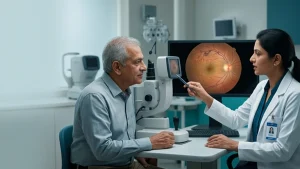
A full assessment may include visual acuity testing, refraction, eye alignment and movement tests, pupil responses, eye pressure measurement, slit lamp exam, and study of the retina and optic nerve. Dilating drops are sometimes used which allows the doctor to see the back of the eye.
A dilated eye checkup is critical as it is the case with glaucoma, diabetic retinopathy, and macular degeneration which may not present early signs. The National Eye Institute reports that dilation is the best method to catch disease before vision loss happens.
| Situation | Why earlier review may be needed |
| Child fails screening or shows an eye turn | Visual-development problems may be difficult to notice at home |
| Diabetes, hypertension, or vascular disease | These conditions may affect the retina or optic nerve |
| Family history of glaucoma or inherited disease | Risk may be higher before symptoms appear |
| Contact-lens use | Fit, corneal condition, prescription, and hygiene require review |
| Previous injury, surgery, or eye condition | Monitoring helps assess healing and treatment response |
| New pain, redness, flashes, floaters, or sudden blur | Some causes require urgent treatment |
Conclusion
Protecting your sight is a life long task. What a preschooler needs is different from what a teen, working adult, or senior citizen requires, yet each group does benefit from prevention and early assessment. We see that in different eye care tips for each stage of life which when applied will get you professional care and attention to eye health that in turn will preserve your comfortable and functional sight. These eye care tips support a lifetime of healthy vision.
For issues of blurred vision, redness, pain, flashes, floaters, poor night vision, or changes in a child’s visual behavior, we ask that you see an ophthalmologist at ASG Eye Care. We will do an assessment which in turn may identify refractive errors or other conditions which require treatment thus supporting lifelong healthy vision.
Frequently Asked Questions
1. How often should a person have an eye examination?
There is not a set schedule. In the case of a child with a suspected squint, an adult with diabetes, a contact lens wearer, and a person without symptoms may require different intervals. An ophthalmologist will be able to advise on timing which takes into account age, health issues, symptoms and test results.
2. Can good food remove the need for glasses?
No. Nutritious foods are good for eye health, we must note that they do not in fact reverse myopia, hyperopia, astigmatism, or presbyopia. That sort of vision correction is typically achieved with the use of glasses and contact lenses or other professional advice from an eye care provider.
3. Does screen use permanently damage the eyes?
Routine use is a factor in temporary issues like strain, dryness, or headache more than in causing permanent structure damage. For healthy vision breaks, appropriate lighting, a good distance, and proper prescription are key.
4. Are sunglasses needed only in summer?
No. UV at all times of the year penetrates the eyes also on cloudy days. Go for sunglasses that label to block 99% to 100% of UVA and UVB.
5. Is it safe to sleep in contact lenses?
Sleeping in contact lenses increases your risk of infection which is why it is recommended you only do so if an eye care professional has fitted you with a suitable pair of overnight lenses and has gone over the wear schedule with you. Even with approved extended wear lenses you must still have them checked.
6. Can children outgrow an eye turn or lazy eye?
Persistent and repeated eye turning should be evaluated. Amblyopia does best with early recognition and treatment, in fact not seeking advice may put an end to the chance of normal visual development.
7. What daily routine helps protect sight?
The healthiest practices include UV protection, injury prevention, good contact lens care, frequent screen breaks, avoidance of tobacco, a balanced diet, management of general health issues, and regular eye exams. At each stage of life consistent eye care tips play a role in preserving healthy vision.