
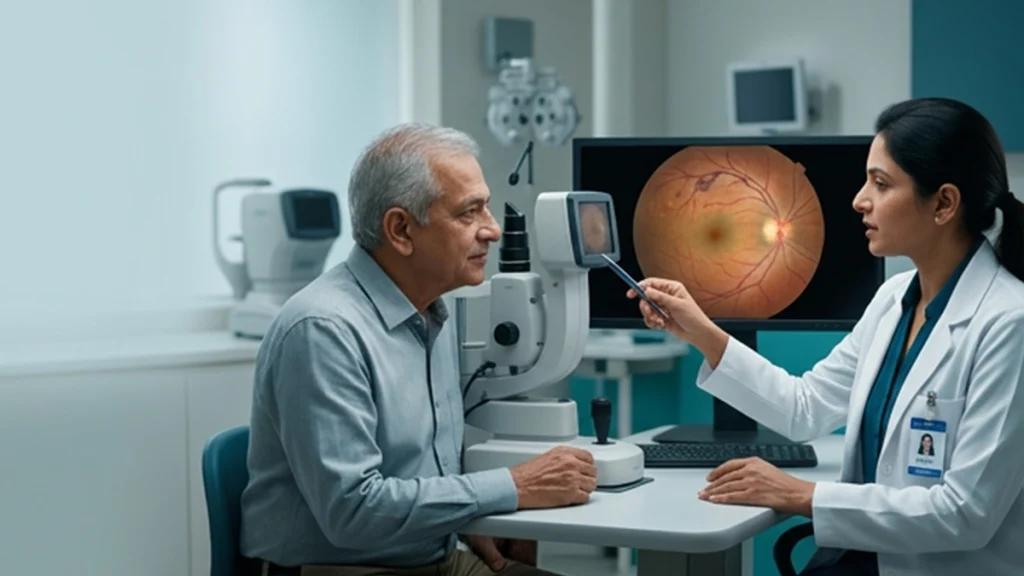
A sudden episode of blurry or distorted vision may be alarming which is often the case when there is no pain. Also a cause is BRVO eye which is branch retinal vein occlusion. This is a condition that happens when a small vein which is responsible for taking blood away from the retina becomes blocked. The blockage may cause blood and fluid to leak into the retinal tissue.
A BRVO eye may only affect part of the visual field which is the result of the blockage in a branch of the retinal vein as opposed to the main retinal vein. When leakage gets to the macula which is the center of the retina and is what we use for detailed vision, eyesight may become blurred or distorted. This swelling is what we term macular edema BRVO and is a key cause of visual changes related to this condition.
What Happens in a BRVO Eye?
In the back of the eye is the retina which is light sensitive. It requires healthy blood flow to function properly. In a case of BRVO eye, the retinal vein which is a part of the eye is blocked which in turn interferes with normal blood outflow from some retinal areas.
Pressure then may build up behind the blockage. Small retinal blood vessels may out bleed or exude fluid. If that leakage goes to the macula, macular edema BRVO may occur which in turn will affect central vision.
The degree of BRVO eye in a patient is variable. Some see only mild blurring of vision, while in others there is a more major change in vision. An eye exam determines the site of the blockage and which if any complications require treatment.
What Causes BRVO?
In the branch retinal vein occlusion causes what we look at is a combination of the eye and the body as a whole. BRVO tends to present itself at the site where a retinal artery crosses a retinal vein. In that area the blood vessels may change which in turn may put pressure on the vein and cause a blockage.
Age, in high blood pressure, diabetes and abnormal blood lipids we see greater incidence as associated with retinal vein occlusion. Also glaucoma and smoking play a role in some. Thus in the diagnosis of branch retinal vein occlusion causes we may see a health assessment of the eye and a look at overall health.
| Factor | Why It Matters |
| High blood pressure | Can contribute to changes in retinal blood vessels |
| Diabetes | May affect the health of small blood vessels |
| High cholesterol | Can be associated with vascular disease |
| Glaucoma | May increase the risk of retinal vein occlusion |
| Increasing age | Vascular changes become more common with age |
Not all people with BRVO eye do in fact have the same risk factors. An ophthalmologist may recommend that a full medical work up be done when determining the branch retinal vein occlusion causes.
What Symptoms Can BRVO Cause?
A BRVO eye is usually one eye. What we see most often is painless blurred vision. Also some people may see distortion, reduced central vision or a dark area in part of their visual field.
Symptoms present themselves when macular edema BRVO occurs. Although retinal vein occlusion does not usually cause pain or redness it is the sudden unexplained change in vision which should not be ignored.
A close look at the retina can tell which is a BRVO eye as well as which other conditions are causing similar visual symptoms.
How Is BRVO Diagnosed?
An ophthalmologist typically dilates the pupil during the retinal exam. Retinal hemorrhages and other tell tale changes may point to BRVO eye.
OCT which is what we usually call it, also measures retinal swelling and in turn helps to identify macular edema BRVO. In some cases Fluorescein angiography will help the ophthalmologist to assess retinal circulation and areas of poor blood flow.
At ASG Eye Hospital we perform retinal evaluations with the use of retinal exams and imaging technologies like OCT which we base our treatment plans off of each individual’s clinical results.
How Is BRVO Treated?
Treatment for BRVO eye mostly involves the management of complications which threaten vision. One of the most important is macular edema BRVO.
Anti in the eye of VEGF medicines is a common treatment for macular swelling which is a result of retinal vein occlusion. In the case of BRVO injections of these drugs which go after vascular leakage. Research which was looked at by the American Academy of Ophthalmology supports the use of anti-VEGF therapy for macular edema that is a result of BRVO.
| Treatment Approach | Purpose |
| BRVO injections with anti-VEGF medicine | Help reduce macular swelling and vascular leakage |
| Corticosteroid treatment | May reduce swelling in selected patients |
| Laser treatment | May be considered in certain clinical situations |
| Medical risk-factor management | Helps address conditions such as hypertension or diabetes |
The frequency and timing of BRVO injections is based on retinal findings and the patient’s response. Some will require multiple BRVO injections and others may have a different treatment approach.
Can Vision Be Protected After BRVO?
The visual result of a BRVO eye is a function of where the blockage is, retinal circulation and if the macula is affected. Early assessment allows the ophthalmologist to identify complications like macular edema BRVO and to determine if treatment is required.
Regular follow up is also key. OCT scans, which is also an option, may be used for tracking retinal edema and to assess response to BRVO injections. Also included in the care plan may be the management of diabetes, blood pressure and other related vascular risk factors.
Conclusion
In some cases a Branch Retinal Venous Occlusion will occur which is a result of blockage in a branch of the retina’s vein system and this may in turn cause bleeding, retinal swelling and also changes in vision. Also it is reported that the most serious of BRVO’s complications is macular edema which in turn may affect the detail in central vision.
Identifying symptoms at the onset and being aware of what causes branch retinal vein occlusion will support timely assessment. As per retinal findings, treatments like BRVO injections may help in the control of swelling and preservation of useful vision. Should you experience sudden or unexpected vision changes it is important to get in to see an ophthalmologist or retina specialist right away.
Frequently Asked Questions
1. Is BRVO a medical emergency?
A BRVO eye requires timely ophthalmic evaluation, also when vision changes acutely. Sudden vision loss may also present with other diseases which is why prompt assessment is important for proper diagnosis.
2. Can BRVO cause permanent vision loss?
Vision loss may occur in the case of retinal circulation impairment or development of macular edema BRVO. Recovery degree is variable between patients and is based on the extent of retinal damage and response to treatment.
3. Are injections always required for BRVO?
No. BRVO injections which include injections are used for macular edema which in turn affect vision, but treatment options may vary. It is the ophthalmologist’s role to determine which treatment, if any, is right for the patient.
4. What are the common branch retinal vein occlusion causes?
Common causes of branch retinal vein occlusion causes include hypertension, diabetes, vascular changes, high cholesterol and advanced age. Individual risk factors may vary.
5. Can BRVO happen again?
Retina blood flow issues may reoccur in some patients or affect the other eye. Also it is important for there to be regular eye exams and treatment of base health issues.
References Links
- NCBI Bookshelf – Branch Retinal Vein Occlusion
https://www.ncbi.nlm.nih.gov/books/NBK535370/ - PubMed – Therapies for Macular Edema Associated with Branch Retinal Vein Occlusion
https://pubmed.ncbi.nlm.nih.gov/28551163/ - ASG Eye Hospital – Retinal Diseases Treatment
https://www.asgeyehospital.com/specialities/retina-diseases/pune/ - ASG Eye Hospital – Eye Injections Treatment (Anti-VEGF)
https://www.asgeyehospital.com/specialities/eye-injections/