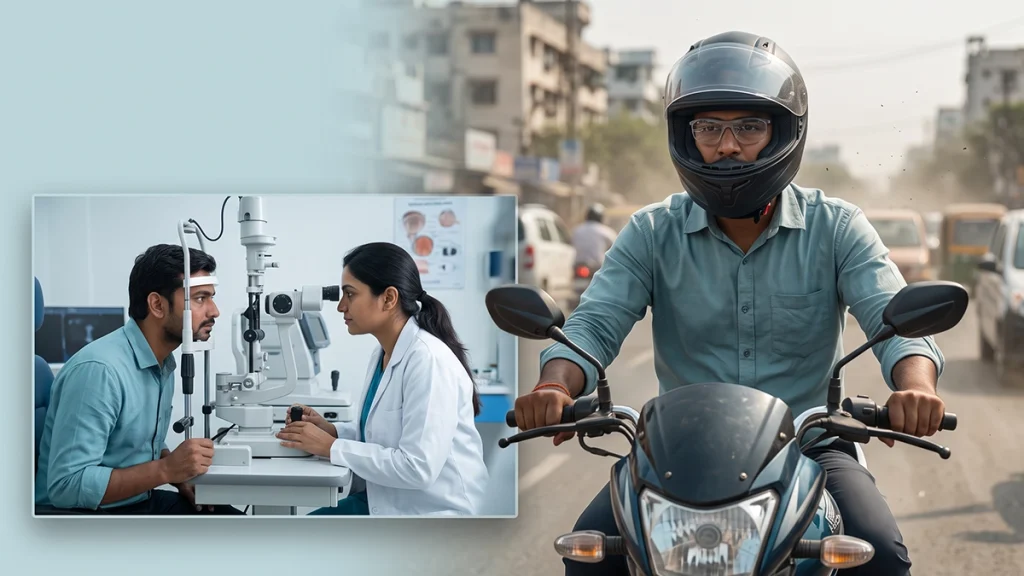
Wind, dust, insects and sunlight play a role in eye issues for two wheeler riders. You may end up with watery or irritated eyes which in turn will distract you and reduce your visibility.Before you hit the road here is what you should know about eye care for two-wheeler riders.
Why Eye Protection Matters
Wind and particles cause watering of the eyes, pain, or blurred vision. For your riding gear include motorcycle eye protection.
7 Tips for Eye Care of Two Wheeler Riders
1. Select a Helmet which has an appropriate visor.
A fitted helmet with a transparent resistant visor protects your eyes from dust and insects. This is a basic step in eye care for two-wheeler riders.
2. Keep Your Visor Clean
Scratches and wear reduce night visibility. Clean the visor with a soft cloth and a trusted product. This supports bike riding eye care.
3. Prepare for Dusty Roads
Close your visors when you move. Also wear secure riding goggles if you have to. Ordinary glasses may not protect your eyes from particles which are in the air. We seek to provide good dust protection for eyes without at the same time restricting your peripheral vision.
4. Choose Tints Carefully
Dark visors also for dusk and night. In low light use a clear visor. For effective motorcycle eye protection your view must be unobstructed.
5. Stop if Your Eyes Become Irritated
Wind, allergies, or dry eye can cause watering of eyes out. When vision is blurred pull over safely. While riding don’t rub your eyes. This is important for eye care for two-wheeler riders.
6. If dust gets in your eye
Park safely, wash hands and rinse with clean water. Do not rub the eye or remove embedded objects. See care if pain or blurred vision persists. In bike riding eye care also knows when to seek help.
7. Protect your eyes from the sun and get your vision checked
Use which are UV protective that play well with your helmet and visor. At night stay away from dark tints. If you have persistent watering of your eyes or trouble reading signs get in to see the eye doctor. For regular eye care for two-wheeler riders include in your routine vision checks and protective gear. This supports care for your bike riding eye care.
Quick Guide to Riding Conditions
| Riding condition | Helpful step |
| Dusty roads | Close the visor or use suitable goggles for dust protection for eyes and check the fit. |
| Bright sunshine | Choose UV protection without compromising visibility. |
| Night riding | Use a clean, clear visor. |
| Rain or humidity | Keep the visor clean and follow anti-fog instructions. |
| Eye irritation | Stop safely and assess symptoms. |
Common Mistakes to Avoid
| Mistake | Why it matters |
| Riding with a scratched visor | Glare may affect visibility. |
| Relying only on sunglasses | They may not protect against impact or wind-driven particles. |
| Wiping your eyes while moving | It distracts you from traffic. |
| Ignoring persistent symptoms | Pain or blurred vision may need assessment. |
Conclusion
Your eyes’ ability to determine distance and also to spot hazards is a key factor. Clean visors, right protective gear and unobstructed vision should be a priority in every ride. We see regular eye care for two-wheeler riders as an element of total health routine for motorcyclists. And should pain or blurred vision persist, see an eye care professional prior to hitting the road again.
Frequently Asked Questions
1. What type of eye protection is required for a rider?
Choose appropriate sized helmets which have clear impact resistant visors. For some helmet types suitable goggles are also recommended. For good motorbike eye protection do not choose options that restrict your view.
2. Do wind and dust affect my eyes?
Dust protection for eyes is to help reduce exposure. Wind causes watering, particles may irritate or scratch the eye. See a doctor if symptoms persist.
3. Should I hit the road if my eyes are watering?
Don’t if it affects your vision.Pull up at a safe spot on the road and wait till it is clear. For Eye care for two-wheeler riders means to put safety first.
4. What should I do if dust gets in my eye?
Pull over somewhere safe, then gently flush your eye with clean water. Do not rub. This is a part of proper bike riding eye care. Go get medical attention for severe pain or vision changes.
5. When does my schedule include an eye exam?
If at any time you see changes in your vision, persistent irritation or have difficulty seeing road signs please see about an exam.
Official Government and Medical References
1. Visors of Protective Helmets for Motorcycle Riders — Official Technical Specification
https://morth.gov.in/sites/default/files/ASI/5_15_2008_1_03_45_PM56%20AIS-058%28Part%202%29.PDF
2. National Eye Institute, U.S. government: Protective Eyewear
https://www.nei.nih.gov/eye-health-information/healthy-vision/nei-for-kids/protective-eyewear
3. Press Information Bureau, Government of India: BIS-Certified Helmet Safety
https://www.pib.gov.in/Pressreleaseshare.aspx?PRID=2142409&lang=2®=48