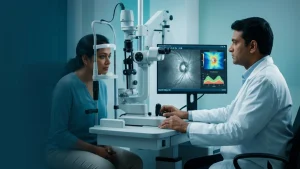
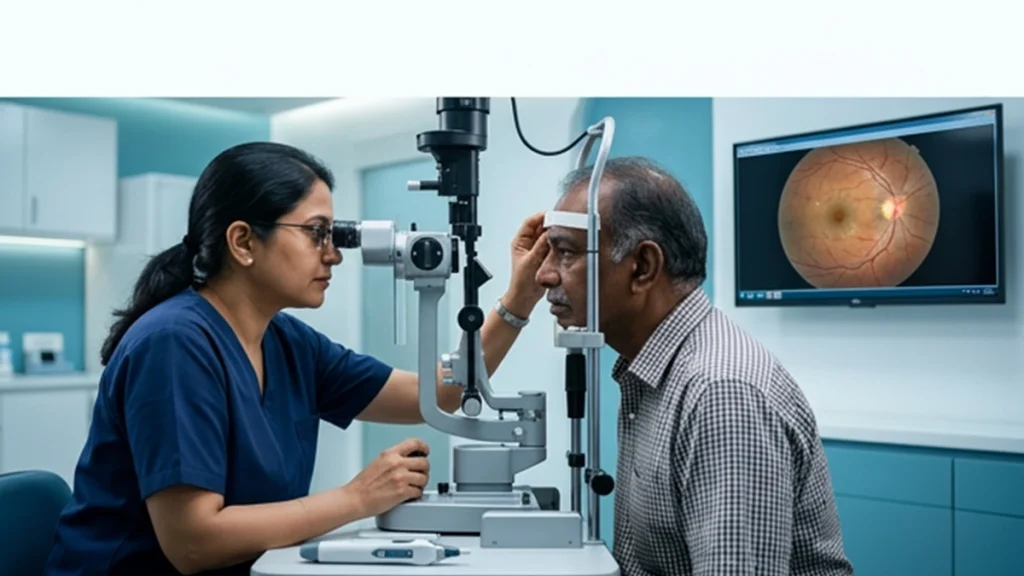
Diabetes for a number of years may pass with no eye issues at all. Then one day the eye becomes red, painful, and blurry. That sudden change is a sign of diabetic neovascular glaucoma which we see in many of our patients at ASG Eye Hospital who come in wishing they had known the warning signs earlier. This guide goes over what Diabetic Neovascular Glaucoma is, what causes the pressure to rise so fast and how we are approaching treatment of it today.
What Is Diabetic Neovascular Glaucoma?
High over time blood sugar damages the tiny retinal blood vessels. The retina which is starved of blood produces VEGF protein. This protein prompts the eye to grow new blood vessels. Also these new vessels are weak and develop in improper places. When they appear on the iris we term it rubeosis iris. Over time the vessels spread into the eye’s drain which causes fluid to be unable to leave the eye and pressure to build up. That series of events results in diabetic neovascular glaucoma.
According to the NIH’s StatPearls report poor blood flow to the retina is what sets this off. Diabetes is the main cause of neovascular glaucoma world wide..
Why Does Eye Pressure Rise So Suddenly?
Most people think that glaucoma develops slowly. But not so with diabetic neovascular glaucoma. At first there is a thin layer of new vessels and scar tissue which covers the drainage channels. Fluid does get out but only very slowly. Later that tissue tightens and the iris moves forward. The drainage angle may close in weeks. That’s when the pressure rises very quickly. This is how diabetic neovascular glaucoma may seem to strike overnight although in fact it developed very slowly.
How Diabetic Neovascular Glaucoma Develops
| Stage | What Happens in the Eye | Eye Pressure |
| Pre-rubeosis | Retina lacks oxygen, no visible new vessels | Normal |
| Rubeosis | New vessels appear on the iris | Usually normal |
| Open-angle stage | A vessel membrane blocks drainage | Rising |
| Angle-closure stage | Scar tissue seals the angle | Very high |
Warning Signs You Should Not Ignore
At the beginning diabetic neovascular glaucoma may present without any symptoms at all which is the reason that it is so important for diabetics to have routine dilated eye exams. As the disease progresses patients often report eye pain, redness, headache, and blurred vision. Also some see halos around light. Also in some cases nausea presents with the pain. If you have diabetes and notice any of these signs see a doctor which is an ophthalmologist right away. Early identification of rubeosis iris gives doctors the best chance to save vision.
How Doctors Treat Diabetic Neovascular Glaucoma
Treatment has as its primary aims reducing eye pressure and addressing the root cause of the problem: a starved retina. In the present age of glaucoma care, we have seen great results from modern practices, including anti-VEGF glaucoma treatment. An in-office injection can bring down the growth of new vessels within a few days. What we see is a quick response that, in turn, gives the laser treatment the best chance to work.
Next doctors will do panretinal laser treatment which in turn reduces retina’s oxygen demand thus producing less VEGF. For early stages pressure lowering drops are used. When the drops don’t work, surgeons may put in a drainage implant. An NIH report says that drainage implants have become very popular in the treatment of neovascular glaucoma.
Table 2: Common Treatment Options
| Treatment | Main Purpose | When Doctors Use It |
| Anti-VEGF injection | Shrinks new vessels quickly | Early, as first support |
| Panretinal laser | Treats the oxygen-starved retina | Soon after diagnosis |
| Pressure-lowering drops | Reduces eye pressure | Early stages |
| Drainage implant surgery | Creates a new fluid exit | When pressure stays high |
Can You Prevent It?
In many cases that is true. What we see is that good sugar control is the best defense against diabetic neovascular glaucoma. Also important is management of blood pressure and cholesterol. Annual dilated eye exams do what they should to catch retinopathy before it turns into diabetic neovascular glaucoma. For patients with existing retinopathy more frequent check ups every few months is recommended. Timely laser or anti-VEGF glaucoma treatment often stops trouble early.
Conclusion
Diabetic neovascular glaucoma is serious but we aren’t out of options. Timely intervention makes all the difference. Identifying early signs of neovascular glaucoma gets you in front of pressure peaks. If you have diabetes, schedule an eye exam at ASG Eye Hospital. We have retina and glaucoma teams which work as a unit to take care of your diabetic neovascular glaucoma from the time of diagnosis through to recovery.
Frequently Asked Questions
- Is diabetic neovascular glaucoma curable?
Doctors may not reverse the damage in every case but they do their best to stabilize the issue. In diabetic neovascular glaucoma what we see is that early intervention has great results in terms of preserving vision. In very late stages of the disease care is directed at comfort and pain relief. - How quickly do new iris vessels turn into glaucoma?
It is different for each person. In some patients rubeosis iris develops into diabetic neovascular glaucoma within weeks. In others the condition may be stable for months with proper care. - Does anti-VEGF glaucoma treatment hurt?
Doctors anesthetize the eye prior to injection. Most patients report only mild pressure. The injection works best in conjunction with a laser for diabetic neovascular glaucoma. - Who faces the highest risk of diabetic neovascular glaucoma?
The risk is highest for those with long term diabetes or poor blood sugar control. Also we see close follow up is required after report of advanced retinopathy or a previous retinal vein blockage as either may lead to neovascular glaucoma . - Can diabetic neovascular glaucoma affect both eyes?
Yes. Diabetes affects the eyes in many ways, thus we also look at the other eye for signs of diabetic neovascular glaucoma.
References link
National Eye Institute — Diabetic Retinopathy
https://www.nei.nih.gov/eye-health-information/eye-conditions-and-diseases/diabetic-retinopathy