Children put themselves out in the world through play, sports, school activities, and out of curiosity. As they do this they also put themselves at risk of injury from unexpected hazards. Sharp objects, chemicals, toys, sports equipment, and even strong sun can cause issues.
Practicing eye safety for children with respect to our kids’ care is a way to reduce many of these risks. Parents, teachers and caregivers are key. At home and in school we put in easy solutions which in fact do improve children’s eye protection and your child’s eye health at the same time as we don’t restrict their normal activities.
Why Is Eye Safety for Children Important?
A child’s vision is a developing process which is why an injury at this time may affect how they see, learn, or go about their day. Kids eye injuries may happen during play, sports, in the class, or while they are using everyday items.
AIIMS reports that eye injuries in children happen at home, at school, or in the playground. Also they put out that which we may term as prevention is a very important step in the prevention of eye injuries.
Good for eye safety for children is to identify hazards prior to an accident.
| Common Risk | Safer Approach |
| Sharp toys, pencils or scissors | Teach safe handling and supervise younger children |
| Sports equipment | Use suitable protective eyewear |
| Cleaning products | Keep chemicals securely stored |
| Strong sunlight | Use UV-protective sunglasses |
| Digital screens | Encourage regular visual breaks |
1. Keep Sharp Objects Away From Young Children
Scissors, pencils, pens, needles, tools, and sharp edge toys can injure a child’s eye in seconds. Put away dangerous items out of younger children’s reach.
Older kids should learn to use sharp tools properly. This basic eye safety for children practice may help to prevent at home and at school avoidable accidents.
2. Use Protective Eyewear During Sports
Sports present kids to fast moving balls, rackets, elbows and other impact risks which go with the territory. For activities that have a greater risk of injury though proper children’s eye protection becomes very important.
The National Eye Institute recommends that kids wear proper protective eyewear during sports. Polycarbonate sports goggles do well at impact resistance in most activities.
Including protection in sports routine improves eye safety for children which doesn’t put a stop to their enjoyment of physical activity.
3. Store Household Chemicals Safely
Cleaning agents, detergents, sprays and any other chemicals should be out of reach of children. A splash into the eye may irritate or cause serious injury to the child eye.
If into the eye a chemical gets into which at once clean water should be used. Also per the government first aid info which is to seek medical help right away for chemical burns and very serious eye injuries.
4. Choose Age-Appropriate Toys
Toy selection is a very important aspect of eye safety for children.Stay away from toys which have sharp elements or that project parts at the other person’s face.
Parents should also watch out for flying objects. Also by instilling safe play habits we may see a large reduction in preventable kids eye injuries.
5. Teach Safe Screen Habits
Screens in general cause discomfort or eye strain which is a different issue from traumatic injury. Also we see that adoption of healthy screen habits is a component of daily children’s eye protection.
Children should step away from their phones, tablets, and computers at regular intervals. Also the Indian government’s primary eye care guide puts forth the 20-20-20 approach for digital screen use.
6. Protect Children’s Eyes From UV Exposure
Outdoor play is good, but at the same time we must protect kids’ eyes from ultraviolet rays. Go for sunglasses which block out UVA and UVB.
A hat which has a brim out does. We recommend that this practice be started young which in turn makes sun protection a routine aspect of eye safety for children.
7. Make Classrooms and Play Areas Safer
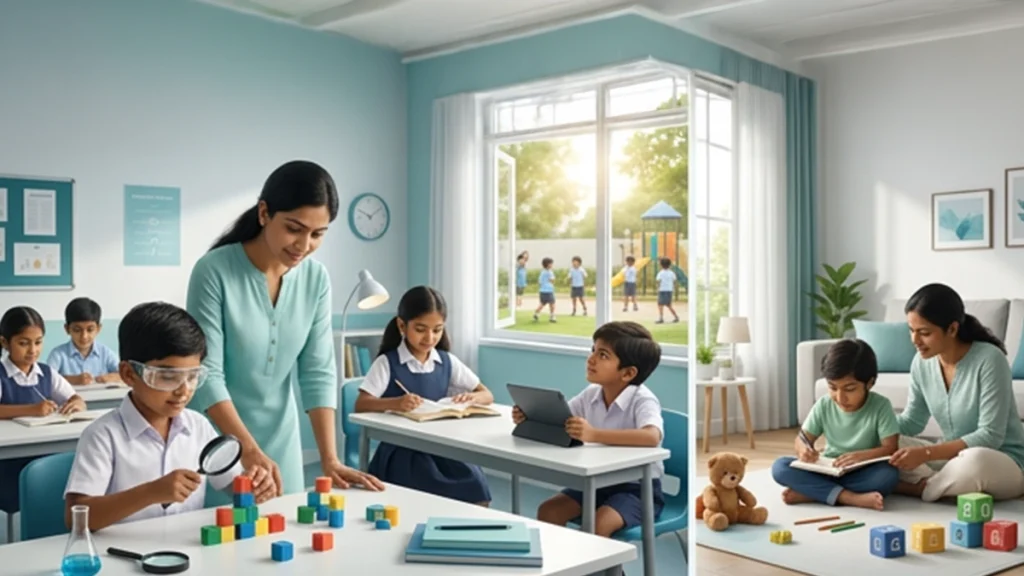
Teachers play a key role in promoting eye safety for children by identifying present hazards in the classroom and playground. Broken equipment, sharp edges, unsafe science materials, or improperly stored tools are what to look out for.
Schools should also see to it that children use children’s eye protection during laboratory work and play sports.
| Situation | What Adults Should Teach |
| Dust enters the eye | Avoid rubbing and rinse carefully |
| Chemical splash | Rinse immediately and seek medical care |
| Eye hit during play | Stop activity and assess the injury |
| Object stuck in the eye | Do not pull it out; seek urgent medical care |
8. Teach Children What to Do After an Eye Injury
Children should be made aware that rubbing an injured eye will only make the issue worse. Also they should report to a parent, teacher, coach, or any other responsible adult at the first sign of eye injury.
Do not try to remove what has become embedded in the eye. In the case of severe pain, bleeding, reduced vision, chemical exposure, or great impact take the person to the emergency room right away. Proper first aid is the base of eye safety for children.
Conclusion
Building healthy eye safety for children doesn’t have to be complicated. Safe storage, supervision, protective gear, smart screen use, UV protection, and proper first aid care is what it takes. Also parents and teachers should pay attention to persistent issues or changes in vision. If an injury is affecting a child’s vision or is very painful, it is important to get in touch with an eye care professional.
Frequently Asked Questions
1. How can parents improve eye safety for children at home?
Parents can also promote eye safety for children by putting away chemicals and sharp objects, choosing safe toys, supervising play which may be risky and teaching them to avoid rubbing at an injured eye.
2. Do children need protective eyewear for sports?
For sports that present a risk of eye injury, we see that appropriate children’s eye protection may greatly reduce serious injury. What is right for which sport will vary.
3. What are common causes of kids eye injuries?
In children, eye injuries are caused by sports, sharp objects, toys, falls, chemical splashes, and things which hit the eye.
4. When should a child see an eye doctor after an injury?
Prompt professional help for your child eye issues if they present with severe pain, bleeding, persistent redness, diminished vision, chemical exposure, or an object that is embedded in the eye.
References
- AIIMS – Manual on Training of Trainers for Volunteers in Primary Eye Care
https://www.aiims.edu/images/depart/RPC/reports%20for%20web/Manual%20on%20Training%20of%20Trainers%20for%20Vlunteers%20in%20Primary%20Eye%20Care.pdf?
National Eye Institute (NIH) – Sports and Eye Safety:
https://www.nei.nih.gov/eye-health-information/healthy-vision/how-eyes-work/sports-and-eye-safety-tips-parents-and-teachers?