
ASG Eye Hospital

Dry Eye Testing: What a Low Tear Break-Up Time Can Tell Your Eye Doctor

Understanding Low Tear Break-Up Time

Your eyes require a base of tears for comfort and for clear vision. When that base breaks up too quickly you may notice burning, a foreign body sensation, redness, or blurred vision. A low TBUT dry eye result helps your eye doctor to determine that your tear film is not stable and what may be the cause of your symptoms.

Tear breakup time (TBUT) which is the time the tear film layer is present after you blink, is what we are looking at. Your doctor will compare Tear breakup time with your symptoms. In the process the doctor looks out for the first sign of dryness that appears on the eye’s surface. It is a useful measure but alone does not explain all symptoms.

How Is the Test Performed?

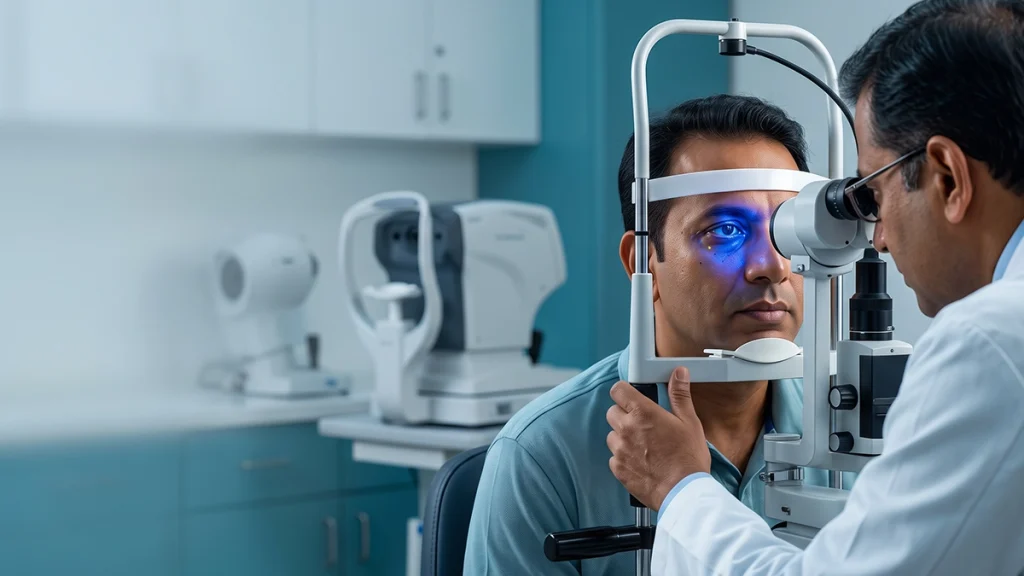
Your physician may put in a little of the fluorescein dye into your eye. You will blink a few times and then keep them open as the physician looks at the tear film with a special blue light. The time which it takes for a dry spot to appear is recorded.

A result below 10 seconds is a sign of tear film instability which is however affected by the test method and other exam results. That said a low TBUT dry eye which is a sign of dry eye does not in and of itself indicate severe disease. Your symptoms, tear production, lid health, and that of the eye surface also play a role in the diagnosis of dry eye.

What Causes Tear Breakup to Occur Early?

A typical reason is evaporative dry eye. The eyelids have meibomian glands which produce oil to reduce tear evaporation. If these glands are blocked or do not function well tears may dry up faster than normal.

Screen use also does so. In the process of reading or working on a computer people tend to blink less. Also air conditioning, fans, dusty settings, contact lenses, and some medicines may play a role. low TBUT dry eye in the case of dry eye may cause your doctor to look at the eyelid edges and oil producing glands more intently.

Not all who present with a short result will have the same issue. Your health care provider may order a repeat of the test or will put it in the context of other symptoms to determine if the issue is evaporative dry eye, reduced tear production, or something else which is at play. This approach puts forward a more accurate dry eye diagnosis.

What Do the Results Mean?

FindingWhat it may suggest
Tear film remains stable longerTears stay spread across the eye for longer.
Short tear breakup timeThe tear film may be unstable and needs further assessment.
Short result with eyelid gland changesEvaporative dry eye may be contributing.
Short result with surface irritationFurther examination may help identify the cause.

These are general guides we present here, they are not a diagnosis in and of themselves. You will have to see your eye care professional who will interpret the results in conjunction with your symptoms and other tests.

What Tests May Follow?

A low TBUT dry eye patients may require further evaluation. Schirmer’s test which measures tear production and also ocular surface staining that reveals issues like corneal damage will be performed. Also we may do an evaluation of the lid glands and ask how symptoms are affecting daily life.

Additional testWhy it may be used
Schirmer’s testChecks how much tear fluid the eyes produce.
Ocular surface stainingLooks for surface damage or irritation.
Eyelid gland assessmentChecks for problems linked to evaporative dry eye.
Symptom questionnaireRecords discomfort and its effect on daily life.

These reports put forth a full picture of dry eye diagnosis which in turn helps in treatment. As per the cause, we may be to prescribe you lubricating drops, eyelid hygiene regime, breaking time from the screen or a prescription treatment. If you are diagnosed with low TBUT dry eye which is persistent, follow through your care plan and report as advised.

Conclusion

A low TBUT dry eye patient gives your ophthalmologist important info on tear film stability, but it is just a piece of what we look at during an exam. The right treatment depends on the cause of your dry eye, what symptoms you have, and the health of your eye surface. If you are a frequent sufferer of burning, grittiness, redness, or fluctuating vision, in that case come in for an exam which also rules out other causes before trying over the counter treatments.

Frequently Asked Questions

1. Is a low TBUT always the case for dry eye?

No. A low TBUT dry eye which indicates tear film instability is present in dry eye, but your doctor has to look at symptoms and do other tests before diagnosing dry eye disease.

2. Is it painful to take the test?

Usually the test is very comfortable. The dye may cause a brief sensation but we do not use injection or surgery.

3. Can screen time impact tear stability?

Yes. During computer and mobile phone use we tend to reduce our blink rate which in turn causes tears to evaporate faster. To reduce discomfort take frequent breaks and make an effort to blink completely. 

4. Can results be improved with treatment?

They can. What we do is address the root cause which in turn improves symptoms and sometimes tear-film stability. Your doctor will determine if repeat testing is needed.

Government and Clinical References

  1. National Eye Institute — Testing for Dry Eye –
    https://www.nei.nih.gov/eye-health-information/eye-conditions-and-diseases/dry-eye/testing-dry-eye
  2. National Eye Institute — Dry Eye –
    https://www.nei.nih.gov/eye-health-information/eye-conditions-and-diseases/dry-eye
  3. National Eye Institute — How Tears Work –
    https://www.nei.nih.gov/eye-health-information/healthy-vision/how-eyes-work/how-tears-work
  4. TFOS DEWS II — Diagnostic Methodology –
    https://www.tfosdewsreport.org/report-diagnostic_methodology/131_36/en/ 
Overview

Job Title: Consultant Ophthalmologist

Location: Pan India
Job Category: Medical Healthcare

Work Employment:  Full time

What you work:

  • Diagnose and treat patients with a focus on Ophthalmologist.
  • Collaborate with senior doctors and multidisciplinary teams.
  • Ensure patient-centric care and follow clinical protocols.
  • Contribute to research, training, or hospital initiatives (if applicable).

Mandatory skills:

  • Relevant medical degree / certification.
  • Strong knowledge of ophthalmology practices / healthcare protocols.
  • Excellent communication and patient-handling skills.
  • Ability to work in fast-paced healthcare environments.

Preferred Qualifications:

  • Experience: 3 to 6 years of experience
  • Prior experience in eye care / multi-speciality hospitals.
  • Fellowship or advanced training in Ophthalmologist.
  • Familiarity with advanced diagnostic tools and surgical techniques.
  • Passion for innovation, patient care, and continuous learning.

Apply For This Positions

This will close in 0 seconds

Overview

Job Title: Optometrist

Location: Amritsar, Punjab 

Job Category: Optometry

Work Employment:  Full time

What you work:

  • Conduct comprehensive eye examinations and vision assessments for patients of all ages.
  • Prescribe and fit spectacles, contact lenses, and low-vision aids.
  • Perform diagnostic tests including refraction, tonometry, perimetry, and OCT imaging.
  • Support consultant ophthalmologists in pre-operative and post-operative patient workups.
  • Counsel patients on eye care, lens hygiene, and follow-up schedules.
  • Maintain accurate clinical records and adhere to hospital protocols.

Mandatory skills:

  • Bachelor’s or Master’s degree in Optometry (B.Optom / M.Optom) from a recognised institution.
  • Valid registration with the relevant state or national optometry council.
  • Proficiency in refraction, slit-lamp examination, and contact lens fitting.
  • Working knowledge of autorefractors, tonometers, fundus cameras, and OCT equipment.
  • Strong communication skills in English, Hindi, and Punjabi.
  • Ability to manage high patient volumes in a fast-paced clinical setting.

Preferred Qualifications:

  • Experience: 1 to 5 years of clinical optometry experience.
  • Prior experience in an eye care or multi-speciality hospital in Punjab.
  • Exposure to paediatric optometry, binocular vision, or low-vision rehabilitation.
  • Familiarity with advanced diagnostic imaging and dry-eye management.
  • Passion for patient care, community eye-health camps, and continuous learning.

Apply For This Positions

This will close in 0 seconds

Overview

Job Title: Optical In-charge 

Location: Panjim, Goa / Mumbai-Worli (Lower Parel) 

Job Category: Optical

Work Employment:  Full time

What you work:

  • Manage day-to-day operations of the optical outlet, including sales, dispensing, and inventory.
  • Guide customers on frame selection, lens options, and coatings based on their prescription and lifestyle.
  • Take accurate frame measurements and ensure precise fitting, adjustments, and after-sales service.
  • Drive optical sales targets and monitor daily, weekly, and monthly business performance.
  • Maintain optimum stock levels, coordinate with vendors, and control shrinkage through periodic audits.
  • Supervise and train optical staff on product knowledge, dispensing standards, and customer service.
  • Coordinate with optometrists and consultants to ensure smooth prescription-to-delivery flow.
  • Ensure visual merchandising, display hygiene, and adherence to brand and hospital standards.

Mandatory skills:

  • Diploma or Bachelor’s degree in Optometry (D.Optom / B.Optom) or equivalent optical dispensing qualification.
  • Minimum 3 years of experience in optical supervisory or in-charge role.
  • Sound knowledge of lens types, coatings, frame materials, and dispensing principles.
  • Hands-on experience with edging, fitting, and basic optical workshop equipment.
  • Proven ability to achieve sales targets and manage inventory and billing systems.
  • Strong communication and interpersonal skills in English, Hindi, and Konkani or Marathi.
  • Working knowledge of POS / retail software and MS Office.

Preferred Qualifications:

  • Experience: 3 to 7 years in optical retail or an eye care hospital optical division.
  • Prior experience managing an optical outlet in Goa or the western region.
  • Exposure to premium and progressive lens brands and specialty eyewear.
  • Familiarity with contact lens dispensing and after-care support.
  • Team leadership, customer relationship management, and continuous learning mindset.

Apply For This Positions

This will close in 0 seconds

Overview

Job Title: Optometrist

Location: Pan India 


Job Category: Optometry

Work Employment:  Full time

What you work:

  • Conduct comprehensive eye examinations and vision assessments for patients of all ages.
  • Prescribe and fit spectacles, contact lenses, and low-vision aids.
  • Perform diagnostic tests including refraction, tonometry, perimetry, and OCT imaging.
  • Support consultant ophthalmologists in pre-operative and post-operative patient workups.
  • Counsel patients on eye care, lens hygiene, and follow-up schedules.
  • Maintain accurate clinical records and adhere to hospital protocols.

Mandatory skills:

  • Diploma / Bachelor’s or Master’s degree in Optometry (D.Optom / B.Optom / M.Optom) from a recognised institution.
  • Valid registration with the relevant state or national optometry council.
  • Proficiency in refraction, slit-lamp examination, and contact lens fitting.
  • Working knowledge of autorefractors, tonometers, fundus cameras, and OCT equipment.
  • Ability to manage high patient volumes in a fast-paced clinical setting.

Preferred Qualifications:

  • Experience: 1 to 5 years of clinical optometry experience.
  • Exposure to paediatric optometry, binocular vision, or low-vision rehabilitation.
  • Passion for patient care, community eye-health camps, and continuous learning.

Apply For This Positions

This will close in 20 seconds