
Understanding narrow eye angles
Gonioscopy narrow angle assessment is what ophthalmologists do to see if the eye’s drainage angle is out of the ordinary. This area is at the point where the iris and the cornea meet. Fluid which is supposed to pass through this point for proper eye pressure regulation usually is. If the iris ends up blocking the drain we see a rise in pressure which in turn may damage the optic nerve.
The anterior chamber angle which is the space between the iris and cornea through which fluid leaves the eye. A diagnosis of gonioscopy narrow angles does not in itself mean glaucoma but does put one at a higher risk for closure. Also since early glaucoma may present with no clear symptoms, it is important to have regular eye exams.
How does gonioscopy work?
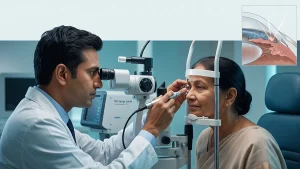
A gonioscopy eye test is performed to view the drainage angle with a special lens. An anesthetic is applied before the doctor gently places the lens on the eye. The exam which only takes a few minutes may cause a slight pressure.
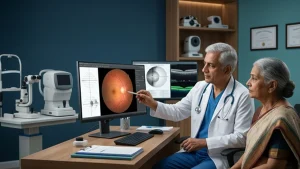
During gonioscopy narrow angle assessment the specialist looks at various sections to see if they are open, if they are narrow or if they have closed. Gonioscopy narrow angles is also reported with eye pressure measurement and an optic nerve exam.
What can the results show?
Gonioscopy narrow angles which is a tell tale sign to distinguish open angle from a narrow or closed one. A narrow anterior chamber angle is a risk factor but in practice we look at the full picture. Angle closure risk is a play of eye anatomy and other clinical variables.
| Gonioscopy finding | What it may mean |
| Open angle | Fluid can reach the drainage pathway. |
| Narrow angle | The iris may block drainage in certain circumstances. |
| Closed angle | The iris obstructs part of the drainage pathway. |
| Adhesions in the angle | Tissue changes may suggest previous or ongoing closure. |
A gonioscopy eye test does not in and of itself diagnose all forms of glaucoma. The ophthalmologist also will look at pressure, optic nerve health and visual field. They use this info to determine treatment and monitoring.
Who may need gonioscopy?
An ophthalmologist may put forward that gonioscopy narrow angles be done if a routine exam points out a shallow anterior chamber or narrow outflow field. Also people with a family past of angle closure glaucoma may in for more in depth evaluation. The angle closure risk varies from person to person which is why follow up schedules will vary.
The natural variation of the anterior chamber angle between individuals, and symptoms do not by themselves reliably indicate if it is narrow. A gonioscopy eye test provides the ophthalmologist with a direct view which in turn guides the next step. Ask about follow up timing.
What happens if the angles are narrow?
Care of the eye depends on what stage the angle is at is it just narrow, beginning to close, or has it caused glaucoma. Also some patients require regular eye pressure and optic nerve checkups. In some cases a doctor may recommend laser peripheral iridotomy. This is a procedure which creates a small opening in the iris which in turn allows for better flow of fluid. It isn’t a universal requirement.
| Clinical situation | Possible next step |
| Narrow angle without other concerning findings | Monitoring and scheduled eye checks |
| Narrow angle with additional risk factors | Personalised discussion of preventive options |
| Confirmed angle closure or glaucoma | Prompt specialist-led treatment |
| Sudden symptoms of acute angle closure | Emergency eye care immediately |
Discuss angle closure risk and present treatment options to your ophthalmologist. Gonioscopy narrow angles is one piece of the puzzle which also includes medical history and other test results. Do not alter eye medication without professional advice.
Conclusion
Gonioscopy narrow angle assessment is a tool which eye specialists use to look at the drainage system and to identify which patients require more attention. A narrow angle is not the same as a diagnosis of glaucoma and care should be individualized. See an ophthalmologist at ASG Eye Hospital for the right examination.
Frequently asked questions
1. Is gonioscopy painful?
A very common reaction to gonioscopy eye test is tolerance. Anesthetizing drops which we put in the eye to numb the tissue do reduce pain which is experienced, although for some there is report of minimal pressure from the lens. If you do feel pain tell your health care provider.
2. Do narrow angles always cause glaucoma?
No. While a narrow anterior chamber angle may lead to closure it is also true that many people with narrow angles do not go on to develop glaucoma. Your specialist will review the results before putting forth a treatment.
3. Does everyone with narrow angles require laser treatment?
No. Some people do better with close monitoring, while others may from preventive laser. The decision is based on the exam results and the clinician’s assessment of the angle closure risk.
4. Which symptoms need urgent attention?
Sudden, intense eye pain with redness, blurred vision, a headache, nausea, or vomiting can signal acute angle-closure glaucoma. Get emergency medical help right away if these symptoms appear abruptly, particularly in combination.
Reference Links
1. National Eye Institute — Explains narrow-angle and angle-closure glaucom –
https://www.nei.nih.gov/eye-health-information/eye-conditions-and-diseases/glaucoma/types-glaucoma
2. Explains how fluid drainage affects eye pressure and how blockage can lead to angle-closure glaucoma –
https://www.nei.nih.gov/eye-health-information/eye-conditions-and-diseases/glaucoma/glaucoma-and-eye-pressure
3. MedlinePlus — Describes glaucoma testing and how blocked drainage can increase pressure and threaten vision.
https://medlineplus.gov/lab-tests/glaucoma-tests/