Glaucoma mostly presents itself when there is an increase in eye pressure which in turn affects the optic nerve. But within glaucomas we have what is known as malignant glaucoma which is a rare and tough variant of the disease. Also it is what some doctors term as Aqueous Misdirection Syndrome or Ciliary Block Glaucoma. Although the name may sound like it is related to cancer, malignant glaucoma in fact has nothing to do with cancer. The term “malignant” here is used to describe the speed at which this disease progresses if left untreated.
In many of the cases we see that malignant glaucoma develops post operatively in people which have certain anatomic risk factors. The condition which was until now described is one of fluid in the eye moving in the wrong direction. This causes the structures within the eye to move forward and the front chamber to become abnormally shallow. We see also that eye pressure may go up which in turn puts at risk the patient’s vision.
What Is Malignant Glaucoma?
Malignant glaucoma is a condition which presents when the aqueous humor, the clear fluid which is produced inside the eye, is misdirected into the vitreous cavity instead of the normal outflow which is to the front of the eye.
As fluid collects behind the lens and iris, these structures move forward. The anterior chamber becomes shallow or sometimes nearly flat. Eye pressure may rise despite an open or functioning peripheral iridotomy. This feature can help doctors distinguish malignant glaucoma from some other types of angle closure. NCBI describes malignant glaucoma as aqueous misdirection syndrome associated with a shallow anterior chamber and elevated intraocular pressure.
| Feature | What May Happen |
| Aqueous fluid | Moves in an abnormal direction inside the eye |
| Anterior chamber | Becomes unusually shallow |
| Eye pressure | Often rises |
| Vision | May become blurred or reduced |
| Treatment | Requires urgent ophthalmic evaluation |
What Causes Malignant Glaucoma?
The cause of malignant glaucoma is not simple. A dysregulation of the ciliary body, lens, zonules and vitreous which in turn redirects aqueous production out of the normal path may present. This in turn causes pressure to build behind the lens-iris diaphragm which in turn propels it forward.
Eye surgery is a large issue which reports cases of malignant glaucoma post glaucoma procedures and cataract surgery. In a long term study which is indexed in PubMed it was reported that glaucoma and cataract surgeries were the common initial events in affected eyes.
People who present with narrow and/or crowded anterior segments may have a greater risk. Also patients which already have angle closure glaucoma may require more intense monitoring post eye procedures.
Symptoms of Malignant Glaucoma
Symptoms of malignant glaucoma may present themselves after ocular surgery but the time of onset is very variable. There is the matter of blurred vision, growing eye pain, headaches and redness. Also some people have a report of visual acuity that falls off as pressure in the eye rises..
Because also many other eye problems present with the same signs, symptoms by themselves are not enough for diagnosis of malignant glaucoma. If you have sudden blurred vision or very intense eye pain after surgery do see an ophthalmologist right away instead of waiting for the issue to resolve.
| Possible Finding | Why It Matters |
| Blurred vision | May indicate changes in eye pressure or anterior chamber depth |
| Eye pain | Can occur when intraocular pressure rises |
| Shallow anterior chamber | Important clinical sign assessed by an ophthalmologist |
| Raised eye pressure | Can threaten the optic nerve |
| Symptoms after eye surgery | Require prompt examination |
How Is Malignant Glaucoma Diagnosed?
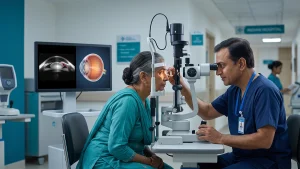
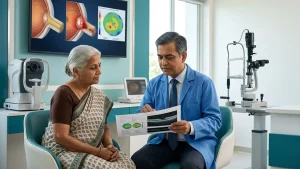
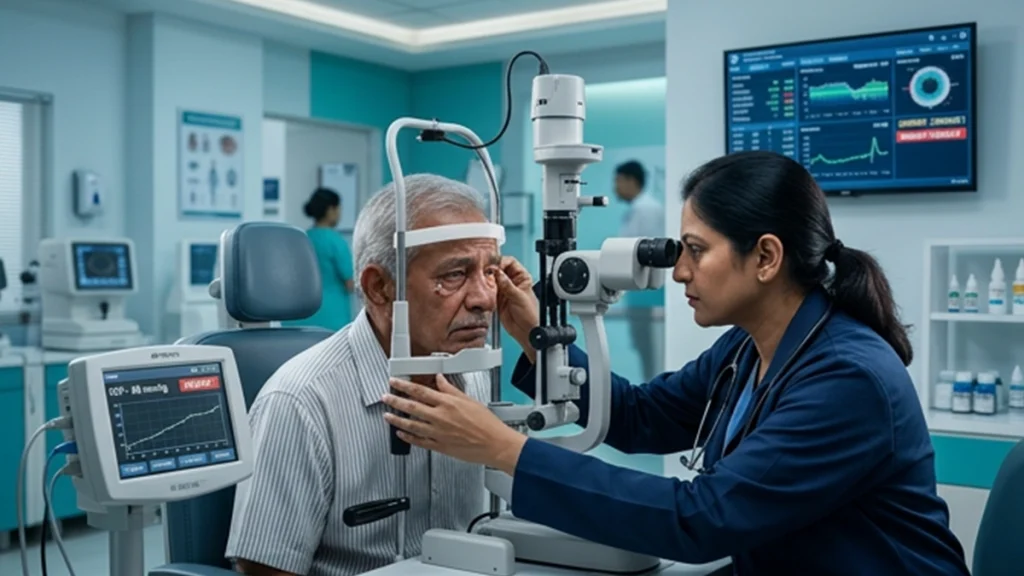
An ophthalmologist who is a medical doctor that focuses on the eyes diagnoses what is known as malignant glaucoma via an in depth eye exam. What they do is check intraocular pressure and look at the depth of the anterior chamber. Also included is an assessment of the iris, lens and the drainage angle.
The clinical team has to tell apart malignant glaucoma from pupillary block angle closure, choroidal issues and other causes of a shallow anterior chamber. Imaging studies like ultrasound biomicroscopy may be used when the internal structure requires a more in depth look.
Correct diagnosis is important because in malignant glaucoma we do not see response to the treatments which we use for primary pupillary block glaucoma..
How Is Malignant Glaucoma Treated?
Treatment of malignant glaucoma is to restore normal fluid flow, enlarge the anterior chamber and control intraocular pressure. What we do depends on the degree of the disease, what previous eye treatment the patient has had and if the natural lens is still present. At first we may try medications which reduce production of aqueous and those that help push the lens-iris diaphragm back. Also some patients may require laser procedures.
If conservative measures fail to improve the condition in malignant glaucoma, surgery may be required. Vitrectomy and related procedures can create a which reestablishes proper fluid flow. Also from a long term study we see that in many cases surgery is the eventual solution when medical treatment does not fully resolve the issue. As untreated malignant glaucoma may cause loss of vision, treatment should always be referred to an ophthalmologist or glaucoma specialist.
Why Is Urgent Treatment Important?
Persistent high eye pressure is a factor which causes damage to the optic nerve. That is why we consider malignant glaucoma to be an ophthalmic condition which requires prompt assessment and treatment. Do not use left over eye drops to manage sudden post op pain, blurred vision or pressure symptoms. An early exam allows the eye specialist to identify the cause and to start appropriate treatment which in turn helps to avoid damage.
Conclusion
Malignant glaucoma is rare, but we see that it is important to recognize it early. A shallow anterior chamber, high eye pressure and sudden visual issues post op should not be overlooked. Prompt evaluation will determine the cause and in turn guide treatment which may prevent further eye damage.
If blurred vision, eye pain, or changes in vision appear after an eye procedure without an obvious explanation, seek prompt care from an ophthalmologist. At ASG Eye Hospital, an eye specialist can assess the cause and recommend treatment suited to your individual eye condition.
Frequently Asked Questions
- Is malignant glaucoma a type of cancer?
No. Malignant glaucoma is not a cancer. This term is used for a rare and complex form of glaucoma which results from improper aqueous fluid movement within the eye
- Can malignant glaucoma occur after cataract surgery?
Yes. Malignant glaucoma is a rare complication of cataract surgery and other glaucoma procedures.
- Is malignant glaucoma an emergency?
It requires immediate ophthalmic evaluation, especially when you notice an increase in eye pressure or sudden blur to vision. Delayed care may report to be a risk factor for serious complications.
- Can medicines cure malignant glaucoma?
In some cases medical or laser treatment will do the trick. But in the case of persistent malignant glaucoma we may have to go ahead with surgery to get that fluid flow in the eye back to normal.
- Can malignant glaucoma come back after treatment?
Recurrence is seen in some patients. Ongoing care by an ophthalmologist is important also after success of treatment
Reference Links
NCBI Bookshelf – Acute Angle-Closure Glaucoma (includes malignant glaucoma / aqueous misdirection syndrome)
https://www.ncbi.nlm.nih.gov/books/NBK430857/
PubMed – Long-term Treatment Outcomes for Malignant Glaucoma
https://pubmed.ncbi.nlm.nih.gov/38158080/