Glaucoma which may present without warning. One may see clearly and go about daily life pain free while the optic nerve is at the same time being affected. That is why glaucoma blindness is a large-scale health issue. The National Eye Institute reports on a group of eye diseases which attack the optic nerve and which may lead to vision loss or blindness. Also in India’s National Program for Control of Blindness and Visual Impairment glaucoma is reported as a common cause of blindness which also requires a comprehensive eye care response.
Blindness is not inevitable after diagnosis. Lost vision cannot usually be restored, but early detection, appropriate glaucoma treatment and monitoring can protect remaining sight and reduce glaucoma blindness.
What Is Glaucoma?
Glaucoma is a collection of diseases that cause damage to the optic nerve which is the structure that transmits visual info from the eye to the brain. In many patients what we see is that the intraocular pressure is higher than what the nerve can tolerate. This pressure may go up when the clear fluid in the front of the eye does not drain properly.
High pressure is a factor but is not the full story. We see some people with high pressure without nerve damage, also others who develop glaucoma at what is considered normal pressure. A full dilated exam is thus better than a single pressure check. Early loss of side vision may go unnoted which in turn allows glaucoma blindness related blindness to progress silently.
Why Does Glaucoma Cause Permanent Vision Loss?
Damage of the optic nerve fibers results in blind spots in the visual field which usually first appear at the edges. As the disease progresses it affects driving, climbing stairs and getting around in unknown or crowded settings. There is no cure for this damage which is done to the fibers so care should be taken to diagnose and treat early. By the time glaucoma blindness becomes obvious, substantial sight may already have been lost.
Types of Glaucoma
| Type | What Happens | Usual Warning Pattern |
| Primary open-angle glaucoma | Fluid drains too slowly, and optic-nerve damage develops gradually | Usually no early symptoms; peripheral vision declines slowly |
| Angle-closure glaucoma | The drainage angle becomes narrow or suddenly blocked | Severe eye pain, redness, blurred vision, headache, nausea or coloured halos may occur |
| Normal-tension glaucoma | Optic-nerve damage occurs without unusually high measured pressure | Often silent and detected during detailed testing |
| Secondary glaucoma | Another eye disease, injury, medicine or operation affects eye pressure or the optic nerve | The pattern depends on the underlying condition |
| Childhood glaucoma | Abnormal eye development interferes with fluid drainage | Watering, light sensitivity, a cloudy cornea or enlarged eyes may be noticed |
Open angle disease often goes unnoted. In acute angle closure pressure may rise suddenly; symptoms include pain, redness, blurred vision and nausea which require immediate care to avert permanent glaucoma blindness.
Glaucoma Causes and Risk Factors
There is no universal explanation for every case. Common glaucoma causes include poor fluid drainage, pressure which in turn stresses the nerve, atypical nerve sensitivity or a related eye issue. Age, genetic factors, eye structure and blood supply also play a role in how much pressure an individual’s optic nerve can take.
Important glaucoma causes and risk factors of glaucoma include a family history of the disease, high intraocular pressure, past eye injury, use of steroids, eye inflammation, large refractive errors and some medical conditions. While the presence of one of these risk factors doesn’t confirm glaucoma, it may mean that you require more regular examination
A close relative with glaucoma increases risk but does not make glaucoma blindness certain. Early visit is the best course of action. Steroids in any form, eye drops, tablets, inhalers, creams or injections also may see an increase in pressure in some people. Do not discontinue prescribed steroids without medical advice but do report all of your steroid use at eye exams. Recognising medicine-related glaucoma causes may prevent avoidable damage.
Symptoms of Glaucoma
Open angle glaucoma in many cases does not present early with any noticeable symptoms. You may have clear central vision while at the same time peripheral vision is affected. A patient may only notice later that they are having issues with certain objects at the side, hitting furniture, having trouble in low light or that their field of vision has narrowed. Do not write off these changes as a normal part of the aging process as they may in fact be a sign of progressive glaucoma blindness.
Angle closure brings about sudden symptoms which include severe eye pain, redness, blurred vision, headache, nausea, vomiting and halos around lights. This is a medical emergency. The National Eye Institute says to seek immediate medical care for sudden pain, redness, blurred vision and nausea which are associated with angle closure glaucoma.
Who Should Have Regular Glaucoma Examinations?
In any person may develop glaucoma but risk goes up with age, family history, high intraocular pressure, diabetes, past eye injury, steroid use, large refractive error or a history of eye surgery. Over 40’s should talk to an ophthalmologist about the right exam frequency.
People at no risk of glaucoma should assume they are completely protected. As early glaucoma may present with no symptoms, we advocate for routine full scale testing which is a very good defense against going blind from glaucoma blindness.
How Is Glaucoma Diagnosed?
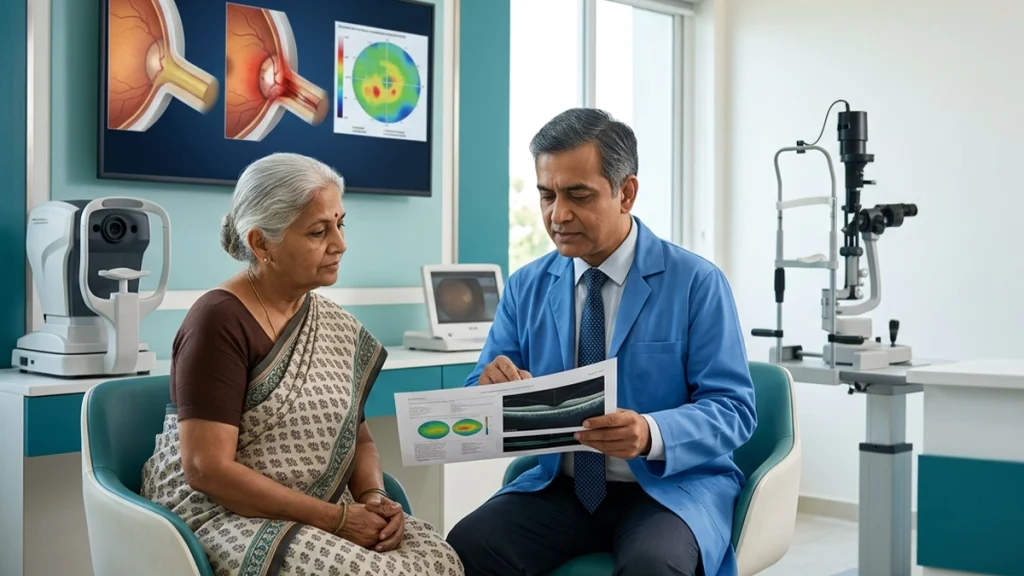
A diagnosis of glaucoma is not based upon a simple letter reading from an eye chart. May also include measurement of eye pressure, analysis of the optic nerve, study of the drainage angle, corneal thickness measurement, peripheral vision test and when required optical coherence tomography.
This layered assessment matters because glaucoma blindness cannot be predicted from eye pressure alone. We use repeat visual field tests and imaging of the optic nerve to determine if damage is stable or is getting worse before we begin or modify glaucoma treatment. Also follow up is very important because it is possible for an eye which reports no pain to actually be unstable.
Glaucoma Treatment Options
The aim of glaucoma treatment is to reduce eye pressure which in turn will slow further optic nerve damage. Reducing glaucoma blindness requires a pressure target suited to the individual eye. Also the put forth plan of action depends on the disease type, stage, rate of progress, general health and practical needs of the patient.
| Treatment Approach | How It Helps | What the Patient Should Know |
| Prescription eye drops | Reduce fluid production or improve drainage | Use them exactly as prescribed, even when the eye feels normal |
| Laser procedure | Improves drainage or opens a blocked angle, depending on the glaucoma type | Follow-up remains necessary, and additional care may still be required |
| Conventional surgery | Creates another route for fluid to leave the eye | It may be considered when pressure is not controlled adequately by other methods |
| Minimally invasive glaucoma surgery | Improves drainage through smaller procedures in selected patients | Suitability depends on the glaucoma type, severity and other planned eye surgery |
| Continuing monitoring | Tracks pressure, optic-nerve structure and visual-field changes | Appointments must continue because progression may remain silent |
Eye drops are a typical method of glaucoma treatment. Some meds reduce the production of fluid in the eye, others improve drainage. They do not usually cause an immediate improvement in vision which may cause people to question their value. What they do is to prevent further damage. The National Eye Institute reports that glaucoma eye drops had better be used as prescribed every single day which we can’t stress enough; if you stop using them vision loss may resume.
Laser is also a first line option or is used after drugs based on the diagnosis. For open angle disease laser trigeminal sympathectomy helps in improving fluid outflow. Also other laser procedures are used for angle closure. Surgery is recommended when eye drops and laser procedures do not achieve adequate pressure control. These procedures are mainstays of glaucoma treatment which is not the same as a patient failure.
Care is very personal. What we see in one person may be different from a single eye drop to multiple medications, laser procedures or even surgery. We aim to achieve a pressure which in turn protects the nerve head and will reduce glaucoma related blindness.
How to Prevent Blindness From Glaucoma
There isn’t a definite way to prevent everyone from getting glaucoma. But we can reduce the risk of going blind from it; also it may be that we can prevent blindness or at minimum reduce severe vision loss by catching the disease early, lowering eye pressure and to very closely monitor for progression. In glaucoma what we try to do is to prevent what is avoidable damage we don’t promise that the disease will not run in the family.
The initial step to prevent blindness is to have a comprehensive eye exam before symptoms present. At high risk groups regular testing is recommended which may be at shorter intervals this should be determined by an ophthalmologist. By the time side vision is visibly gone that is a sign that early detection’s benefit has been missed.
The second step in preventing blindness is to achieve full treatment adherence. Eye drops must be used at the prescribed time and the patient is to report to the doctor when the bottle is empty. It is best that patients bring to the doctor’s notice any side effects which they may experience instead of stopping treatment on their own. A medicine may be changed or dosed differently, but silent elevation of intraocular pressure should not go untreated.
At which point we have regular follow up. At each of these visits we check pressure, do nerve head scans and visual field tests which help the ophthalmologist determine if the present treatment is working to save the eye. If we see progression of the disease we may have to intensify treatment even when the patient reports they are doing fine. This is an ongoing process which is key to preventing glaucoma blindness.
Family health talk also plays a role in preventing blindness. If one person in the family is diagnosed with glaucoma it is important to get other close relatives in for an eye exam. This may be the talk that identifies another at risk family member before they experience any significant vision loss.
Patients also should not use steroid eye drops without medical supervision. Redness is a symptom of allergy, infection, dryness, inflammation or some other eye issue and use of the wrong medication may in fact delay diagnosis or raise eye pressure. Safe prescribing and pressure monitoring help address avoidable glaucoma causes.
Daily Habits That Support Glaucoma Care
Healthy routines which support overall eye and vascular health are great but they do not replace medical care or treat all forms of glaucoma causes. Also patients may put their eye drops into their routine at night, use phone reminders for when it is time to drop in their eyes, and make sure that the drop bottle does not touch the eye, the eyelid or fingers.
Consistency helps prevent blindness, however home remedies, dietary products, and supplements do not present an alternative to that which is prescribed by medical professionals. In fact people with diabetes or high blood pressure should see their physicians to do what is necessary in managing these conditions.
Living With Glaucoma
Fear of glaucoma blindness is understandable, but a diagnosis does not mean that blindness is inevitable. Many patients do in fact report that they are able to live full and independent lives when the issue is identified at an early stage and treated.
Patients must be made aware of the stage of their disease, their target eye pressure and the warning signs which require urgent attention. At the point of large vision loss, low vision rehabilitation, magnification devices, mobility aids and other assistive tools may improve independence until medical care is able to prevent blindness from progressing.
When to Visit an Eye Hospital
At age over 40, if you have a family history of glaucoma, are on long term steroids, have had eye trauma, present with high eye pressure or are told that your optic nerve is abnormal you should see an eye care professional for a full exam. Also get in to see about that which is an unexpected peripheral vision issue.
Seek prompt medical care for sudden very severe eye pain, redness, blurry vision, headache, nausea or halos around lights. Quick assessment may prevent blindness in cases of acute angle closure.
At our ASG Eye Hospital we have that an ophthalmologist will assess your eye pressure, look at the structure of your optic nerve, test your visual fields and determine the specific cause of your glaucoma before we present you with a personalized glaucoma treatment. We stress timely testing as it is key to preserving your useful sight and in reducing the chance of going blind from glaucoma blindness.
Conclusion
Glaucoma may present no pain at all, but it is true that glaucoma blindness is not a given. The best response to glaucoma blindness is to seek out timely and proven treatments as opposed to waiting for symptoms to become noticeable. Know what causes glaucoma, get in for full exams, start appropriate treatment at the first sign of issue and follow through with the care plan put out by your health care team which will help to protect your vision.
Do not delay until you develop tunnel vision or eye pain. If you have risk factors, a family history of eye disease or atypical exam results, see an ophthalmologist. Timely care offers the best opportunity to prevent blindness and preserve sight for daily life.
Frequently Asked Questions
1. Is glaucoma always caused by high eye pressure?
No. High intraocular pressure is a very large risk factor for glaucoma but some individuals present with optic-nerve damage when in fact they have normal measurable pressure. Also other glaucoma causes and variances in optic-nerve sensitivity should be taken into account.
2. Can glaucoma blindness be reversed?
Vision gone due to optic-nerve damage is usually permanent. Early glaucoma treatment is done to save what sight is left and to also reduce further glaucoma blindness.
3. Can glaucoma be completely prevented?
At times the disease is in an advanced stage by the time it is detected which we wish to avoid. We also aim to catch it early and to control eye pressure which in turn will prevent blindness or at minimum limit vision loss.
4. How often should glaucoma testing be done?
Testing frequency is based on age, family history, eye pressure, optic nerve appearance and prior exam results. An ophthalmologist will determine the proper interval.
5. Do glaucoma eye drops need to be used lifelong?
Many of the patients are in for the long term although we see some changes in medicines and procedures which may vary over time. Eye drops that do not present a risk to health should not be ceased without a consultation with the doctor of the eye.
6. Can steroid eye drops cause glaucoma?
Yes. Steroids do raise eye pressure in some people and they are known to be a cause of secondary glaucoma causes. They should only be used under medical supervision.
7. Does a family history guarantee blindness?
No. Family history is a risk factor but it doesn’t cause glaucoma blindness. Early and regular in depth eye exams are the answer.
8. Can diet or exercise replace medical treatment?
No. Healthy habits may support health in general however these are not a substitute for prescribed eye drops, laser treatment, or surgery if the doctor says they are needed.