Good vision is a result of more than just regular eye exams. What we put in our body supports the complex structures which enable us to see daily. Among minerals, zinc has drawn focus for its many roles in normal cell function and eye health.
Understanding the role of Zinc for Eye Health is true when it comes to the retina and age related changes in vision. Zinc is present in many foods and also is a component in some eye health supplements. But that doesn’t mean that the more zinc the better for your eyes.
Research reports on many of the Zinc Benefits, which in particular do age related macular degeneration (AMD) patients good. Also at the fore are Good Eye Nutrition, regular eye exams, and proper medical care which play a key role in a lifetime of Vision Health.
Why Is Zinc Important for Your Eyes?
Zinc is a mineral which the human body does not produce by itself. Therefore we have to get it from our diet which is from which I am to also include that when at a medical level it is appropriate to do so we use supplements.
When we speak of Zinc for Eye Health it is good to know that zinc is a component in many of our normal body processes. It plays a role in protein and DNA synthesis, cell function, immunity, and wound healing. These wide ranging Zinc Benefits also put into picture why it is important to have adequate zinc in your diet for health in general.
The eye is made up of many specialized tissues. The retina which lines the back of the eye converts light into signals that go to the brain. For support of good Retina Health a combination of nutrients is required instead of a single vitamin or mineral.
Healthy diet plays a role in Vision Health as we age. Zinc is a piece of that larger Eye Nutrition picture.
According to the National Institute of Health’s Office of Dietary Supplements report, zinc is an element for good health which also presents in many foods including meat, seafood, beans, nuts and whole grains.
How Zinc Supports Retina Health
The retina is constantly at work every moment that we have our eyes open. It has special cells which process incoming light and send visual information through the optic nerve.
Researchers are that Zinc for Eye Health out as zinc is found in ocular tissues and plays a role in key cellular processes. Thus it is that which may be had to put in good Retina Health.
It is critical to separate nutritional support from disease treatment. The Zinc Benefits should not be taken to mean that it cures retinal diseases.
A diet rich in a variety of foods is what we should aim for in terms of Eye Nutrition. This means to get your nutrients from food sources and at the same time to manage your diabetes, blood pressure, smoking and other health issues which are relevant.
Regular eye exams also play a key role in long term Vision Health, as we get older.
Zinc and Age-Related Macular Degeneration
Age related macular degeneration affects the macula, the center part of the retina that is responsible for detailed central vision. AMD can interfere with tasks such as reading, recognizing faces and driving.
Much of what has drawn in interest for Zinc for Eye Health is from the Age Related Eye Disease Studies which are known as AREDS and AREDS2.
The National Eye Institute reports that the AREDS and AREDS2 supplement formulations reduced the risk of progression from intermediate to advanced AMD by about 25%. Zinc formed part of those formulations alongside other nutrients.
This issue has been at the core of AMD Prevention discussion but in terms of which words to use care is advised. AREDS2 supplements do not prevent AMD in people that do not have the right stage of disease. They may help to slow progress in some patients which already have AMD.
Thus the which we have identified as Zinc Benefits are for zinc in the context of a full nutritional formula. We cannot say from that which we have presented that taking zinc by itself will prevent AMD.
For persons who are worried about Retina Health an ophthalmologist can determine the stage of AMD and also which AREDS2 formulation is right for you.
What Research Says About Zinc and AMD
| Research finding | What it means for patients |
| AREDS/AREDS2 formulas contain zinc with other antioxidants and nutrients | Zinc should not be viewed as the only active nutrient |
| AREDS/AREDS2 reduced progression from intermediate to advanced AMD by about 25% | Certain diagnosed AMD patients may benefit |
| AREDS2 does not prevent AMD from developing | Supplements are not universal AMD Prevention |
| AREDS2 includes zinc and copper | The formula was designed and clinically studied as a combination |
| Suitability depends on the stage of AMD | An eye doctor should guide supplement use |
The National Eye Institute also states that AREDS2 supplements contain zinc, copper, vitamin C, vitamin E, lutein and zeaxanthin.
Can Zinc Prevent AMD?
This is a very common issue in the discussion of Zinc for Eye Health.
We do not put forth zinc as a sure fire way to prevent AMD. The research does not support that zinc supplements will AMD Prevention. from showing up in healthy eyes.
Instead what the research shows is that specific AREDS or AREDS2 formulations are for certain stages of AMD. This does for patients what removes the option of them taking unneeded high dose supplements.
For better Retina Health we recommend a combination of medical care with healthy lifestyle choices. Appropriate Eye Nutrition may also play a role in this approach.
The National Eye Institute reports that which is the case for AREDS2 supplements, they do not prevent early AMD from turning into intermediate AMD. They do however have a role in people with intermediate AMD or certain types of late AMD.
That is what made us say AMD Prevention should not be of a do it yourself affair with zinc supplements.
Best Dietary Sources of Zinc
For most healthy people, food provides a practical way to maintain appropriate zinc intake.
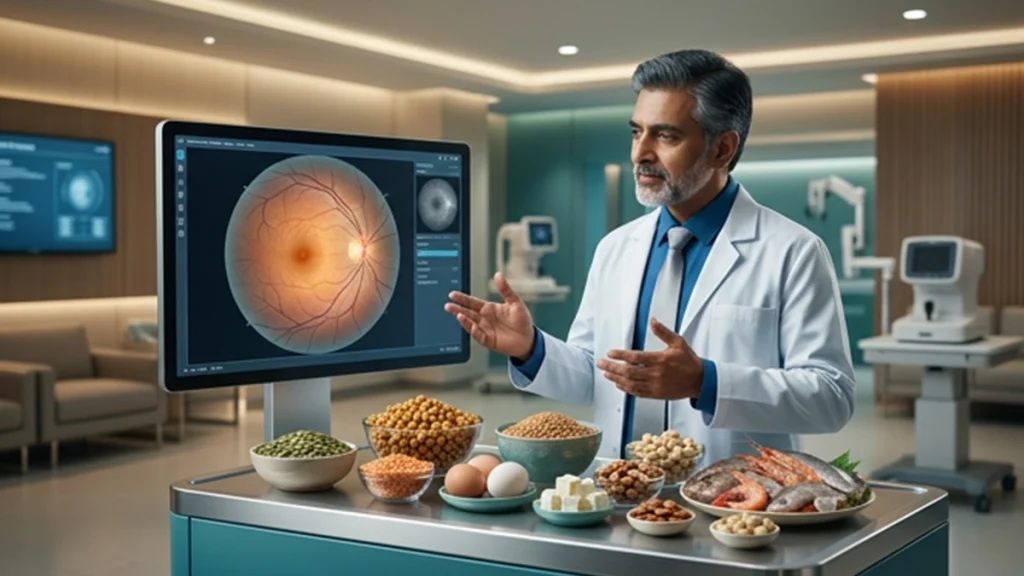
Foods that are high in zinc may be included in a balanced Eye Nutrition plan. Good sources are oysters and other sea food, meat, poultry, dairy products, beans, nuts, whole grains and fortified foods.
A wide range of foods supports Vision Health. We see that the eyes use many vitamins, minerals, antioxidants, proteins and healthy fats.
Zinc Sources and Their Role in a Balanced Diet
| Food group | Examples | Eye Nutrition consideration |
| Seafood | Oysters, crab and fish | Can provide zinc along with other nutrients |
| Meat and poultry | Chicken and different meat preparations | Common dietary zinc sources |
| Pulses | Lentils, chickpeas and beans | Useful plant-based options |
| Nuts and seeds | Cashews, pumpkin seeds and similar foods | Easy additions to a varied diet |
| Dairy foods | Milk, curd and cheese | Can contribute zinc and protein |
| Whole grains | Whole wheat and fortified cereals | Helpful as part of balanced meals |
For Indian families, there is no need for a costly or complex diet of Zinc for Eye Health. A mixed meal plan can provide zinc and at the same time support in general Vision Health.
Zinc Deficiency and Vision
Zinc deficiency is a result of low intake which in turn may also be caused by poor absorption in the body. Also some health conditions may play a role in increasing the risk of deficiency.
The full range of Zinc Benefits includes support for normal immune function, growth, wound healing and cellular processes.
People must not diagnose zinc deficiency by itself from an eye issue. Blurred vision, night time blindness and other visual issues are but a few of the many causes.
When eye sight changes do not try to treat it yourself with supplements get an eye exam which gives better info on Retina Health and overall Vision Health.
Good Eye Nutrition is great for the eyes, that said it does not replace a diagnosis.
Should You Take Zinc Supplements for Eye Health?
Not all of us require supplements for Zinc for Eye Health.
If you eat a variety of foods and do not have a diagnosed issue or related eye disease, you may not see any additional benefit from extra zinc. High dose supplementation also causes issues.
The NIH reports that high levels of zinc can lead to nausea, dizziness, headaches, gastric issues, and in which also there is little to no appetite. In the long term, continuous high intake may cause disturbances with copper levels in the body as well as present other health issues.
Also, it is important to note we don’t recommend that patients take large doses of Zinc Benefits which is why they should not act on that alone without first consulting a health care provider.
People who are looking into supplements for AMD Prevention should first in for an eye exam. The ophthalmologist will see if AMD is present and what stage it is at.
This personalized approach which in turn protects Retina Health and wider Vision Health.
Zinc, Copper and AREDS2 Supplements
People out there which research into Zinc for Eye Health report that in AREDS2 products there is also included copper in addition to zinc.
In the developed formula copper has been included as a result of the high amount of zinc present. Also of note patients should not try to create their own version of the AREDS2 supplement from separate high dose products.
In terms of what is known from research on Zinc Benefits in AMD it is of note that they are related to certain groups of nutrients. These must be looked at in the clinical setting.
For patients with AMD it is best to follow an ophthalmologist’s advice which may not always agree with what is put forth in Eye Nutrition advertising.
Also at the core of Retina Health. is appropriate treatment and care.
Who Should Be More Careful With Zinc Supplements?
Patients which are taking daily medicines, have chronic health conditions, or which already are on multiple supplements should speak with a health care professional before adding zinc.
Some drugs may interact with zinc and large unnecessary doses may cause nutritional imbalances.
Pregnant women, older adults and people on restricted diets also may have different nutritional needs. Their Eye Nutrition plan should reflect overall health instead of just AMD Prevention.
The aim of Zinc for Eye Health is to achieve a state of adequate nutrition which in turn will see better results as compared to excessive supplementation.
This approach presents a safer way to approach the issue of which Zinc Benefits may present itself and at the same time will protect over all Vision Health.
Eye Nutrition Is More Than Zinc
No one food item is responsible for perfect eyesight.
What we do have is that Retina Health is a result of many variables which include age, genetics, general health, smoking background, metabolic health and nutrition.
A healthy Eye Nutrition plan includes lots of vegetables, fruits, pulses, whole grains, proteins, nuts and other high in nutrients foods when appropriate.
Zinc is included in this diet, also for AMD Prevention we must pay attention to changeable risk factors and also we do regular eye exams.
Patients that have diabetes, hypertension or a family history of retinal issues may require more frequent care.
For long term Vision Health, early detection is as important as diet.
When Should You Visit an Eye Doctor?
Nutrition is very important but do not manage symptoms with supplements alone.
See an ophthalmologist if you note persistent blurry vision, distorted central vision, new dark spots, trouble reading, changes in color perception or sudden loss of vision.
An ophthalmologist may look at the macula and also check in on the Retina Health of patients that present at our clinic.
This is very true for the older adult who is looking at options like Zinc for Eye Health which they see as a way to AMD Prevention after they have noticed some visual changes.
At ASG Eye Care we perform eye exams that may note issues with the retina, lens, optic nerve, cornea or any other component of the eye. Our clinical notes from the exam will in turn inform the best course of treatment, what follow up may be necessary and also may play a role in the advice we give out on what Eye Nutrition may be of benefit
Conclusion
The issue of that which is related to Zinc for Eye Health and age related eye disease is of great import, but also of which we should be aware is that context. Zinc plays a role in normal body functions and also is a part of the AREDS2 formula which is used for certain patients with AMD.
The best Zinc Benefits do not mean that zinc alone will prevent retinal disease. For proper AMD prevention we require a broad risk management approach while for diagnosed AMD regular monitoring and appropriate treatment is required.
Balanced Eye Nutrition, annual eye exams and prompt medical care present a better approach to Retina Health.. We put this forward as a plan which also reports to support long term Vision Health.
If you have noticed changes in central vision or are worried about AMD, in that case schedule an eye exam with ASG Eye Care before you begin on any eye health supplements.
Also Read :
10 Best Juices for Eye Health, Best Diet Plan for Healthy Eyes and Vision, Vitamin A for Eye Health,
Top Eye-Healthy Foods Every Child Needs, Vitamin B12 Deficiency and Blurred Vision, Vitamin C for Eye Health, Omega-3 for Eye Health
Frequently Asked Questions
1. Is zinc good for eyesight?
Adequate zinc is for normal body function and also a component of healthy Eye Nutrition. In terms of research which looked at Zinc for Eye Health within AREDS for AMD it is noted. But also it is important to note that zinc alone does not guarantee better eyesight.
2. Does zinc improve Retina Health?
Zinc is a component of normal cell function and also is present in eye tissue. We see that a proper diet which includes zinc is good for Retina Health, but at the same time we must note that supplements of zinc do not treat retinal disease.
3. Can zinc prevent macular degeneration?
Zinc by itself has not been proven to be a universal AMD Prevention. AREDS2 supplements may slow progression in some people with AMD, but they do not stop the disease from developing.
4. What are the main Zinc Benefits for the eyes?
The most studied Zinc Benefits are in AREDS and AREDS2 which may reduce the risk of advanced AMD in certain patients.
5. Which foods contain zinc?
Sea which include fish, meat, fowl, milk products, pulses, beans, nuts and whole grains are sources of zinc. Also they play a role in balanced Eye Nutrition and general Vision Health.
6. Should everyone take zinc supplements for eye health?
No. Zinc for Eye Health does not mean that which is for all people. You should take supplements only when your health care provider identifies a nutritional or medical need.
7. Can too much zinc affect health?
Yes. Excessive zinc may lead to health issues, also it may disrupt copper metabolism. Do not take high doses without professional advice.