
Vision is a product of the eye, optic nerves, and brain all functioning as they should. As vitamin B12 is a player in nerve health and red blood cell production, the topic of Vitamin B12 for Eye Health is very relevant. While large scale deficiencies may at times play a role in visual issues we should note that it is not the common cause of Blurred Vision.
This guide goes over the issue of Vitamin B12 Deficiency in relation to eyesight, we present the symptoms which require attention, the role of diet, testing, treatment and Eye Care. Also we look at the reason why Eye vitamins should not in fact be used as a substitute for a proper diagnosis.
What Does Vitamin B12 Do?
Vitamin B12 also known as cobalamin is a component in DNA production, health of red blood cells and the normal function of the central nervous system. Also it supports myelin which is the protective material around many nerves. These functions are what account for the discussion of Vitamin B12 for Eye Health related visual issues which is mostly for prevention not a cure for spectacle power, cataracts or retinal disease.
Good Optic Nerve Health is a result of good nutrition, circulation, metabolic health, and also free from inflammation, compression, toxins, or inherited disease. Vitamin B12 is but one element of that. Thus Eye Vitamins play a role as a nutritional supplement when deemed appropriate by a medical professional, which is not to say they are a substitute for an eye exam.
Can Vitamin B12 Deficiency Affect Vision?
Yes. Severe and persistent Vitamin B12 Deficiency in some people may cause vision problems. The NHS reports visual problems as a possible complication and MedlinePlus notes that B12 related neurological disease may present with optic nerve damage, reduced acuity of vision, abnormal pupil responses, and other changes.
In this setting, what has brought Vitamin B12 for Eye Health to the forefront of clinical care is that correction of a deficiency may prevent progression of nerve damage. That said Blurred Vision is rather a symptom which in most cases is associated with refractive error, dry eye, cataract, diabetes, migraine, medication issues, retinal disease, and other eye conditions. At present blood work is not enough for diagnosis of which issue is present.
How Can Low B12 Affect the Optic Nerve?
The optic nerve has a composition of over one million nerve fibers which transfer visual info from the retina to the brain. At any point in this system damage may occur which in turn may impair vision in one or both eyes.
When B12 deficiency causes optic neuropathy a person may see progressive painless loss of visual acuity, reduced central vision, color discrimination issues, or lower visual contrast. Protecting Optic Nerve Health requires prompt evaluation rather than independently increasing a supplement dose.
The issue of Vitamin B12 for Eye Health and nerve function is key which is that neurological changes may happen before we see signs of anemia. NIH reports that nerve symptoms may present without the development of megaloblastic anemia and that early diagnosis is of great importance because some damage may be permanent.
Possible Warning Signs
| Possible change | What it may indicate | What to do |
| Gradual unclear vision in one or both eyes | Refractive, surface, retinal, optic nerve, metabolic, or neurological causes | Arrange a comprehensive eye examination |
| Reduced colour brightness or central clarity | Possible optic nerve involvement among several causes | Seek prompt ophthalmology assessment |
| Tingling, numbness, poor balance, weakness, or memory changes with visual symptoms | Possible neurological effects of Vitamin B12 Deficiency or another condition | Consult a physician and eye specialist |
| Sudden vision loss, flashes, a curtain-like shadow, severe pain, or new weakness | An eye or neurological emergency | Seek urgent medical care |
| Fatigue, pale skin, palpitations, or a sore tongue with visual complaints | Possible anaemia or nutritional deficiency | Ask a doctor about blood tests and clinical assessment |
The table is a guide, at best do not take it as a diagnosis. Vitamin B12 for Eye Health is not to be used as a self treatment option. If you experience sudden Blurred vision, vision loss, severe pain, new flashes or floaters, or weakness on one side of the body seek evaluation immediately.
Who Is at Higher Risk?
Some people have enough B12 yet cannot absorb it. Causes include pernicious anemia, low intrinsic factor, from which I’ve also got a couple examples we also have reduced gastric health in that is related to a type of surgeries, coeliac disease, Crohn\’s disease, and long term usage of certain medicines like metformin and proton pump inhibitors. Also at play here are some issues which present as a result of normal aging.
Vegans see an increased risk as natural sources of B12 are mostly in animals. Fortified foods or medical supplements may be required. In this case Vitamin B12 for Eye Health plays a role in overall health which is also true for when you are tired, have tingling, balance issues, or a change in vision.
Previous stomach surgery, chronic digestive illness, restrictive eating, and long term medication use should be brought up in medical and Eye Care consultations. What we identify as the cause is key because dietary deficiency and poor absorption may require different treatment approaches.
Why Can Symptoms Appear Slowly?
The body has a large reserve of B12 which is why signs of Vitamin B12 Deficiency may not present until after many years. Slow change is often attributed to stress, age, screen use, or a new pair of glasses.
This issue is that Vitamin B12 for Eye Health should be included in the full clinical history. A person may not see Blurred Vision as a symptom of a larger issue like numbness, poor balance, tiredness, or memory changes but in fact that combination of symptoms may in fact present the indication for appropriate testing.
How Is Deficiency Diagnosed?
Assessment starts out with symptoms, diet, medical history, medicines and physical examination. We may run a full blood count and B12 level. If results are at the border line or don’t match the symptoms we may do a methylmalonic acid and homocysteine test. NIH reports that it is very sensitive in which case age and kidney function play a role in interpretation.
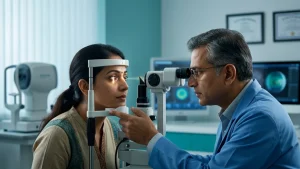
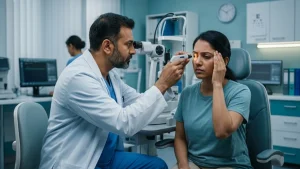
For Blurred Vision an ophthalmologist may evaluate visual acuity, spectacle power, color vision, pupils, retina, optic nerve, eye pressure, and visual fields as appropriate. Optic nerve health does not show in a vitamin report.
Can Treatment Improve Vision?
Treatment is based on the cause and degree of illness. B12 can be provided via the mouth or into the muscle, which is especially so when absorption is poor or there are neurologic symptoms. The dose, method, and duration of treatment should be determined by a health care professional. Government health guidelines report that we should identify and treat the root cause of the issue instead of using the same supplement for all.
Correct at the first sign which may in some cases stop progress of the disease and see some improvement in symptoms, but full recovery is not to be expected with long term damage. Vitamin B12 for Eye Health is thus best used in the early stages of the disease for proper treatment. It does not mean that Eye Vitamins will restore what has been lost.
Persistent Blurred Vision at this stage still requires a full Eye Care assessment even if a person is on B12 because there may be more than one condition present.
Food Sources and Practical Nutrition
Natural B12 also is mostly present in fish, meat, poultry, eggs, milk and milk products. Fortified cereals, nutritional yeast, and some plant based foods may help people that eschew animal products but the amount varies by product.
| Food or approach | Role in B12 intake | Practical point |
| Milk, curd, paneer, eggs, fish, poultry, and meat | Natural sources | Choose according to dietary preference and medical needs |
| B12-fortified cereals or plant products | Useful in vegetarian and vegan diets | Check the label because fortification varies |
| Prescribed oral B12 | May suit dietary deficiency and selected absorption problems | Follow the advised dose and duration |
| B12 injections | Bypass intestinal absorption | May be considered for malabsorption or neurological symptoms |
| General Eye Vitamins | May contain B12 and other nutrients | Do not use them to treat unexplained vision loss |
A healthy diet is a good source of Vitamin B12 for Eye Health, but it may not correct pernicious anemia or serious malabsorption issues in which case. For these issues, over the counter Eye Vitamins may not be strong enough or may give you a false sense of security.
Are Eye Vitamins Necessary for Everyone?
No. Eye vitamins don’t for all that wear glasses, use computers for long hours, or have eye strain. Refractive error, dry eye, cataract, glaucoma, retinal disease and optic nerve disorders require different care.
The value of Vitamin B12 for Eye Health is seen to be greatest when deficiency or some other definite issue is present. Unnecessary supplements do not in fact address all causes of Blurred Vision. Good Eye Care also includes routine eye exams, diabetes and blood pressure management, protection from ultraviolet rays, smart screen time, and reporting of new symptoms.
When Should You See an Eye Doctor?
Arrangement of an eye exam is recommended when vision is blurred, colors appear dim, reading is a struggle, or if one eye does not seem like the other. Go to the emergency room if there is sudden vision loss, severe pain, a curtain or shadow comes over your vision, flashes of light with many floaters, double vision which may come with weakness, or a sudden severe headache.
Tell the doctor if you have a history of vegan or vegetarian diet, gastric surgery, digestive disease, anemia, metformin use, acid suppressing meds, tingling, numbness, poor balance, or memory changes. We use this information to assess your Optic Nerve Health and to determine if input from a physician, neurologist, or hematologist is also needed.
At ASG Eye Care we see that an ophthalmic assessment is a tool to determine what the root cause of a visual issue is which may include spectacle power, the ocular surface, lens, retina, optic nerve, or some other element of the visual path. Also we look into Vitamin B12 for Eye Health when the history and physical exam point us in that direction which isn’t to say it will always present with obvious symptoms.
Conclusion
Vitamin B12 for Eye Health as the vitamin supports normal nerve function and we see that in serious deficiencies which may in some cases affect the optic nerve. That said most cases of Blurred Vision have other causes, and supplements should not put off a medical exam.
People who have chronic visual changes, neurological issues, digestive issues, are on restrictive diets, or which take into account medications that affect absorption should see a doctor. Timely testing, appropriate replacement and ongoing Eye Care is key to general health and Optic Nerve Health. Choose Eye Vitamins as a part of a health care professional’s plan
10 Best Juices for Eye Health, Best Diet Plan for Healthy Eyes and Vision, Vitamin A for Eye Health,
Top Eye-Healthy Foods Every Child Needs, Vitamin B12 Deficiency and Blurred Vision, Vitamin C for Eye Health, Vitamin E for Eye Health
Frequently Asked Questions
1. Can Low B12 Cause Blurred Vision?
A serious or persistent shortage of which is atypical in comparison to other causes does occur in cases of Vitamin B12 Deficiency which should be confirmed by a physician also an ophthalmologist will do an eye check up.
2. Is Vitamin B12 Good for Eyesight?
Vitamin B12 for Eye Health supports normal nerve function in which case the body is at a sufficient level. It does not correct visual acuity issues, reverse cataracts, or include all retinal problems in its scope of care. Its role is more critical in cases of deficiency that affect Optic Nerve Health.
3. What Visual Symptoms May Occur?
Possible symptoms of these issues include a gradual onset of blurred vision, reduced central visual acuity, altered color perception, or lower contrast. As many diseases present with the same signs and symptoms professional Eye Care evaluation is required.
4. Can Deficiency Permanently Damage the Optic Nerve?
Untreated neurological damage at times does not revert. Best chance of stopping it in its tracks is with early treatment which is what we see with Vitamin B12 for Eye Health and Optic Nerve Health which should be put to the test right away.
5. Which Tests Are Commonly Used?
Doctors may put in use serum B12, complete blood count, methylmalonic acid, homocysteine, and selected antibody tests. Vitamin B12 Deficiency does not present reliably from eye symptoms alone.
6. Should Vegetarians Take Supplements?
Some vegans and many vegetarians will require fortified foods and supplements. What is right for the body may depend on the diet, age, blood results, pregnancy, medicine use, and absorption. Eye vitamins do not replace professional medical advice.
7. How Quickly Can Eyesight Improve After Treatment?
Recovery from nerve injury is a variable process which depends on the degree, length of time and area of the injury. Some will see improvement in their condition, while in some the symptoms will be permanent. Vitamin B12 for Eye Health is a tool in the treatment plan but does not guarantee a full recovery.
8. Can I Take a B-Complex Tablet for Vision Blurring?
Do not dismiss unexplained vision changes to a B complex supplement alone. Eye vitamins may in fact not be the issue at hand which could delay a proper diagnosis of an eye or neurological problem from which you may be suffering.