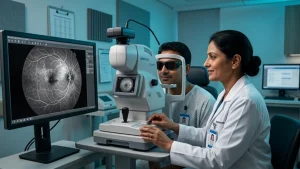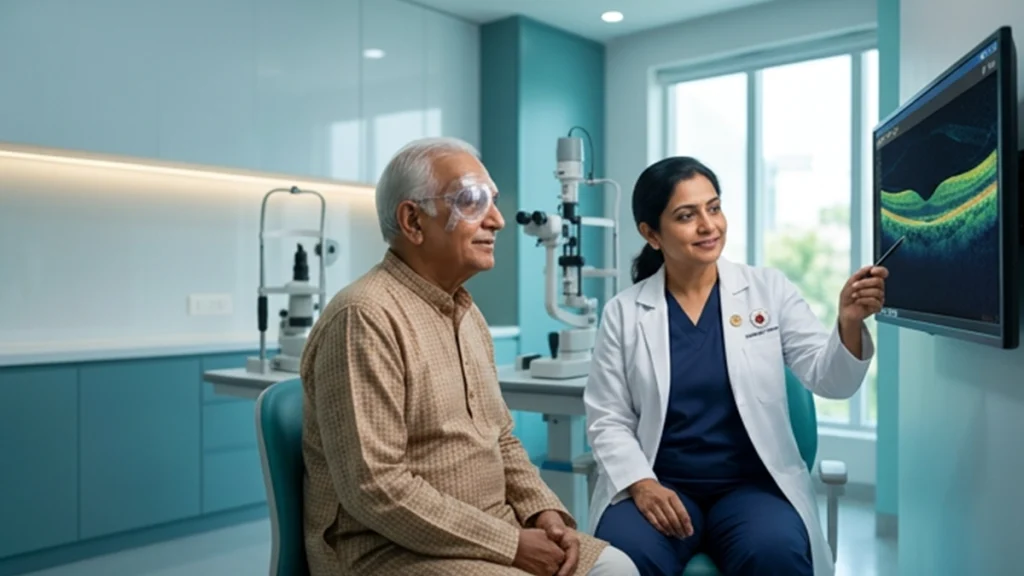
Retinal detachment is a condition where the light sensitive retina detaches from its support structure. Surgery is performed to reattach the retina and to seal the tear, but the healing process continues post op. Careful post retinal detachment surgery recovery care is key to the success of the repair and to reduce the risk of secondary issues.
No two patients’ healing processes will be the same. What the type of retinal detachment is, if the macula was affected, the operation that was performed, and the use of gas or silicone oil can play a role in recovery from retina surgery recovery. We also see that individualized prescriptions for medication, head position, activity and review which in turn support retinal detachment care is what also allows the doctor to watch vision recovery very closely.
How Retinal Detachment Surgery Affects Recovery
Retinal detachment can be treated by pneumatic retinopexy, scleral buckling, vitrectomy, laser, cryotherapy or a combination of these. In pneumatic retinopexy we use a gas bubble, in scleral buckling we attach a sponge or rubber band to the outside of the eye, and in vitrectomy we remove the vitreous gel which is then replaced with air, gas or silicone oil. The National Eye Institute reports that which treatment is used depends on the location and extent of the detachment.
The operation performed will dictate retinal detachment surgery recovery. In some cases we see patients with internal gas bubbles which require strict postures and travel restrictions, others which have a scleral buckle may present with temporary discomfort or a change in spectacle power. It is important to note that what we put online is not a substitute for the individual retinal detachment care plan given to you by your retinal surgeon.
What to Expect After Retinal Detachment Surgery
Blurred vision, redness, tearing, foreign body sensation, mild to moderate pain is experienced in initial days after surgery. What was operated on may be less clear at the time with the presence of gas, air or silicone oil. National Eye Institute reports redness and swelling may present as long as several weeks post vitrectomy and that in turn will cause a blurry picture during this period of healing.
Temporary blur does not always mean that the surgery has failed. Inflammation, dilating drops and an internal bubble can delay early vision recovery. Severe pain, increase in redness, discharge or sudden loss in sight should never be dismissed as part of the routine healing process.
Retinal Detachment Surgery Recovery Timeline
The below is a general guide. Your surgeon’s instructions take preference as retinal detachment surgery recovery does vary by procedure and condition of the retina.
| Recovery stage | What may be experienced | Main care priority |
| First 24–48 hours | Blurred sight, watering, redness, soreness and light sensitivity | Use the shield and prescribed drops, avoid rubbing and attend the first review |
| First week | Cloudy vision; a gas bubble may appear as a moving line or dark area | Follow the prescribed head position and keep soap, dust and dirty water away |
| Weeks 2–6 | Gradual reduction in redness and discomfort | Increase activity only after approval and avoid prohibited exertion |
| Following months | Sight may continue to change as the retina and macula recover | Attend retinal checks and report new flashes, floaters or shadows |
Many patients see an improvement at the 6 week mark, but full vision recovery may take a few months. NHS reports that blurry vision and a tender red eye may last 2 to 6 weeks in which case, the National Eye Institute reports that improvement may not be seen until a few weeks post op. It is recommended that the progress of retina surgery recovery be assessed in follow up exams rather than by comparing with another patient.
Use Prescribed Eye Drops Correctly
Post operative drops also can control inflammation, reduce the chance of infection and lower intraocular pressure. Their proper application is key to retinal detachment surgery recovery. Prior to using, wash and dry your hands, also to the bottle tip which should not touch the eye or the eyelashes and also to the intervals between each drop as advised. Do not discontinue steroid drops without instruction.
Avoid over the counter redness remedies, herbal solutions and left over drugs. These products may irritate the healing eye or disrupt treatment. For safe retinal detachment care get in the practice of checking in with your doctor about every eye product you use.
Follow the Prescribed Head Position
Avoid over the counter redness remedies, herbal solutions and left over drugs. These products may irritate the healing eye or disrupt treatment. For safe retinal detachment care, get in the practice of checking in with your doctor about every eye product you use.
Correct posture may be challenging, but it is an element of retinal detachment surgery recovery which may go well. Supportive pillows or special positioning equipment may help. At Cambridge University Hospitals we tell patients to adhere exactly to the position and time as given by your consultant in which the required posture will depend on the repair. Report to the surgeon if you have issues with neck, back, breathing or mobility that makes the posture difficult.
Never Fly With a Gas Bubble in the Eye
Air travel and excursions to high altitude are dangerous so long as there is a gas bubble in the eye. At higher pressures which we experience at high altitudes the bubble may expand which in turn may raise intra ocular pressure which is very dangerous. Until the ophthalmologist says the bubble is gone do not fly or go to the mountains.
Patients should also report to any doctor or anesthetist before another procedure that the bubble is present in the eye. The National Eye Institute also says to avoid air travel and high altitudes during retina surgery recovery which has gas in the eye. This is a very important step in retinal detachment care even when the eye is doing better.
Protect the Operated Eye
Do not rub, press or sleep on the operated eye. Follow through with the protective shield as prescribed. In the early stages of retinal detachment surgery recovery keep soap, shampoo and unclean water away. May also want to avoid swimming, eye make up, dusty work and smoky environments for a while.
Sunglasses reduce the risk of bright light damage but are not a substitute for protection. Clean hands, a clean pillow case and careful handling support in retinal detachment care by reducing irritation and contamination.
Rest, Movement and Daily Activities
Rest is useful initially, but complete bed rest is not usually required unless prescribed. Gentle walking may be allowed, while deep bending, straining, heavy lifting and high-impact exercise are often restricted. Ask when household work, the gym or physical employment can resume.
Depth of field may be impaired during retinal detachment surgery recovery as one eye may be blurred. Use handrails, go slow on stairs and get assistance on uneven ground. Gradual return to activity supports retina surgery recovery which in turn does not put much stress on the healing eye.
Reading, Screens, Work and Driving
Reading, TV, and mobile use generally doesn’t cause damage to a repaired retina but may cause discomfort when the eye is inflamed or dilated. Begin briefly and stop if discomfort increases. Screens must not interfere with post your postures, drop use or rest.
Time out of the office is a variable which depends on the job at hand and job requirements. The National Eye Institute reports that for some vitrectomy patients we may see a 2 to 4 week mark for going back to work, although that is a very individual thing. You may resume driving only once the ophthalmologist has determined that your clarity, depth perception and field of vision have returned to adequate levels. Safe return to work protects vision recovery as well as total retina surgery recovery.
Understanding Changes in Vision
A gas bubble may produce the effect that one’s eye is seeing through water at times after an op. As it shrinks in size which at time will see a mobile horizontal line out of the corner of your eye. As time progresses the clear area increases as the normal eye fluid replaces that of the gas.
The degree of vision recovery is very much a function of whether the macula detached and for what duration. Also after a successful reattachment of the retina some degree of distortion, reduced contrast or a different prescription may still be present. Realistic expectations are supported by retinal detachment surgery recovery which does not see sharp sight returning right away.
Warning Signs During Recovery
Contact your ophthalmologist or go to the emergency eye care facility right away for severe pain which is getting worse, sudden vision loss, redness that is quick to progress, discharges that are pus like, persistent nausea with eye pain, new floaters, a shower of what may look like little insects in your field of vision or a new curtain like shadow. The National Eye Institute reports sudden floaters, flashes and a new curtain or shadow as signs of retinal detachment.
Do not put off your next appointment if symptoms present out of the blue. Early assessment is key to retinal detachment surgery recovery as at that stage we may be able to deal with recurrent detachment, infection, bleeding or pressure changes which may require urgent care.
Eye Care After Surgery
| Care area | Recommended approach | Avoid |
| Medicines | Use every prescribed drop at the correct time | Skipping doses or using unapproved remedies |
| Positioning | Maintain the exact posture advised by the surgeon | Changing position based on general online information |
| Activity | Rest initially and increase activity after clearance | Heavy lifting, straining and vigorous exercise |
| Hygiene | Keep hands clean and protect the eye from soap and dirty water | Rubbing the eye, early swimming and eye makeup |
| Travel | Confirm that any gas bubble has fully resolved | Flying or high-altitude travel with gas present |
| Follow-up | Attend every scheduled retinal examination | Missing reviews because the eye feels better |
A steady routine is what you want over trying to speed up the healing process. Good retinal detachment care is key in the repair, also having a family which administers the eye drops, helps with positioning and manages travel makes for a better retina surgery recovery.
Follow-Up and Long-Term Retinal Care
Follow up visits for retinal detachment surgery recovery will have the ophthalmologist check retinal attachment, eye pressure and inflammation, adjust medicines and to also monitor for cataract, scar tissue or silicone oil. Do not skip your post op reviews which are very important even when pain and redness has gone away. These checks are what will guide your vision recovery over time.
The other eye is also to be examined as some risk factors affect both. In terms of etinal detachment care we include knowing the warning signs and to have dilated retinal exams at the interval that the doctor advises.
Retinal Care at ASG Eye Care
At ASG Eye Care our retinal specialists perform post op exams of the repaired retina, give postoperative care instructions and monitor the healing. Each patient’s case is different which is why individual advice is important in retinal detachment surgery recovery . it varies according to the type of surgery, tear location, macular involvement and what we put in the eye.
Bring in your discharge report, medicine list and past reports. Talk about your work, travel and daily routines so the ophthalmologist may give you practical tips on retina surgery recovery and set realistic expectations for vision recovery.
Conclusion
Using as prescribed eye drops, keeping the head in the proper position, protecting the eye from pressure and infection, avoiding travel which is unsafe and attending all follow up visits are the basics of retinal detachment surgery recovery. A patient with an intraocular gas bubble must not fly or go to high altitude until the surgeon reports that the bubble has gone.
Recovery should not be hurried or measured against someone else’s experience. Following a personalised retina surgery recovery plan, maintaining consistent retinal detachment care and reporting warning signs early give the repaired retina its best chance of staying stable while supporting meaningful vision recovery. For advice tailored to your operation and symptoms, speak with a retinal specialist at ASG Eye Care.
Frequently Asked Questions
1. How long does retinal detachment surgery recovery take?
Initial healing from retinal detachment surgery recovery is usually a few weeks’ time, but full recovery may take many months. The type of procedure, the severity of the detachment, macular involvement and the use of gas or silicone oil play a role in determining the timeline.
2. When will vision become clear after retinal surgery?
Sight usually goes through a period where it appears blurred as a result of inflammation, drops and also an internal bubble;Vision recovery does not always come about quickly; it may be some time up to a few months before it begins to gradually present itself and continue on that path. Also if the macula was involved you may still see some distortion and less than perfect clarity.
3. Is face-down positioning always necessary?
No. The prescribed posture is based on the retinal tear’s location and the internal support used. Follow the position which was chosen for your retinal detachment surgery recovery, even when another patient is given different instructions.
4. Can I sleep normally after surgery?
Ask which is the safe position for the surgeon. For patients with gas or oil the back and operated side should be avoided at night. Proper sleep position can support retina surgery recovery by keeping the bubble over the repaired area.
5. Can I use my phone or watch television?
Limited use of screens is a go when it is comfortable but do not let it interfere with postures or rest. If it causes more discomfort, reduce use. Screen time is not a substitute for your prescribed retinal detachment care.
6. Can I fly after retinal detachment surgery?
Do not fly with gas present in the eye. At altitude the bubble may expand which in turn raises eye pressure sharply. Air travel may resume only after the retinal surgeon reports it is safe during retinal detachment surgery recovery.
7. Is blurred sight normal after the operation?
Temporary blurring is a known issue, especially with gas or silicone oil. Sudden onset of symptoms, new floaters, many flashes or a shadow like curtain in the field of vision requires prompt evaluation to protect vision recovery.
8. When can I exercise again?
Gentle walking may be permitted early on. Heavy lifting, straining, and vigorous exercise, however, require medical clearance. Since each retina surgery recovery plan is individual, the restrictions vary.
9. Can the retina detach again?
In some patients, the retina can detach again. Long-term care includes follow-up examinations, along with promptly reporting flashes, floaters, shadows, or sudden blurred vision retinal detachment care.