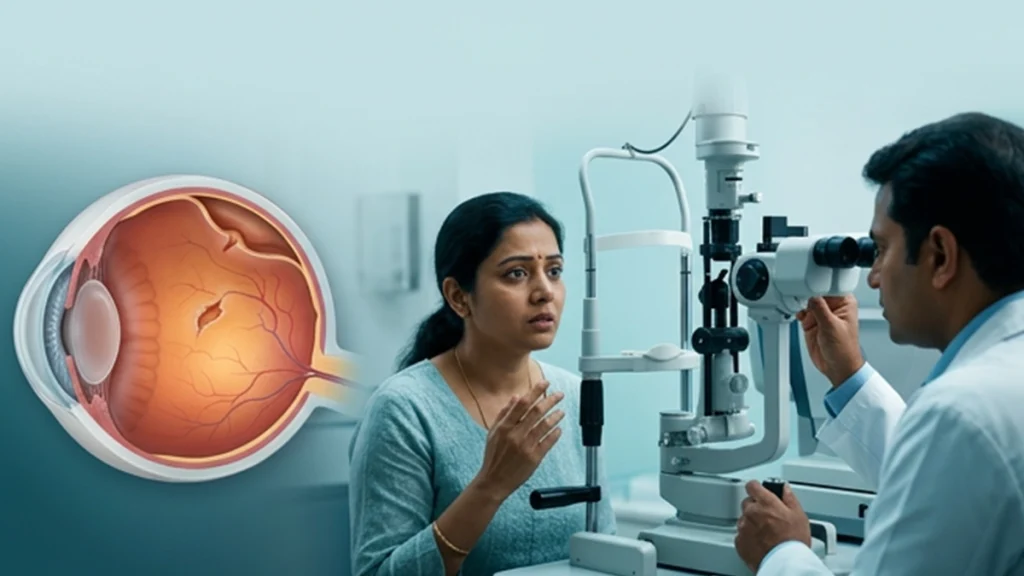
Sudden changes in vision are a cause for concern, in particular when you see new spots, flashes or shadows. To be able to tell between a retinal tear vs retinal detachment is to better recognize when to get urgent care. Both of these conditions affect the retina which is the light sensitive tissue at the back of the eye. What they do in the eye and the extent of the issue is what sets them apart.
What Is the Difference Between a Retinal Tear and Retinal Detachment?
When it comes to retinal tear vs retinal detachment what we find is that the retina’s position does in fact change. A torn retina is a result of a break or opening that forms in the retinal tissue. This may be a cause as the vitreous gel within the eye detaches from the retina. Retinal detachment is the issue of the retina pulling away from the normal position. Also fluid may build up under a torn retina which in turn may cause the retina to fully detach.
| Condition | What Happens? | Main Concern |
| Retinal tear | A break or hole develops in the retina | It may progress to retinal detachment |
| Retinal detachment | The retina separates from the back of the eye | It can threaten vision and requires urgent care |
The retinal tear vs retinal detachment distinction matters because treating a tear early may help prevent further separation.
What Symptoms Should You Watch For?
The symptoms of retinal tear vs retinal detachment do in fact overlap. There is one large tell tale sign which is sudden flashes and floaters that present as spots, strands, cobwebs, or small forms within your field of vision. Also you may see flashes of light which come and go like very bright short flares or streaks.
A torn retina can present as a sudden large amount of flashes and floaters. Also, some people report a change to blurred vision. In the case of retinal detachment symptoms tend to become more apparent. You may see a dark curtain or a shadow moving in your vision. Also it is common to have a reduction in side vision, and at the same time experience blurred vision in part of your visual field. It is important to note that retinal detachment does not usually cause pain. A painless eye does not at all rule out a serious retina emergency.
| Symptom | Possible Concern | Recommended Action |
| Sudden flashes and floaters | Vitreous change or retinal tear | Seek urgent eye assessment |
| Dark curtain or shadow | Possible retinal detachment | Seek emergency eye care |
| Sudden loss of side vision | Possible retinal detachment | Treat as a retina emergency |
| Long-standing, unchanged floaters | Often less urgent | Discuss during an eye examination |
When Is It a Retina Emergency?
When evaluating between retinal tear vs retinal detachment, it is a risk to wait for symptoms to go away. The U.S. National Eye Institute reports that retinal detachment is a medical emergency. If you notice sudden new floaters, flashes, or a curtain like shadow in your field of vision seek medical care right away.
Not all episodes of flashes and floaters are a sign of retinal detachment. These symptoms also present in Posterior Vitreous Detachment which is a more common issue as we age. That said PVD at times does cause a torn retina. For that reason it is best to see an ophthalmologist at the onset of sudden symptoms which you may or may not have had before.
How Are Retinal Tears and Detachments Diagnosed?
An ophthalmologist which is what you would see for a case of retinal tear vs retinal detachment does a dilated eye exam. Dilation of the pupil in this case gives the doctor a better view of the retina. In some cases we may turn to other imaging options for more info. Ultrasound or optical coherence tomography may be used when required.
If doctors diagnose a torn retina we may use laser treatment or cryotherapy for that issue. In the case that retinal detachment is present, surgery may be required. As it stands to which treatment is used it will depend on the retina issue’s location, extent, and type.
Who May Have a Higher Risk?
The risk of retinal tear vs retinal detachment may increase with severe myopia, history of retinal detachment, eye injury, cataract surgery, and certain retinal diseases. Age related changes in the vitreous also play a role in the development of retinal issues. People with these risk factors should watch for sudden flashes and floaters or changes in peripheral vision.
Conclusion
Understanding the distinction between retinal tear vs retinal detachment is important in the care of sudden vision changes. In a retinal tear the retina has a break, in retinal detachment the retina peels away from its normal position.
Sudden flashes and floaters, blurred vision, loss of side vision, or a curtain like shadow are not something to ignore. These symptoms may in fact be a sign of a retina emergency. At once getting in to ASG Eye Care or a qualified health care professional can do much to determine the cause and what is the best treatment.
FAQs
1. Can a retinal tear turn into retinal detachment?
Yes. Fluid can go through a torn retina and pool under it. This causes the retina to detach from the back of the eye.
2. Are flashes and floaters always dangerous?
Also many have what are called harmless floaters. While these are normal, sudden onset of new flashes and floaters which also if they increase in number quickly should be checked out as they may be a sign of a retinal issue.
3. Is retinal detachment painful?
Retinal detachment typically does not cause pain. While sudden vision changes may not be accompanied by pain, they should be reported to a medical professional immediately.
4. What should I do if I see a curtain over my vision?
Go to see emergency eye care services. A dark curtain of vision loss is also a sign of retinal detachment which is a retina emergency.
5. Can doctors treat a retinal tear before detachment occurs?
Yes. Per the tear’s location and size an ophthalmologist may suggest laser treatment or cryotherapy to mend it up and to also reduce risk of further damage.
Reference links
- National Eye Institute (NIH) – Retinal Detachment https://www.nei.nih.gov/eye-health-information/eye-conditions-and-diseases/retinal-detachment