Retinal degeneration is a progressive issue which results in the damage or loss of cells in the light sensitive tissue that lines the back of the eye, what’s known as the retina. The retina is that which translates that light, which is then sent as a signal to the brain. So as a result of retinal degeneration a person may have issues of impaired central vision, side vision, dark adaptation, or color perception. In some forms this issue will present slowly and in others a more immediate care plan needs to be put in place.
What Is Retinal Degeneration?
Retinal degeneration is a group of related conditions. They include issues from aging, genetic conditions, high myopia, inflammation, vascular issues, and other retinal diseases. In age related macular degeneration for example the macula may thin out over time. The National Eye Institute reports that in dry age related macular degeneration which is a form of it the macula thins out and may progress slowly over a number of years. Inherited retinal diseases present in many ways. For instance retinitis pigmentosa causes slow breakdown of retinal cells and also affects night and peripheral vision.
People may see terms like retinal thinning, weak retina, retinal atrophy, or thin eye post scan. These terms do not mean the same thing. A scan may report on foveal thinning or local weak spots in the retina, but an ophthalmologist has to put that in context with the patient’s symptoms and eye history. Scleral thinning is of the outer wall of the eye which is a different issue from retinal degeneration.
Early Signs of Retinal Degeneration
Symptoms of retinal degeneration will depend on what area of the retina is affected. In the case of central damage you may see blurred or distorted vision, have trouble with reading, or identifying faces. Peripherally when the damage occurs side vision may be reduced. Also some inherited forms of retinal degeneration present first with poor night vision or a problem with the eyes’ adjustment to dark.
Sudden flashes of light, many new floaters, a shadow that appears as a curtain, or sudden vision loss are issues that require prompt medical care. These symptoms may in fact be of an acute retinal issue as opposed to that of a gradual retinal degeneration.
| Possible Retinal Change | What a Patient May Notice |
| Macular or foveal involvement | Blurred central vision or distortion |
| Peripheral involvement | Reduced side vision |
| Photoreceptor damage | Poor night vision or light sensitivity |
| Retinal atrophy | Gradual loss of visual detail |
What Causes Retinal Degeneration?
Several factors which may lead to retinal degeneration include age which affects the macula in older people, also there is that genes play a role, causing what is known as inherited retinal dystrophies. High myopia may stretch out the retina tissue in the back of the eye and also it has a relation to retinal thinning. Also inflammation, trauma, diabetes, and blood vessel problems may impact retinal health.
A weak retina or what appears to be weak spots in the retina does not in itself mean permanent vision loss. What we see and the cause of it is what counts. Also retinal atrophy may present for many reasons. Foveal thinning is an issue which requires close evaluation as the fovea is key to sharp central vision..
How Is Retinal Degeneration Diagnosed?
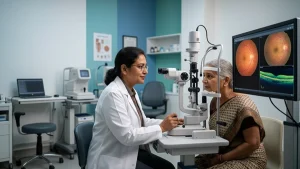
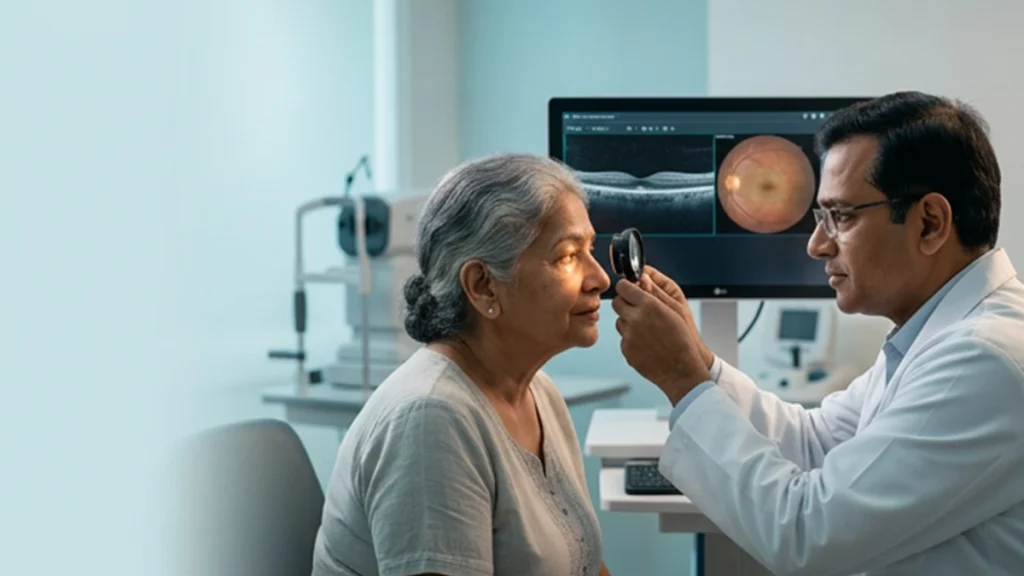
Doctors at present perform in depth eye exams and use retinal imaging for the diagnosis of retinal degeneration. Visual acuity tests determine what level of detail a person is able to see. Once the pupils are dilated we may use a special instrument to look at the retina directly.
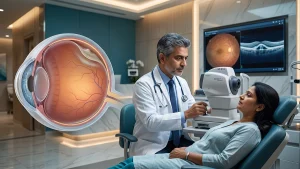
Optical coherence tomography which we will refer to as OCT produces transverse images of the retinal layers. It also identifies retinal thinning, foveal thinning, and areas of retinal atrophy. OCT is very much used in the assessment of retinal atrophy and structural retinal changes.
| Test | Why It May Be Used |
| Dilated eye examination | Examines the retina and macula |
| OCT scan | Shows retinal layers, thinning, fluid, or atrophy |
| Fundus imaging | Records retinal changes over time |
| Visual field test | Measures central and peripheral vision |
| ERG or genetic testing | Helps assess inherited retinal disorders |
Fundus imaging may help doctors compare changes over time. Visual field testing can identify areas of reduced vision. Electroretinography and genetic testing may also help when inherited retinal degeneration is suspected.
Treatment for Retinal Degeneration
Treatment of retinal degeneration is based on its cause. We do not have a single treatment that fits for all patients. Some people only require regular follow up and repeat scans. Others may require treatment for an underlying retinal condition, injections, laser procedures, surgery, low vision support, or genetic counseling.
The primary aim is to identify retinal degeneration at an early stage, to track any changes, and to treat complications when we can. Patients should not go out and begin use of supplements or eye drops at the word of a report which notes weak retina, retinal thinning, or thin eyes. An ophthalmologist is the person to see to determine if in fact treatment or follow up is needed.
Conclusion
Retinal degeneration does not affect everyone’s vision in the same way; the effects depend on its cause, severity, and location. Expressions including retinal thinning, retinal atrophy, foveal thinning, weak retina, and weak spots in retina require proper clinical interpretation, not self-diagnosis.
An in depth retinal exam and appropriate imaging is done to determine if changes are stable or progressive. If an eye scan points to retinal degeneration we refer to our ophthalmologist at ASG Eye Care which is to determine the cause and what the next step should be.
FAQs About Retinal Degeneration
- Can retinal degeneration be stopped?
Some causes of retinal degeneration we do treat and manage. But in some cases of inherited or age related conditions that may run in the family that is not always the case. We see early diagnosis as key in which at that point doctors are able to put together a monitoring plan and also determine the best course of care.
- Is retinal thinning the same as retinal degeneration?
Not always. We see that retinal thinning is a usual anatomic finding on imaging. Retinal degeneration which is damage or loss of retinal tissue may include thinning or atrophy.
- Does a weak retina always cause vision loss?
Not always. We see that retinal thinning is a usual anatomic finding on imaging. Retinal degeneration which is damage or loss of retinal tissue may include thinning or atrophy.
- Is scleral thinning the same as retinal thinning?
No. Scleral thinning affects the sclera, the eye’s outer coat. Retinal thinning, by contrast, involves the light-sensitive retinal tissue within the eye.
- When should I consult an eye specialist?
Persistent vision issues which include central or peripheral vision loss, degeneration of vision, and night vision impairment, as well as any unaccountable changes in vision also call for an eye exam. As for sudden vision loss or other acute retinal symptoms get in to see the doctor right away.