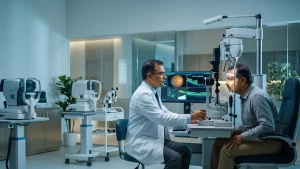
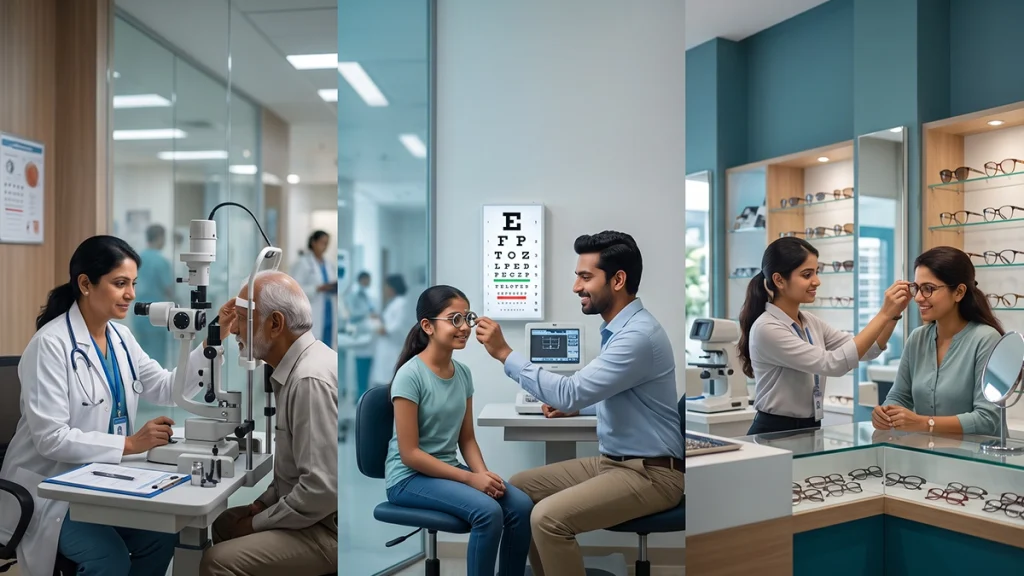
Your eyes are tired out, also your glasses may no longer fit right. You go to get help but then you get stuck. Should you see an optometrist, an optician or an ophthalmologist? The names sound alike and many people put them out of order. This guide puts each in simple terms. Also we tell you which to see which to avoid wasting time or money.
What Does an Eye Specialist Mean?
Let’s look at what an eye specialist meaning is. An eye specialist is any health professional that takes care of your eyes. But not all eye specialists do the same work. In the field of eye care we have three roles and each is different.
According to the National Eye Institute, we see that there are two main types of eye doctors. Also we have the optician which is a third party that you go to for the right glasses. Thus the full spectrum of eye specialist meaning includes all three of them, but only one of them is a medical doctor.
What Is an Ophthalmologist?
People ask what is an ophthalmologist. In India an ophthalmologist is a medical doctor. They first get a MBBS, then go on to train for years in eye care through an MS, MD or DNB which they obtain. This in depth training which they go through allows them to treat any and all eye problems.
An ophthalmologist does the evaluation of your eyes, diagnoses disease and prescribes treatment. Also they do surgery. The National Eye Institute reports that we have access to treatments which optometrists don’t. Some ophthalmologists also specialize in a single area which may be glaucoma or diabetic retinopathy.
When asked what is an ophthalmologist is, the short answer is that it is a doctor for your eyes which does it all from a basic eye exam to a complex surgery.
What Does an Optometrist Do?
An optometrist is a trained eye care professional which in India has a 4 year degree in the field of optometry. They test vision, determine the power of your glasses and fit contact lenses. Also they screen for early signs of eye disease.
If a problem is identified by an optometrist they refer you to an ophthalmologist for treatment. Many which are common like short sight and long sight fall into the categories of refractive and vision disorders. An optometrist handles these with the right glasses or lenses.
What Does an Optician Do?
An optician does not do the work of a doctor. The National Eye Institute reports that it is the optician’s job to use your prescription to put you in the right pair of glasses or contacts. They are the ones that help you choose frames, take measurements and fit lenses. Also they repair and adjust your glasses.
This is the point at which we see the confusion between optician vs optometrist. While they both work with glasses the roles are different. The optometrist does the eye test and writes the prescription. The optician then takes that info to make and fit the glasses. So in which is which between optician vs optometrist the former does the eye test and the latter works on your specs.
| Professional | Training | What They Do | Can I Do Surgery? |
| Ophthalmologist | MBBS plus MS, MD or DNB | Diagnose, treat, prescribe medicines, operate | Yes |
| Optometrist | Degree in optometry | Test vision, prescribe glasses, screen eyes | No |
| Optician | Training in lens fitting | Make and fit glasses and contacts | No |
The table above sums up optician vs optometrist and the doctor’s role at a glance.
Ophthalmologist vs Optometrist: The Key Difference
In the ophthalmologist vs optometrist debate it is mainly around one issue. An ophthalmologist is a medical doctor which means they are able to treat disease and perform operations. An optometrist on the other hand does vision tests and prescribes glasses. While they both do full eye exams, only the ophthalmologist can perform surgery.
Think of this. For routine eye issues either profession will do. In case of a serious problem you will need an ophthalmologist. That is the easy way out for the layman in choosing between an ophthalmologist vs optometrist for day to day issues.
When Should You See an Eye Doctor?
Knowing when to see an ophthalmologist will protect your sight. The National Eye Institute reports to take in an eye doctor if your vision goes blurry. Also go if your eyes are red, swollen or painful. Also at that time if you can’t see clearly even with your glasses on.
Other signs that you should when to see an ophthalmologist. include when you have sudden flashes of light, notice many new floaters, or a dark shadow in your field of vision. Also if you have diabetes or a family history of glaucoma you should be getting regular eye exams. In which case you should go to a full eye hospital which will be able to do the testing and treatment.
| Your Situation | Whom to See | Why |
| Need new glasses or a power check | Optometrist | Quick vision test |
| Want new frames or lenses fitted | Optician | Makes and fits your glasses |
| Red, painful or swollen eyes | Eye doctor | May need medicines |
| Sudden blur, flashes or floaters | Eye doctor | Needs urgent care |
| Cataract, glaucoma or diabetes | Eye doctor | Needs medical or surgical care |
What Happens During a Full Eye Check?
A full eye exam can take some time so we ask that you plan for it. The team will test your vision, check your eye pressure and look at the back of your eye. At times we use drops to widen your pupils. Our guide to eye exam explained we walk you through each step.
Conclusion
Now you know what each does. The optician fits your glasses, and the optometrist does the power check. An ophthalmologist is the one to see for eye disease and also for surgery. We have put this out there for you to see which is which of eye specialist meaning and thus which to see. If you are not sure when to see an ophthalmologist,, start with a full check up at ASG Eye Hospital. We have a team of great doctors and optometrists under one roof. Book an appointment and let our expert ophthalmologist take care of your eyes.
Frequently Asked Questions
1. What is an ophthalmologist in simple words?
What is an ophthalmologist? A medical doctor that deals with all issues related to the eye including surgery.
2. Ophthalmologist vs optometrist: who should I see first?
For a routine check either will do. In the choice between ophthalmologist vs optometrist, pick the doctor for pain, disease or surgery.
3. What is the difference between an optician vs optometrist?
In the field of eye care, optician vs optometrist perform eye tests and opticians fit and provide glasses.
4. What does the eye specialist mean?
The term eye specialist meaning includes anyone trained in eye care. In practice it refers to an eye doctor.
5. When to see an ophthalmologist urgently?
Know when to see an ophthalmologist Go at once if you have sudden vision loss, eye pain or a dark curtain over your sight.