At the end of your day your eyes may react the next morning. Screen marathons, bad sleep, dry air, contact lens abuse, and over the counter remedies may all play a role. Good Night Eye Care isn’t just about closing your eyes and sleeping. It is about developing a pre bed time routine which supports clear vision and full recovery.
The issue of Sleep and Eye Health is also very important. Your eyes are at work for hours focusing, blinking, adjusting to light, and using digital devices. Give them the rest they deserve which in turn will reduce dryness and eye strain. A few changes to your Night Eye Care routine may really pay off.
Why Does Night Eye Care Matter?
Poor Night Eye Care practices can leave your eyes dry, heavy, irritated, or tired. Screen time is a large factor. The National Eye Institute reports that extended use of computers, tablets, and smart phones play a role in dry eye which is in part because people blink less while using screens.
Healthy choices for Sleep and Eye Health give your eyes a break from that constant close work. Also they reduce your exposure to Blue Light and extended focusing before bed.
| Nighttime Habit | Possible Effect | Better Habit |
| Long phone use in bed | Dryness and Eye Strain | Reduce screen time before sleeping |
| Sleeping in contact lenses | Irritation or infection risk | Remove lenses before bed |
| Rubbing tired eyes | Increased irritation | Rest the eyes instead |
| Direct fan or AC airflow | Greater dryness | Keep airflow away from the face |
Using Your Phone Until You Fall Asleep
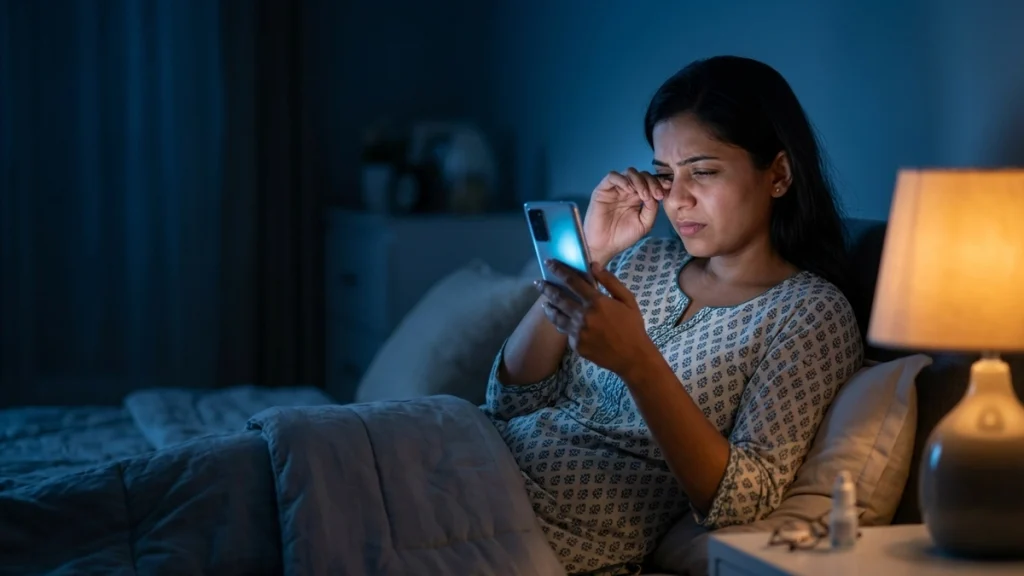
Late night use is the greatest issue in terms of Night Eye Care. As you use a phone for a while at night, you tend to blink less. This causes dryness and eye strain.
India’s National Health Mission reports that which you put in bed has a negative effect on vision and sleep quality. Also they note that continuous screen use without breaks may cause severe eye strain.
This connection also puts forward the issue of importance of screen control for Sleep and Eye Health. We see that which of the things you do like reducing brightness, limiting late night scroll time, and putting away the phone before bed may in fact be better Night Eye Care.
People also report that they are worried about Blue Light from smartphones. What we see is that Blue Light does affect alertness and sleep timing, but that it has not been proven the retina is damaged by routine device use which we do in fact do. For practical Night Eye Care what we should do is reduce the time we spend on screens which is more useful than to be afraid of Blue Light itself.
Sleeping With Contact Lenses
Sleeping in contact lenses that have not been approved by a medical professional is harmful to your Night Eye care routine. Your cornea requires oxygen, also extended wear may increase the risk of irritation and infection.
Before bed is the time to take out your contacts which is good for Sleep and Eye Health also gives your eyes a rest. If your eyes were already uncomfortable from wearing contacts all day, sleeping in them can make Eye Strain or dryness much worse.
Rubbing Your Eyes at Night
People have a tendency to rub their eyes when they are sleepy or itchy. But as a matter of fact repeated rubbing does in fact make the irritation worse. Better Night Eye Care is about not putting pressure on sensitive eye tissues.
Persistent itchiness may be due to allergies, dry eye, or some other issue as a result of Eye Strain. Also in Support of Good Sleep and Eye Health we put forward that you get your symptoms checked out instead of just rubbing your eyes into the ground.
Bright Screens in Dark Rooms
In a dark room which is totally devoid of light, a bright screen stands out greatly. You are constantly shifting between the bright image and the dark background which in turn increases visual discomfort and eye strain.
Reduce lowering screen brightness and using mild night time lighting is for better Night Eye care. Also Night mode features may reduce Blue Light exposure which in turn makes evening screen use a more comfortable experience.
| Better Evening Habit | Eye Health Benefit |
| Take regular screen breaks | Helps manage Eye Strain |
| Reduce screen brightness | Improves visual comfort |
| Limit Blue Light before bed | May support a calmer bedtime routine |
| Remove contact lenses | Supports safer Night Eye Care |
| Get adequate sleep | Supports Sleep and Eye Health |
The National Eye Institute reports that it is important to give your eyes periodic rest during computer use. We recommend the 20-20-20 rule which is to look at something around 20 feet away for 20 seconds every 20 minutes. Also use this tip during evening screen sessions which in turn will improve your Night Eye Care routine.
Can Lack of Sleep Affect Your Eyes?
Yes. Inadequate rest can leave the eyes feeling tired or out of comfort. Also from the U.S. National Institutes of Health research we find that dry eye has a connection to poor sleep quality. Thus it is worth maintaining regular Sleep and Eye Health routines which may in turn see improvement in your dry eye symptoms.
Conclusion
Healthy eyes do better with good nighttime practices. Try to break up long screen time, which includes reducing blue light exposure, also don’t forget to avoid eye rubbing, take out your contact lenses, and get enough sleep which in turn will reduce excessive eye strain.
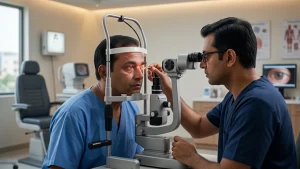
Consistent use of Night Eye Care improves Sleep and Eye Health and also provides your eyes with valuable recovery time. If you still experience dryness, redness, blurred vision, pain, or persistent Eye Strain while using Night Eye Care, visit an eye specialist at ASG Eye Care for a proper examination.
FAQs About Night Eye Care
1. Can using a phone at night cause eye strain?
Yes. Long term use of electronic devices causes eye strain, dry eyes, headaches, or blurred vision. For Better Night Eye Care we recommend you take breaks and avoid excessive scrolling before bed.
2. Is blue light from phones dangerous?
Normal blue light exposure does not have proof that it causes permanent retinal damage. Instead we see that reducing blue light and screen brightness at night may support better sleep and eye health.
3. Should I sleep with contact lenses?
You should not go to bed with your contact lenses in unless your eye doctor says it is alright. Take them out for better Night Eye care and to reduce eye irritation.
4. Why do my eyes feel tired after waking up?
Poor sleep, dry air, prolonged screens, dry eye, or uncorrected vision problems may contribute. Persistent morning Eye Strain deserves an eye examination.
5. How can I improve sleep and eye health?
Reduce your late night screen time, take visual breaks, manage blue light, remove contact lenses, stay hydrated, and get enough sleep. These do for better Sleep and Eye Health which in turn improves your daily Night Eye Care.
References
National Eye Institute, U.S. National Institutes of Health – Dry Eye
https://www.nei.nih.gov/eye-health-information/eye-conditions-and-diseases/dry-eye
National Eye Institute – Keep Your Eyes Healthy
https://www.nei.nih.gov/eye-health-information/healthy-vision/how-eyes-work/keep-your-eyes-healthy