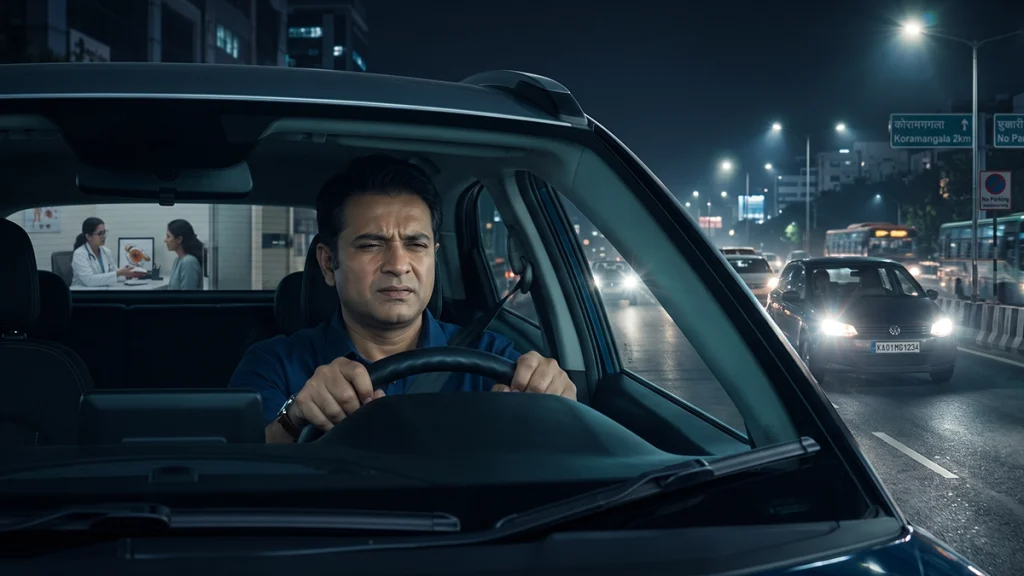
You leave the office after the sun sets and head out for the drive home. An oncoming car will flash its head lights at you for a second which leaves you seeing nothing. Street lamps are bright and road signs are fuzzy. Many adults over 40 notice their night driving vision getting worse with each passing year. This guide goes over seven common reasons and five solutions which work.
What Glare, Halos and Starbursts Really Mean
Glare from headlights is what causes a sharp loss of sight of the road for a second. Halos around lights are soft rings which surround street lamps and car lights. Starbursts around lights are thin rays which shoot out from a bright point. These are caused by something in the eye which scatters light instead of focusing it in a normal fashion.
Also some people have issues with seeing in dim light. This is what they term night blindness. It is not total darkness they are unable to see in, it is that their eyes take longer to adjust and they do not see as much detail in the dark.
7 Reasons Your Night Driving Vision Is Getting Worse
The primary and most common reason is a cataract. As we age our natural lens inside the eye slowly goes cloudy. MedlinePlus reports that early signs are glare from head lights, halos around lights and trouble seeing at night. Many people report that they notice their night time driving vision is going which is a result of this cloudy lens.
The second cause is an old or incorrect prescription. Even a small change in power will blur fine detail at night. Uncorrected astigmatism also causes starbursts around lights. MedlinePlus reports that nearsightedness is a very common and treatable cause of night blindness.
The third cause is dry eye. A patchy tear film which is like a smudged window scatters light. Many people notice more halos around lights after long screen time or in air conditioned cars. The fourth cause is surprising. Dirty or scratched windshields, glasses and headlights which scatter light before it ever reaches your eyes.
The fifth cause is diabetic retinopathy. High blood sugar damages the tiny blood vessels in the retina. Over time this may blur vision and make low light driving harder.
The seventh reason is vitamin A deficiency. It is rare, but it can cause night blindness. Too much vitamin A can also harm you, so ask a doctor before taking supplements.
| Reason | What You Notice | Can It Be Treated? |
| Cataract | Glare, halos, dull colours | Yes, with surgery |
| Old or wrong glasses | Blur, starbursts | Yes, with new glasses |
| Dry eye | Halos that come and go | Yes, with drops and care |
| Dirty glass or windshield | Smeared glare | Yes, with cleaning |
| Diabetic eye damage | Blurred or patchy vision | Yes, if caught early |
| Certain medicines | Poor night vision | Often, with a doctor’s help |
| Vitamin A deficiency | Night blindness | Yes, under medical advice |
Cataract and Night Driving: What You Should Know
Many people keep driving at night with cataract for months before they get help. At first we see that brighter home lights and new glasses help a little. But a cataract will continue to grow, also no drop or diet will do away with it. MedlinePlus reports that only surgery is the solution for cataract. Doctors will recommend it once the cataract starts to impact daily activities like reading or driving.
Driving at night with cataract is risky because glare can blind you at the worst moment. Modern cataract surgery replaces the cloudy lens with a clear artificial one. Many patients who felt their night driving vision getting worse say it feels new again afterward.
5 Fixes That Actually Help
The first fix is a full eye exam. We do a check-up to find out the real cause of your night driving vision getting worse. Your doctor will update your power, test for cataract and check out your retina.
As for the second fix, we have anti-reflective coating for your glasses. It reduces reflections and softens starbursts around lights. Also, skip the yellow tinted “night driving” glasses. They reduce the light which in turn may make things worse.
The third fix is to keep glass clean. Wipe the inside and outside of your windscreen every week. Clean your glasses daily and replace worn wiper blades. The fourth fix is to adopt better driving practices. Look to the left edge of the road when a car approaches, do not stare into its lights. Dim your dashboard lights and reduce speed on unlit roads.
The fifth fix is treating the cause. That might mean surgery, dry eye drops or better diabetes control. People who drive for work after dark need extra care. Our guide on eye care for night workers shares more tips for cab drivers, delivery riders and shift staff.
| Fix | How to Do It | Best For |
| Full eye exam | Book a yearly check after 40 | All causes |
| Anti-reflective coating | Ask for it on your next glasses | Glare and reflections |
| Clean glass | Wipe windshield weekly, glasses daily | Smeared glare |
| Smarter habits | Look left, dim the dashboard | Oncoming headlights |
| Treat the cause | Surgery, drops or sugar control | Cataract, dry eye, diabetes |
When to See an Eye Doctor
Book a visit if you notice your night driving vision getting worse over a few months. See a doctor quickly if glare from headlights suddenly feels stronger in one eye. Sudden vision loss, eye pain or flashes of light need urgent care.
Conclusion
Seeing your night driving vision getting worse can feel scary, but you can usually fix it. Most causes, from night blindness to driving at night with cataract, respond well to treatment. Do not accept night driving vision getting worse as a normal part of ageing. At ASG Eye Hospital, our doctors can find the cause and help you drive safely again. If you have noticed your night driving vision getting worse, book a check today.
Frequently Asked Questions
1. Why is my night driving vision getting worse after 40?
Ageing lenses, early cataracts and old prescriptions are the causes of night driving vision getting worse after 40.
2. Can glasses reduce glare from headlights?
Yes. The right power with an anti-reflective coating reduces headlight glare. Tinted night glasses usually do not help.
3. Are halos around lights dangerous?
By themselves. But new halos around lights can signal cataract, so get your eyes checked.
4. What causes starbursts around lights?
Astigmatism and cataract often cause starbursts around lights. Correct glasses or surgery usually help.
5. Is driving at night with cataract safe?
As the lens clouds with cataract, night driving gets riskier. Ask your doctor whether it is time for surgery.
References
- Cataracts, MedlinePlus, U.S. National Library of Medicine
https://medlineplus.gov/cataract.html - Night blindness, MedlinePlus Medical Encyclopedia, U.S. Nati
https://medlineplus.gov/ency/article/003039.htm