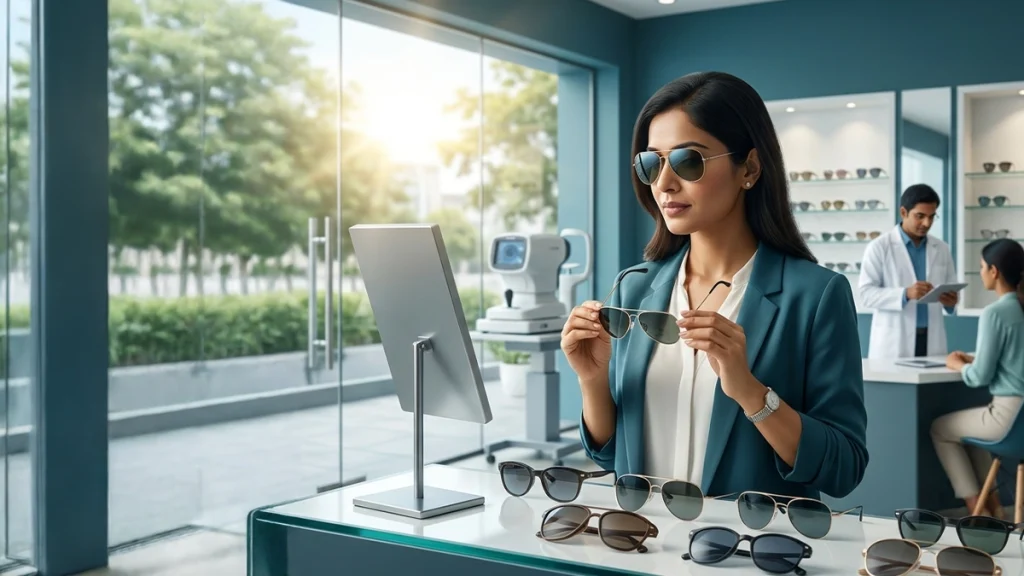
Sunglasses are known for their shape, color, or style. But that is only the tip of the iceberg in terms of what they do. What is not apparent is that good sunglasses also protect against harmful UV rays, improve visual comfort in bright conditions, and in general improve Eye Safety. In choosing the Best Sunglasses for Eyes you must pay more attention to issues of lens protection, fit, coverage, and intended use as opposed to looks alone.
Sun light has out going ultraviolet radiation which over time affects the eyes. That is why it is important to wear UV protection at all times, not just in the summer. The Best Sunglasses for Eyes wear combine solid protection with easy wearability and a frame which you will want to wear daily.
Why UV Protection Matters for Your Eyes
Ultraviolet light which is out of range of what we can see with our eyes is a factor which with long term exposure will affect eye tissue. The National Eye Institute reports that the sun’s rays may play a role in eye issues which include cataracts. Some studies point to a connection between long term unprotected exposure and age related macular degeneration.
For improved eye safety, sunglasses should block 99% to 100% of UVA and UVB rays. Also look for labels which note UV400. In terms of choosing the best sunglasses for eyes’ protection, which also include appropriate UV protection, you may reduce your unnecessary exposure each time you go out.
Importantly it is a myth that dark lenses provide better UV protection. What you see through the lens mainly is a result of how much visible light is let in. A very pale tint which has certified UV protection may in fact be a better choice for eye safety than a very dark lens which does not properly filter out UV.
| What to Check | What to Look For |
| UV filtering | 99–100% UVA and UVB protection or UV400 |
| Frame coverage | Large or wraparound frames |
| Lens quality | Clear, distortion-free vision |
| Glare control | Polarized Sunglasses when useful |
| Comfort | Secure fit without pressure or slipping |
Look for 99–100% UVA and UVB Protection
When it comes to Best Sunglasses for Eyes protection don’t go by the price tag. Look for 99% to 100% UVA and UVB block or a UV400 rating. This level of UV Protection should remain your first priority.
Expensive sunglasses are not necessarily better. A pair that is mid price range which has proven UV Protection is enough for great Eye Safety. Also a costly fashion pair which does not have proper UV filtering may not in fact protect your eyes.
Are Polarized Sunglasses Better for Your Eyes?
Polarized Sunglasses reduce reflection from which you can see out on roads, water, sand and snow. For many this means that daily outdoor activity is more comfortable, especially while you are at the wheel or in the middle of reflective settings.
However, we see which features are different. That which is true of Polarized Sunglasses is they reduce reflected glare, also it is true that polarization by itself does not mean UV protection. Thus for Best Sunglasses for Eyes what we want is proper UV filtering to be present. Out of that you may choose polarization if in your lifestyle glare reduction is a benefit to you.
| Sunglass Feature | Main Benefit | Useful For |
| UV400 lenses | Strong UV Protection | Everyday outdoor use |
| Polarized Sunglasses | Reduce reflected glare | Driving, beaches and water activities |
| Wraparound frames | Reduce light entering from the sides | Extended outdoor exposure |
| Prescription sunglasses | Correct vision while reducing sunlight exposure | People who require prescription lenses |
Choose a Frame That Provides Good Coverage
Frame choice is important for eye safety. Large frames and wraparound styles which in turn, have a better performance at blocking out sun rays that enter from on top and at the sides of the glasses. This is especially true near reflective surfaces like water, sand, or concrete.
The Best Sunglasses for Eyes should also be very comfortable. Frames that keep slipping off your nose will leave your eyes exposed from different angles. Great coverage, comfort, and reliable UV Protection go hand in hand.
Choose Sunglasses According to Your Lifestyle
The right pair of sunglasses may change based on what you do outside. For drivers we recommend Polarized sunglasses which do a great job at reducing glare from roads and cars. Also for those that frequent the beach or spend a lot of time by water Polarized sunglasses are a better choice.
Children do also require protection. They should wear sunglasses that provide real UV protection instead of just dark or colored lenses. For daily outdoor activities, we may choose the Best Sunglasses for Eyes which in turn can turn sun protection into a simple daily routine for the whole family.
Can Dark Sunglasses Damage Your Eyes?
Dark lenses in and of themselves are not harmful. What does bring up a issue is when dark lenses do not provide adequate UV Protection. The FDA reports that lens color does not mean anything as to how well sunglasses block out ultraviolet radiation.
For quality eye safety choose the UV rating which is given for sunglasses instead of judging the protection by the lens color. The Best Sunglasses for Eyes will protect against UV rays no matter if their lenses are gray, brown, green or some other shade.
Conclusion
Choosing which pair of shades to buy isn’t just about which frame is the most fashion forward. At the Best Sunglasses for Eyes we provide you with the facts we give you UV protection that is for verified, we give you coverage that is comfortable, we give you clear vision and we pay attention to the features that suit your daily wear. Polarized Sunglasses we do recommend for when glare is an issue but at the end of the day UV block is non negotiable.
Wearing sunglasses as a regular practice when you are outdoors is an easy way to protect your eyes in the long term. If you are not sure which lenses best fit your prescription, lifestyle, or eye condition we at ASG Eye Hospital can help you choose the right option.
FAQs
1. What are the Best Sunglasses for Eyes?
The Best Sunglasses for Eyes block out 99 to 100% of UVA and UVB rays or have a UV400 rating. Also they should fit well and provide enough coverage.
2. Are Polarized Sunglasses necessary?
While polarized sunglasses aren’t a must for all people, they do greatly reduce reflected glare. They are very useful for driving and activities which bring you near water.
3. Does a darker lens provide better UV Protection?
No. Darker lenses do not necessarily provide stronger UV Protection. Always check the UV rating or product label.
4. Should children wear sunglasses?
Yes. Proper sunglasses play a role in protecting kids’ eyes during outdoor activities. Go for lenses which are proven to block out UV rays instead of toy or fashion sunglasses which do not have a given UV rating.
5. Can I wear sunglasses with contact lenses?
Yes. Even while contact lenses do block out some UV rays it is the sunglasses which provide extra Eye Safety by which also cover areas that lenses don’t.
References
National Eye Institute (NEI) — Protecting Your Eyes from the Sun’s UV Light
https://www.nei.nih.gov/research-and-training/research-news/protecting-your-eyes-suns-uv-light
U.S. Food & Drug Administration (FDA) — Tips to Stay Safe in the Sun: From Sunscreen to Sunglasses
https://www.fda.gov/consumers/consumer-updates/tips-stay-safe-sun-sunscreen-sunglasses