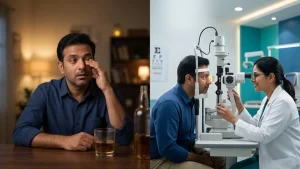
The human eyes are prone to various disorders that may affect vision and decrease the quality of life. Environmental factors and lifestyle choices play a significant role in eye health, but genetic makeup also plays a role. The genetic basis of eye diseases helps diagnose and manage these conditions. also enables the development of potential treatments and preventive measures.
Here we will discuss the complex world of genetic factors in eye conditions and genetic eye diseases that cause blindness and what that means for you.
What Role Does Genetics Play in Eye Disorders?
Genetic factors contribute to eye diseases in several ways:
- Inherited Conditions: Most eye diseases are inherited in a Mendelian fashion, thus leading to some clear patterns of inheritance. For example, autosomal-dominant diseases like retinitis pigmentosa and Leber congenital amaurosis are heritable within families and caused by mutation at the single gene level.
- Complex Traits: Some blinding eye diseases result from the interaction of multiple genes and environmental factors. For instance, age-related macular degeneration and glaucoma have some genetic background but are also affected by lifestyle.
Inherited Eye Diseases
- Retinitis Pigmentosa: Retinitis pigmentosa represents a wide group of hereditary genetic eye diseases, the key symptom of which is progressive retina degeneration. RP can result from gene mutations RHO, RPGR, and RPE65. The mutation leads to loss of photoreceptors, resulting in night blindness and peripheral vision loss. Advances in genetic testing have made it possible to identify specific gene mutations, which can aid in diagnosis and inform potential gene therapy options.
- Leber Congenital Amaurosis (LCA): LCA is an autosomal recessive and severe congenital retinal dystrophy. It occurs at birth or during early infancy due to gene mutations (GUCY2D and RPE65). Kids suffering from LCA have profound loss of vision and are practically blind within a few years of age. Gene therapy research is undergoing promising treatments in this regard by correcting the defective genes.
- Stargardt Disease: Stargardt disease is a form of juvenile macular degeneration characteristically seen in adolescence or early adulthood. In most cases, it stems from a mutation in the ABCA4 gene. This disorder brings about the progressive loss of vision and impairment in central vision due to an accumulation of toxic by-products in the retina. Confirmation of diagnosis can be made through genetic testing, and studies for targeted therapies are ongoing.
Complex Genetic in Eye Diseases
- Age-Related Macular Degeneration (AMD): AMD is the most common cause of vision loss in the elderly and results from genetic and environmental risk factors. The genetic susceptibility points to variations in genes, including CFH and ARMS2. The influence of these genetic variants on the immune system and retinal health finally leads to the development of AMD. Lifestyle influences, such as smoking and diet, are also critical factors in the progression of the disease.
- Glaucoma: Glaucoma is a group of eye disorders that may cause progressive damage to the optic nerve, usually due to increased intraocular pressure. The condition is known to possess genetic risk factors for its occurrence. As a result, genetic mutations in the MYOC gene, which encodes myocilin, and in the CYP1B1 gene, which encodes cytochrome, were identified. However, glaucoma is a systemic disease, and while the influence of genetics is significant, it is not the sole cause of the disease. Other environmental factors and intraocular pressure levels also play a role in its development.
- Myopia (Nearsightedness): Myopia, or nearsightedness, is another common refractive error whereby a patient cannot see far-off objects. Whereas in the past it was considered to be due to environmental factors, it has been confirmed to be with a strong genetic component. Several genetic loci have recently been associated with myopia, for example, those in the RASGRF1 gene. These genetic factors can help predict the risk and develop strategies for managing or slowing its progress.
Genetic Testing and Personalized Medicine
In the field of Eye disease diagnosis and management, there has been a significant transformation due to advancements in genetic testing technologies.
- Genetic Testing Can: Confirm Diagnosis: Many inherited eye diseases where clinical symptoms manifest can have their diagnosis supported through genetic testing.
- Guide Treatment: Specific genetic mutations may identify targeted treatments; for example, gene therapy trials targeting specific mutations in LCA and RP.
- Predict Risk: Genetic testing can provide information about a person’s risk of developing many eye diseases, allowing for appropriate monitoring and early intervention.
Recent Trends in Genetic Research
Genetic research in the ophthalmology fraternity is evolving rapidly. A few of the bright spots are in the following areas:
- Gene Therapy: Genetic correction has given hope to replacing a few genes with suitable functional genes for genetic eye disorders treatment. Investigations are going on to use techniques like CRISPR-Cas9 to rectify genetic mutations at the DNA level.
- Pharmacogenomics: Tailoring treatment according to variations in genes interacting with drug response could build much more effective, personalized treatment with reduced side effects.
- Genetic Counseling: With a better understanding of genetic factors, genetic counseling will soon play a crucial role in helping patients and families understand their risks and make informed decisions about their eye health.
Conclusion:
Genetics plays a crucial role in many eye diseases, from inherited ones like retinitis pigmentosa to complex disorders such as age-related macular degeneration and glaucoma. That has all changed dramatically, in terms of diagnosing, treating, and managing eye conditions, with continuous, fast-paced improvements in genetic research and testing. As more information on the genetic underpinnings of these ocular diseases becomes available, there is a promise for more targeted therapies and bigger hopes for affected individuals. If you have a family history of eye diseases or experience vision problems, consider consulting with a genetic counselor or ophthalmologist to discuss how genetics might impact your eye health.