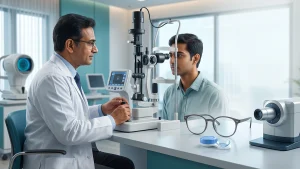
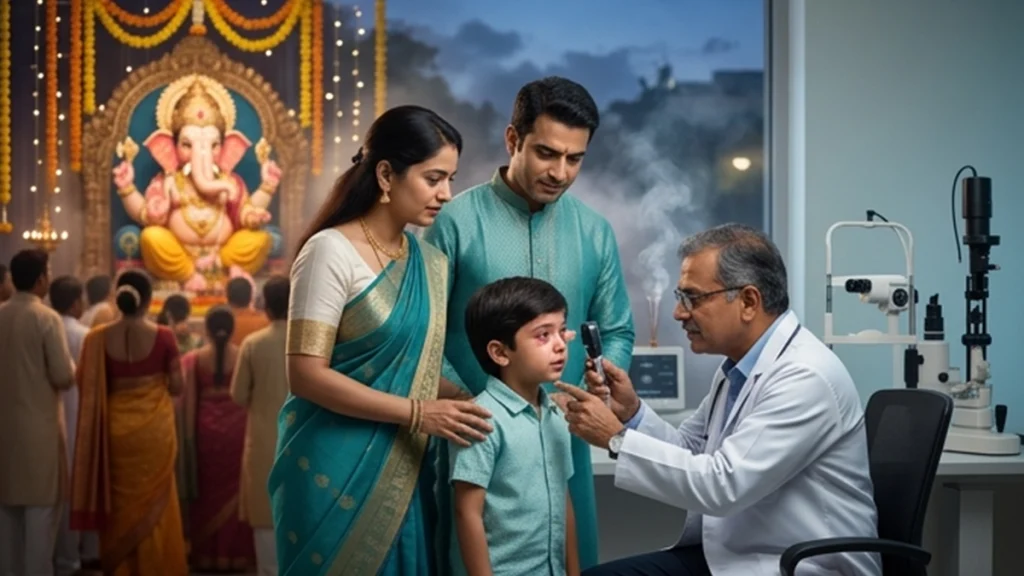
Ganesh Chaturthi is a time for devotion, color, music, processions and joyous community get togethers. Also which may see an increase of time spent in dusty roads, traffic fumes, incense smoke, decorative powders and large outdoor settings. For people with sensitive eyes it may cause Itchy, Watery, Burning or Red Eyes during the Ganesh Festival. Also people with allergic conjunctivitis, dry eye, asthma, eczema or seasonal allergies may be more affected.
Eye Allergies During Ganesh Festival are not brought about by the festival itself. What we see is that they develop when the eye surface has a reaction to an allergen or it becomes irritated by dust, smoke or airborne particles. Also because allergy, dryness and infection present in very similar ways, every red eye should not be treated the same.
Why Do Eye Allergies During Ganesh Festival Increase?
The conjunctiva is that which covers the white of the eye and lines the inner eyelids. In a person that is very sensitive upon contact with an allergen the body may release histamine which in turn causes itchy, red, teary eyes and puffy eyelids. MedlinePlus, a service of the U.S. National Library of Medicine reports red, itchy and watery eyes to be very typical of allergic conjunctivitis. [1] Also in terms of public health issues and at large scale events foot traffic and vehicle traffic can raise road dust which goes into the air. Incense, dhoop, smoke, traffic emissions, damp temporary structures and airborne decorative particles also play a role in increasing the irritant load.
NIH indexed reviews report that particulate pollution is associated with dry eye and conjunctival inflammation. In the case of Air Pollution and Eyes we note that the eye surface is a very direct interface with the environment. Tears which are meant to wash out foreign particles may not function properly in poor environmental conditions. Also factors like extended time out of the home, reduced blinking, contact lens wear and a great deal of eye rubbing can break down this natural protection. This is what we see in the case of Eye Allergies During Ganesh Festival which may break out after a long procession, smoky aarti or a very polluted travel.
How Air Pollution and Eyes Triggers Affect Festival Comfort
| Festival exposure | Possible effect on the eyes | Safer response |
| Road dust and dry soil | Grittiness, watering, itching and Red Eyes | Wear wraparound spectacles and avoid rubbing |
| Traffic exhaust and fine particles | Burning, dryness and tear-film irritation | Avoid standing near idling vehicles |
| Incense, dhoop and smoke | Watering, stinging and temporary redness | Move to a well-ventilated area |
| Loose glitter, colour or spray | Direct irritation or sensitivity | Keep products away from the face and eyes |
| Damp pandals or mould | Allergy flare in sensitive people | Avoid visibly damp or musty areas |
| Long contact-lens wear | Dryness and trapping of particles | Prefer spectacles in dusty conditions |
Sensitivity of symptoms varies. The Eye Allergies During Ganesh Festival may differ from one individual to another so in terms of Festival Eye Care it is best to identify what your own particular triggers are.
Eye Allergy Symptoms You Should Recognise
Typical Eye Allergy Symptoms are very red eyes, clear discharge from the eyes, burning sensation, some lid swelling and may be in which both eyes are affected. In some people also there is sneezing, nasal itching or a runny nose. While itching is a very good indicator, it is not enough for a confirmed diagnosis.
Red Eyes also can be a result of viral or bacterial conjunctivitis, dry eye, a corneal scratch, chemical exposure, contact lens issues or eye inflammation. Allergic conjunctivitis does not spread, but some infective forms can through contaminated hands, towels or surfaces. The CDC says to avoid eye rub and to stop contact lens use till symptoms go away or an eye care professional gives the OK. [4] Allergies at the time of Ganesh Festival often affect both eyes without changing vision. Pain, light sensitivity, blurred vision, thick discharge or severe swelling are not features of a simple allergy.
Allergy, Pollution, Irritation or Infection?
| Feature | Eye allergy | Pollution or smoke irritation | Possible infection |
| Itching | Usually prominent | Mild or absent | Variable |
| Discharge | Clear and watery | Mostly watery | May be watery, sticky or thick |
| Eyes affected | Commonly both | Usually both after exposure | May begin in one eye |
| Other clues | Sneezing or nasal allergy | Starts around dust, fumes or smoke | Recent contact with conjunctivitis |
| Contagious | No | No | Viral and bacterial forms may spread |
| Medical review | If persistent, severe or recurrent | If it does not settle after exposure ends | Recommended, particularly with discharge or pain |
Conditions may present at the same time. Also get checked by an ophthalmologist for persistent or typical Eye Allergy Symptoms.
Practical Pollution Eye Protection and Festival Eye Care Before Leaving Home
Effective Air Pollution and Eyes is a year round effort which includes before and during festivals. Check the air quality report before that big parade. The Central Pollution Control Board in India has put out resources for the National Air Quality Index. [5] For some days which may be ok to you, choose a shorter time of visit or a less crowded day.
Wrap in which the glasses cover the full circumference of the head provides an effective physical barrier against inhaled dust. For children, two wheeler drivers and people that commute near to the traffic this is particularly useful.
Wash up before you touch your face, and keep handy clean tissues for blotting tears from the cheeks as opposed to rubbing the eye. Upon return wash the face and closed eyelids gently. This simple Festival Eye Care tip is to remove surface dust.
What to Do When the Eyes Start Itching
During the course of the Eye Allergies During Ganesh Festival present themselves in the middle of a procession or at the pandal stay away from what may be causing the issue and go to a cleaner better ventilated area. Do not rub the eyes. Rubbing can increase swelling and also may cause a scratch to the cornea if there is a particle embedded under the eyelid.
A cool clean compress may relieve mild itchy eyes. Preservative free lubricating drops may help some but they must be appropriate for the user and never shared. The drop bottle tip should never touch the eye, eyelid or fingers.
Do not start on any antibiotic, steroid, redness relief or combined eye drops without first consulting a medical professional. Antibiotics do not treat allergy and the use of steroids can result in serious side effects from incorrect use or if an infection is present. For recurring Eye Allergies During Ganesh Festival we recommend an ophthalmologist developed plan.
Contact Lenses, Makeup and Eye Allergies During Ganesh Festival
Contact wear of lenses is an issue with Air Pollution and Eyes irritants as they may stick to the cornea. During dust or smoke events glasses are a better option. Out of the home remove the lenses with clean dry hands at first sign of irritation and do not put them back in until you are told to.
Eye make up should not be shared. Outdated mascara, kajal or eyeliner may play home to microorganisms, also loose glitter and powder can get in the eye. Put on products away from the inner lid margin, remove them before going to sleep and discontinue use of what causes burning. This is a key Festival Eye Care tip.
Children put their hands on decorations, flowers, railings and footwear which in turn get to their eyes. Parents should wash out their kids’ hands and also train them to blink which is an alternative to rubbing when something gets in the eye. Child sized glasses are put forward as a practical solution for Pollution Eye Protection.
Daily Festival Eye Care for Air Pollution and Eyes Discomfort
Managing Air Pollution and Eyes exposure is to choose quiet times, avoid exhaust and dense incense smoke, and take indoor breaks. At home use a damp cloth to dust surfaces instead of dry sweeping. This supports Pollution Eye Protection by reducing indoor dust, and also wears wraparound glasses for better outdoor Pollution Eye Protection.
Hydration and sleep may support comfort but don’t replace treatment. Use only eye drops which are recommended for you. It is unsafe to use another person’s medicine even if their Eye Allergy Symptoms look the same.
People which experience Red Eyes may benefit from a consultation with an ophthalmologist prior to festival activities. Professional advice is always what should be followed for Preventive Festival Eye Care What medicine to use is determined by age, pregnancy, contact lens use and ocular surface health.
When Should You Consult an Eye Doctor?
Arrange for an exam if Eye Allergies During Ganesh Festival persist, bother your daily life or recur each season. Repeated Eye Allergy Symptoms should get to the bottom of. An ophthalmologist is able to determine what the issue is — whether it is allergic conjunctivitis, dry eye, lid inflammation, infection or some other condition.
Urgent evaluation is required for eye pain, blurred or reduced vision, marked sensitivity to light, chemical exposure, injury, a retained foreign body, severe swelling, thick discharge or symptoms after wearing contact lenses. The National Eye Institute reports pain, blurred vision, redness, watering and light sensitivity as some symptoms of corneal conditions. [6] which is very true for young children, recent eye surgery patients and people with one functional eye. Pollution Eye Protection may reduce exposure, but at the point vision changes or pain develops that does not rule out a serious condition.
How ASG Eye Care Can Help
During the Eye Allergies During Ganesh Festival,we see that at ASG Eye Care our ophthalmologists will assess your Eye Allergy Symptoms, do an examination of the ocular surface and present you with a diagnosis based care plan.
A tailored plan for those with repeated Eye Allergies During Ganesh Festival which includes seasonal allergy, dry eye, blepharitis and infection that do present together. Also this is for a more individualized Festival Eye Care. We do see through an exam which non-contagious allergies are present as well as which may be conjunctivitis which is transmissible.
Responsible Festival Eye Care practices clean hands, use of protective glasses, reduced smoke exposure and prompt medical attention.
Conclusion
Eye Allergies During Ganesh Festival may put a damper on what should be joyous celebrations but with proper preparation the risk may be reduced. Identifying Eye Allergy Symptoms, reducing exposure to Air Pollution and Eyes irritants, avoiding the rub and to practical Festival Eye Care tips are key initial steps.
Do not assume all Red Eyes are allergic in nature. Persistent or severe symptoms, pain, discharge, light sensitivity or vision change should be evaluated by an ophthalmologist. Individualized treatment, awareness of Air Pollution and Eyes health, and reliable Pollution Eye Protection info can help patients to do well without avoidable eye health issues.
Frequently Asked Questions
1. Why do my eyes itch more during Ganesh Chaturthi?
Dust, traffic pollution, incense smoke, mold and increased time spent outdoors may trigger eye allergies in sensitive individuals. Eye Allergies During Ganesh Festival we see a rise in cases in people which also may be related to dry eye, asthma or eczema.
2. Are Red Eyes during the festival always caused by pollution?
No. Red Eyes can be a result of allergy, dryness, smoke, infection, injury or a contact lens issue.Air Pollution and Eyes exposure is but one cause. Persistent redness which also brings in pain, discharge, light sensitivity or blurred vision requires an exam.
3. Can air pollution worsen an existing eye allergy?
Yes environmental particles and smoke do play a role in irritating the ocular surface which in turn aggravates symptoms in some people. The impact of Air Pollution and Eyes depends on the pollutant, length of exposure and individual sensitivity.
4. What are the most common Eye Allergy Symptoms?
Common Eye Allergy Symptoms are itchy eyes, teary eyes, redness, burning and mild eyelid swelling which usually affect both eyes. Pain or vision loss is not seen in case of mild allergies.
5. Which drops can I use for festival-related itching?
The Eye Allergies During Ganesh Festival is based on the cause of the Eye Allergy Symptoms or redness. For mild irritation which some may experience we have lubricating drops, also in some cases we will require anti allergy medications which should be chosen with professional guidance. Also do not use antibiotic or steroid drops at your own risk if you have Red Eyes.
6. Should I wear contact lenses during visarjan?
Spectacles do better in dusty, smoky or crowded settings and they provide extra Pollution Eye Protection. At the first sign of discomfort remove the lenses which is a practice in what we term sensible Pollution Eye Protection.
7. Is allergic conjunctivitis contagious?
No. Allergy related conjunctivitis is not contagious. Viral and bacterial conjunctivitis may spread and can present with the same symptoms as allergy so persistent Red Eyes should not be diagnosed without proper assessment.
8. How can parents protect children’s eyes at pandals?
Use of protective glasses, frequent hand washing, stop the kids from rubbing and keep loose glitter and spray out of their face. These actions improve Festival Eye Care for kids.
9. When does eye redness require urgent care?
Seek prompt help when you see Red Eyes which is also painful, has reduced vision, is very sensitive to light, is due to injury, chemical exposure, severe swelling or related to contact lenses.
10. Can Eye Allergies During Ganesh Festival be completely prevented?
Complete prevention is out of the question. But do your best to avoid dense smoke, go for off peak hours, put on protective glasses, get that prescribed treatment and into Pollution Eye Protection which may reduce your exposure and discomfort.
Reference Links
[1] PubMed Central, U.S. National Institutes of Health: Impact of Particulate Matter and Air Pollution on Ocular Surface Disease
https://pmc.ncbi.nlm.nih.gov/articles/PMC11811958/
[2] PubMed Central, U.S. National Institutes of Health: Global Associations of Air Pollution and Conjunctivitis Diseases
https://pmc.ncbi.nlm.nih.gov/articles/PMC6801537/
[3] Central Pollution Control Board, Government of India: Air Quality Management and National Air Quality Index Resources
https://cpcb.nic.in/
[4] National Eye Institute, U.S. National Institutes of Health: Corneal Conditions
https://www.nei.nih.gov/eye-health-information/eye-conditions-and-diseases/corneal-conditions