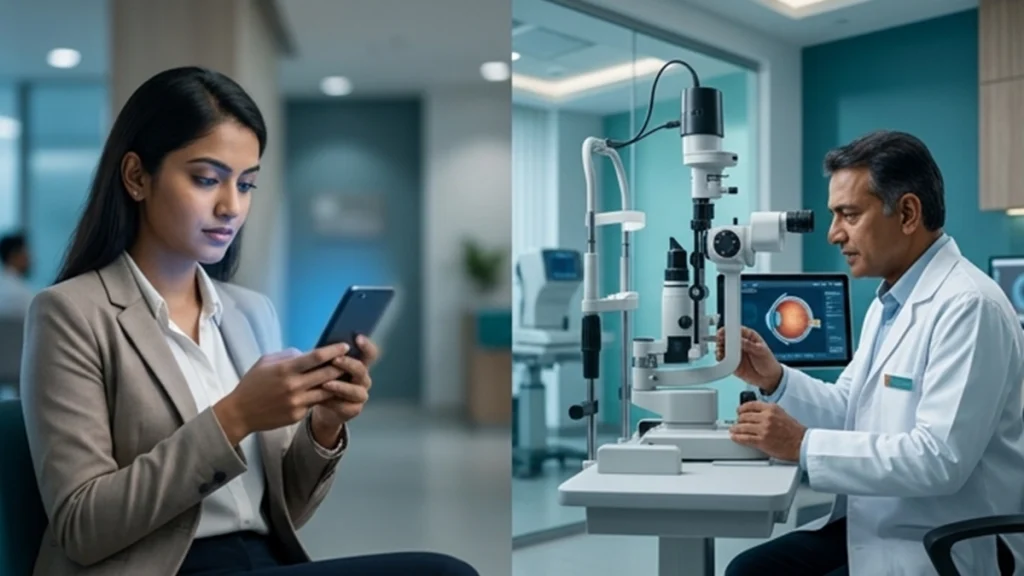
Long periods of scrolling can cause smartphone blurry vision, tired eyes, dryness, or difficulty in refocusing. What we are seeing is mostly screen strain which in turn causes the symptoms rather than permanent eye damage. Also we see that people focus on what they are looking at for long periods and reduce their blink rate which in turn causes mobile eye strain. As for the blue light effects, we don’t have proof that normal use of screens damages the retina.
Why Can Smartphones Make Vision Blurry?
Your visual focus constantly changes when you look at close objects. With long term phone use that focus mechanism remains engaged. It may take a while for your eye to adjust back to distance on a phone break. This may cause what we call smartphone blurry vision..
Screen time also sees reduction in eye blink rate. As the tear film breaks down vision may fluctuate and we experience burning or a grating sensation in the eyes. We see that reduced blink rate and tear film issues are factors in digital eye strain.
The CDC reports that extended screen time is associated with blurred vision, dry eyes, burning, double vision, and headache.
What Is Digital Eye Strain?
Digital eye syndrome is a term we use for eye and vision issues which present during or at the end of long hours of phone, computer, or tablet use. It is not one specific condition. May be brought on by sustained near work, decreased blink rate, glare, dryness, and uncorrected vision issues.
A person who has smartphone blurry vision may also see that they get headaches, eye pressure, dryness, or have trouble focusing. For many people these symptoms go away with rest from the screen. Also from research we see that blurred vision, dryness, watering, and headache are reported by many as common digital eye strain symptoms.
| Symptom | What it may feel like |
| smartphone blurry vision | Words or distant objects look temporarily unclear |
| mobile eye strain | Eyes feel tired, sore, or overworked |
| Dryness | Burning, grittiness, or fluctuating clarity |
| Headache | Discomfort around the forehead or eyes |
| digital eye syndrome | A combination of screen-related eye symptoms |
How Do Smartphones Trigger Blurred Vision?
Phones are at arm’s length. Tiny text and long use increases focus demand and reduce natural visual breaks.
These issues with smartphone blurry vision may present themselves more in smartphone use after gaming, reading, or social media. In the case of dry eye or out of date glasses prescription symptoms may present sooner. Research into digital eye strain reports the role of near work, ocular surface dryness, and vision problems in screen related discomfort.
Poor light may cause eye issues and it is true that a very bright screen within a dark room creates extreme contrast. Also high intensity light can also heighten the problem. CDC reports that they recommend routine breaks, glare reduction, appropriate screen brightness, and regular eye exams as remedies for report related vision problems.
Are Blue Light Effects the Main Cause?
Many issues are attributed to blue light effects from screens. The evidence is more complex. We see that digital devices produce blue light but also that which we use our screens daily has not been proven to damage the human retina.
This is to say blue light effects exposure is not the primary cause of permanent eye damage from use of smart phones.
If smartphone blurry vision while using smartphones improves with breaks, blinking, and better viewing conditions it may be that dryness or focusing fatigue play a greater role than blue light alone. Research into digital eye strain reports out many variables which contribute rather than a single cause.
Dry Eye and Mobile Eye Strain
An unstable tear film which in turn may cause vision to fluctuate. With reduced blinking which may happen during periods of intense computer use this issue is made worse and we see an increase in symptoms.
The National Eye Institute reports that long term use of digital devices may cause these issues to worsen. They note eye strain, dry eye, and discomfort as a result. Also dry eye may cause blurry vision.
If you have smartphone blurry vision which also brings in a burning or a gritty sensation, dryness may be the issue. Repeat occurrence of these symptoms means it is time for an eye exam which may bring up issues of dry eye or a refractive error.
How to Reduce Smartphone Blurry Vision
Reduce to improve smartphone blurry vision is a matter of changing your screen habits. Take regular visual breaks and gaze at distant objects. Blink completely and frequently which is especially true while reading or watching videos. Breaks from the screen are a part of the CDC’s guide to reduce screen related discomfort.
Keep your phone at a comfortable distance, when you need it use the magnifier feature, and set screen brightness to that of your room.
Also try to break up long sessions. For your job which involves a lot of screen time, ask for input on how to introduce regular breaks
| Screen habit | Better approach |
| Long continuous viewing | Take regular distance-viewing breaks |
| Very small text | Increase font size |
| Phone held too close | Use a comfortable viewing distance |
| Bright screen in a dark room | Match brightness to the room |
| Reduced blinking | Blink fully and regularly |
| Worry about blue light effects | Focus on breaks, comfort, and healthy screen habits |
Does Night-Time Phone Use Make Symptoms Worse?
At night use may cause your smartphone blurry vision which in turn may worsen eye strain or issues when the lights are down. In the evening light also plays a role in our sleep. What research has looked at is the connection between screen time, visual distress, and sleep.
Lower excessive brightness and avoid long, uninterrupted viewing before bed.
When Is Blurred Vision More Than Digital Eye Syndrome?
Not at all times do we find the cause of smartphone blurry vision in the phone. At times persistent blur is a result of an eye issue or some other health related problem.
Seek out timely ophthalmic care for sudden blur, severe pain, flashes, many new floaters, a curtain like shadow, or vision loss. Do not assume that these symptoms are from screen use.
Digital eye syndrome is very much a result of screen time, and symptoms improve with rest from that activity. People with recurrent smartphone blurry vision issues should have a full eye exam.
Can Children Develop Smartphone Blurry Vision?
Children also report digital eye strain which may present as smartphone blurry vision from excessive near work on smartphones, and at the same time they experience headaches, tired eyes, dryness, and hard time with focus shift. We also see in reports of kids who use digital screens for long periods.
The National Eye Institute reports that spending time reading or using screens is a risk factor for myopia. Going outside for greater amounts of time does seem to decrease that risk.
Balanced use of screens is key to reducing mobile eye strain. Also include in your routine good lighting, time for outdoor activity, and regular eye exams which will support healthy vision.
What About Blue-Light Glasses?
Blue light glasses which are put forth for blue light effects, are a common thing, but they should not take the place of healthy screen habits. At present we do not have that which proves digital retinal damage from normal use.
If you experience smartphone blurry vision, get an eye exam which may also check for signs of dry eyes and a bad prescription. With digital eye strain you still should take frequent breaks, have appropriate text size, good lighting, and also break to blink.
When Should You Visit ASG Eye Care?
Occasional smartphone blurry vision which resolves after a break is a sign of temporary strain. Frequent episodes should be evaluated.
An eye exam may also identify mobile eye strain, dry eye, refractive error, or other conditions. Also it is a chance to bring up digital eye syndrome. We can talk about blue light effects at the same time.
Conclusion
Smartphones are a cause of what I would term as transient smartphone blurry vision which in particular is seen after extensive near viewing. Also we see a great deal of sustained focus, dryness, reduced blinking, glare, and poor screen habits. What we are dealing with is basically Mobile eye strain and digital eye syndrome which is not fun, but in most cases simple changes to your screen do help.
At the same time it is important to not overstate blue light effects. We do not see that normal use of screens causes retinal damage. If blue light is an issue which persists or which comes back after screen use then an eye exam is the better step to take.
FAQs
1. Can smartphones really cause blurry vision?
Yes. Prolong term use of smart phones can cause what is called a smartphone blurry vision which is temporary in many reports. This issue of blurred vision related to screens has been reported by the CDC and also in research reviews. If the blur is persistent it should be checked out by an ophthalmologist.
2. How long does mobile eye strain last?
Mild mobile eye strain will go away with rest and time away from the screen. The CDC reports that many screen related symptoms are temporary and associated with periods of heavy use. If symptoms persist they should be evaluated by a professional.
3. Is digital eye syndrome permanent?
Digital eye syndrome is what we mostly see in regard to symptoms from screens as opposed to permanent damage. Many of these symptoms improve with change in your screen habits. Persistent pain or blurry vision still requires an evaluation.
4. Do blue light effects damage the retina?
Current data does not support retinal damage from typical screen use. What is put forth on blue light effects should be put to the side of known causes of digital eye strain.
5. Can dry eyes cause smartphone blurry vision?
Yes. An issue with tear film stability may cause variable smartphone blurry vision. Also noted is that dry eye has a connection to blurred vision which in turn is related to extended digital device use.
6. What is the best way to prevent mobile eye strain?
Take short breaks, blink more often, use a large text size, and view at a moderate distance. Also out fit issues of glare and brightness which in turn will reduce mobile eye strain.
7. Should I see a doctor for digital eye syndrome?
See a doctor for your eyes if digital eye syndrome symptoms persist, worsen or don’t improve with less screen time. Also an exam can bring to light dry eye issues or an uncorrected vision problem.