Most people think of high cholesterol in terms of heart disease, clogged arteries, or stroke. But what is also true is that cholesterol plays a role in the small blood vessels which supply the eyes. The relationship between High Cholesterol and Eyes is an issue we should pay attention to as the retina requires a constant flow of oxygen rich blood to function properly.
High blood cholesterol often does not present with any clear symptoms. For years a person may feel fine as fatty deposits accumulate in the arteries. In some cases this process may affect blood flow which in turn can damage Retina Health and cause serious Vision Problems.
Some people report to see that around the eyes there is a change like yellow spots near the eyelids. Also these changes are not a sure sign of high cholesterol. At the same time though they may be a reason to bring up the topic of getting a cholesterol test with your doctor.
Understanding High Cholesterol and Eyes is a way for people to identify warning signs early and protect your Eye Health.
What Is High Cholesterol?
Cholesterol is a waxy fat based substance which the body requires in right amounts. It is used by the body to produce hormones, vitamin D, and cell membranes. The issue is what to do when certain cholesterol levels go beyond what is normal.
Low density lipoprotein which is also known as LDL or “bad” cholesterol may cause plaque to develop within the arteries. High density lipoprotein (HDL) plays a role in reverse cholesterol transport to the liver.
According to the National Heart, Lung, and Blood Institute we see that high LDL cholesterol is a factor which causes plaque to build up in arteries. This build up may not only reduce the amount of blood flow but also increase the chance of clots forming.
This vascular issue is a large component in the association of High Cholesterol and Eyes. which also note that the eyes have a complex network of blood vessels. With healthy circulation issues you support the retina as well as other fine eye structures.
How Are High Cholesterol and Eyes Connected?
High Cholesterol and Eyes is a blood issue which affects the Eye health. While cholesterol does not in large degree affect vision health, rather it is in the blood. What we should be concerned about is when cholesterol plays a role in atherosclerosis or other blood vessel issues.
Plaque may slowly reduce artery size which in turn may cause restricted blood flow. When circulation to the retina is damaged the retinal tissue may get less oxygen.
The retina which is at the base of the eye transforms light into signals which the brain in turn interprets as images. For good health of the retina, healthy circulation is thus very important.
In other serious cases a clot or fatty material may cause a retinal artery to become blocked. Also from MedlinePlus, a service of the U.S. National Library of Medicine we learn that retinal artery occlusion is what happens when an artery which supplies the retina is blocked. High blood fat levels are among the health issues which in turn cause these blockages.
This is that we look at High Cholesterol and Eyes in the context of the Eyes which is beyond note of changes around the eyelids.
Can High Cholesterol Cause Vision Problems?
High cholesterol doesn’t produce, in many cases, Vision Problems which would be of notice. What we see is that many with raised cholesterol may still pass each day normally. In fact it is very common for high cholesterol to present no at all — if at all early signs.
However in the long term it has the effect of increasing risk to blood vessels that over time can lead to problems which affect eyesight. Also if the retinal blood vessel does close up, this can happen suddenly, causing vision to go blurry or leave large parts of the field of vision missing.
The issue of High Cholesterol and Eyes is of great importance when also present with diabetes, high blood pressure, cardiovascular disease, or other vascular risk factors.
A sudden change in vision should not be written off as just tiredness or a sign of age. Prompt medical attention is important because some retinal vascular issues which may cause sight loss also may be a red flag for health problems in other parts of the circulatory system.
| Possible Concern | What You May Notice | Why It Matters |
| Reduced retinal circulation | Blurred or disturbed vision | The retina depends on oxygen-rich blood |
| Retinal artery blockage | Sudden partial or complete vision loss | Requires urgent medical assessment |
| Xanthelasma | Yellowish patches near the eyelids | Sometimes associated with high cholesterol |
| Corneal arcus | White, grey, or bluish ring around the cornea | May warrant cholesterol evaluation, especially in younger people |
Cholesterol and Retinal Blood Vessels
The retina has an extensive network of very small blood vessels. These vessels supply oxygen and nutrients that retinal cells require at all times.
This puts Retina Health in close ties with vascular health. Diseases which damage or narrow blood vessels can affect circulation throughout the body which includes that in the eyes.
The fact that High Cholesterol and Eyes is a wide scale indicator of a more extensive cardiovascular issue. High cholesterol also causes plaque to build up over time. As arteries which are the passageways for the blood narrow, the flow of blood becomes less effective.
A retinal artery blockage will in turn starve some of the retina of blood and oxygen. Depending on where the blockage is and how severe it is will determine the degree of Vision Problems.
Thus by protecting your heart health you also protect your Eye Health
Retinal Artery Occlusion and High Cholesterol
Retinal artery occlusion is a serious eye complication related to High Cholesterol and Eyes.which we see in practice. We may have a block of blood flow in the central retinal artery or one of its branches.
The extent of vision loss will depend in part which vessel is affected.
MedlinePlus reports that retinal artery occlusion can present with sudden blurring or loss of vision in all or part of one eye. Also they put forth hyperlipidaemia which is high level of fat in the blood as a related condition.
Sudden and painless loss of sight is a matter of going to the doctor right away. Do not wait for your vision to improve before you seek care.
These points show that good Retina Health includes much more than routine vision correction.
Can Cholesterol Deposits Appear Around the Eyes?
One issue put forth regarding High Cholesterol and Eyes is the condition of xanthelasma. This typically presents as soft, flat, yellow spots on or around the eye lids. These deposits are of cholesterol. Also it is important to note that their appearance is not a sure sign of high blood cholesterol. People with normal cholesterol levels may also get them.
The NHS reports that yellow lumps or patches on the eyelids are a sign of xanthelasma which at times is associated with high cholesterol.
Any person which notes these patches should talk in to a doctor as a lipid profile may be indicated.
Xanthelasma mostly presents a cosmetic issue and does not affect Retina Health or cause Vision Problems.
What Is Corneal Arcus?
Corneal arcus is noted as a white, gray, at times blue ring around the periphery of the cornea. It becomes more prevalent with age and usually does not affect vision.
Also in young people it may bring up issues related to lipids. Certain inherited cholesterol issues can also cause early onset corneal arcus.
This is a visible association between High Cholesterol and Eyes We do see that which is present in the eye but a separate eye exam is not enough for diagnosis of high cholesterol. A blood test still is the requirement to accurately measure cholesterol levels.
What Symptoms Should You Watch For?
High cholesterol usually doesn\’t show any symptoms. That is why people should not use eye symptoms to tell if their cholesterol is in check.
With regard to eye related signs of High Cholesterol and Eyes they vary greatly. Some may see yellow patches around the eyelids. In others some may see no changes at all.
More serious symptoms may include sudden onset of blurred vision, a new area of vision loss, or sudden loss of sight in one eye. These Vision Problems require prompt assessment.
Also included in what is to be paid attention to are changes that may seem out of the ordinary even when they are painless.
How Do Doctors Diagnose Cholesterol-Related Eye Concerns?
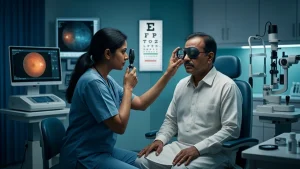
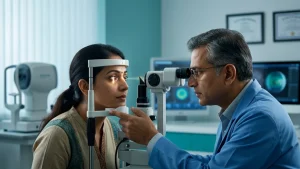
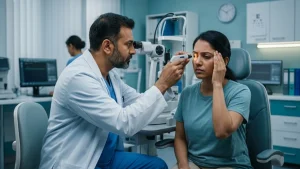
An ophthalmologist at a full scale eye exam can look at the retina, optic nerve, cornea, and blood vessels. As per symptoms which may present, the doctor may also use dilation to get a better look at the back of the eye.
If retinal circulation is abnormal, at times further investigation will help assess Retina Health.
MedlinePlus reports that which tests doctors use to evaluate retinal artery occlusion may vary but may include a wide retina examination, retinal imaging, visual acuity and visual field assessments and fluorescein angiography if indicated in that case. Blood tests for cholesterol and triglycerides may also be included.
An eye examination can identify ocular changes, but a lipid profile determines blood cholesterol levels.
Who May Have a Higher Risk?
The issue of High Cholesterol and Eyes plays a greater role when other vascular risk factors are present.
High blood pressure, diabetes, smoking, obesity, cardiovascular disease, and abnormal cholesterol play a role in vascular health. Age and family history also play into a person’s total risk.
Some people with many risk factors will require a team approach which includes their physician and Eye doctor. This team approach is to improve cardiovascular health at the same time it supports long term Eye Health.
Those with a diagnosis of high cholesterol also should follow the care and monitoring plan put forth by their health care team.
Can Lowering Cholesterol Protect Your Eyes?
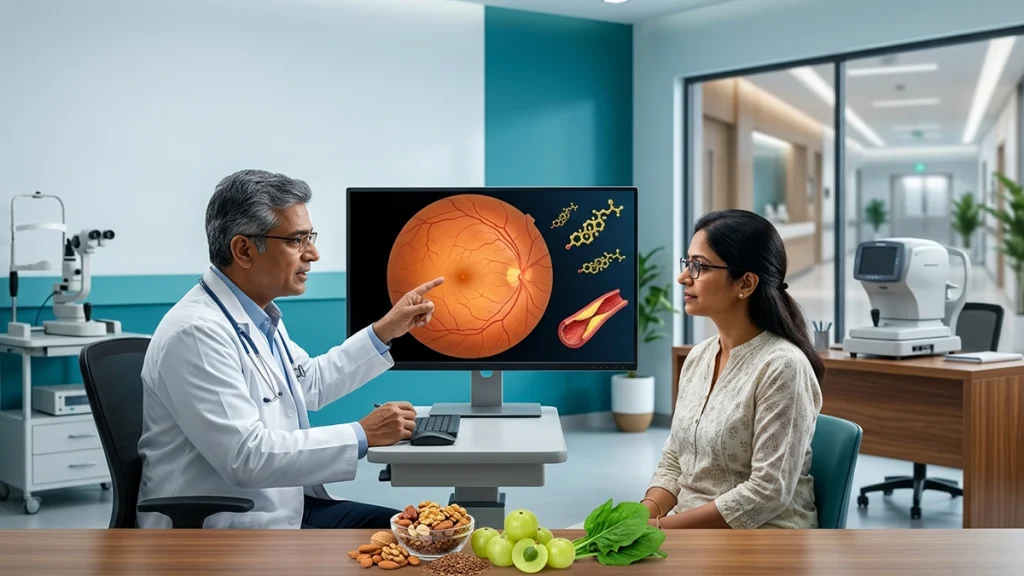
Managing cholesterol means to support healthier arteries which in turn may help reduce vascular issues that do affect the eyes.
The NHLBI reports that for very high cholesterol which is unhealthy, we may have to make heart healthy lifestyle changes and take medicine in order to get those levels into a better range.
A balanced diet, regular physical activity, attainment and maintenance of a healthy weight, avoidance of tobacco, and adherence to prescribed treatment are elements of better vascular health.
As for cholesterol lowering medication, that which is doled out by medical advice is what should be followed. Do not begin or stop use of cholesterol medications at the sign of an eye change.
Managing High Cholesterol and Eyes does best in a large scale approach to cardiovascular and Eye Health.
| Healthy Approach | Potential Benefit |
| Regular cholesterol testing | Identifies abnormal lipid levels that may otherwise remain unnoticed |
| Balanced diet | Supports cholesterol and cardiovascular management |
| Regular physical activity | Supports heart and blood vessel health |
| Blood pressure and diabetes control | Reduces additional stress on small blood vessels |
| Routine eye examinations | Helps identify changes affecting Retina Health |
| Following prescribed treatment | Helps manage cholesterol according to individual medical needs |
Why Regular Eye Examinations Matter
Regular eye exams do much more than assess whether someone needs glasses. They also provide an opportunity for an Eye specialist to look at the front and back of the eye.
For those with High Cholesterol and Eyes issues which also affect the eyes, these exams may report on retinal vascular changes or deposits that appear around the eye.
Routine checkups are very important for diabetics, hypertensives, or those with heart issues.
In terms of Eye care we combine routine exams with also managing general health. To protect Retina Health we must attend to the issues which affect body wide circulation.
When Should You Consult an Eye Specialist?
Routine changes in vision should be looked at, but sudden changes are of much greater urgency.
See immediate medical care if vision suddenly goes blurry, dark, or out of part or full field of one eye. Retinal artery occlusion causes sudden vision loss, and prompt assessment is key.
People report that they bring up yellow deposits around the eyes which they should bring to a health care professional’s attention. At ASG Eye Care we do an appropriate eye exam which is to identify what is causing changes in vision and to determine if a more in depth medical evaluation is needed. Also early evaluation is very much a key element in the maintenance of Eye Health.
Conclusion
The association between High Cholesterol and Eyes reports of the close connection between eye health and general health. While high cholesterol does not in itself cause vision loss and many don’t see any symptoms, it is what it does in the background that is of great issue. It contributes to plaque build up and vascular disease.
When blood flow is reduced to the eyes, that which affects the delicate retinal blood vessels also may present a risk. This is a reason for the importance of cholesterol management for the health of your heart as well as the Retina Health in the long term.
Visible signs of which xanthelasma is an example may at times prompt further medical evaluation. Also of great importance is that sudden Vision Problems,which include acute blurring or loss of sight, require urgent attention.
Regular monitoring of cholesterol levels, healthful lifestyle choices, appropriate medical care, and in depth eye exams may be put together to improve overall Eye Health. It is also put forward that anyone with High Cholesterol and Eyes issues should speak to their physician and eye specialist regarding their individual risk factors which may not present till later.
Frequently Asked Questions
1. Can high cholesterol directly cause blindness?
High cholesterol does not in itself lead to blindness. As for the connection betweenHigh Cholesterol and Eyes health that is present it may become a serious issue with the development of vascular disease which in turn affects the retinal circulation. Retinal artery blockage is a result which may see acute vision loss and is a medical emergency.
2. What are the eye signs of high cholesterol?
Possible symptoms are yellow colored deposits on the eyelids which we term xanthelasma and in some people we see corneal arcus. It is important to note that these are not in and of themselves proof of high cholesterol. A blood test is required for diagnosis.
3. Does high cholesterol cause blurry vision?
High cholesterol does not in and of itself cause blurred vision. However we see that vascular complications do present serious Vision Problems. For instance retinal artery blockage may cause sudden onset of blurring or loss of vision which in turn requires urgent evaluation.
4. Can cholesterol damage the retina?
High cholesterol is a factor in atherosclerosis and vascular disease which in turn may cause issues with blood flow. As proper circulation supports health of the retina, serious vascular blockages of retinal arteries can impair Retina Health, and vision.
5. Are yellow patches around the eyes always caused by cholesterol?
No. Xanthelasma is seen in persons with high as well as normal cholesterol levels. If you notice persistent yellow patches by your eyes which are near the eyelids see your doctor that may in fact refer you for a cholesterol test or more assessment.
6. Can reducing cholesterol improve eyesight?
Lower high blood cholesterol levels do not usually improve what is considered normal eyesight. At the same time through which we work to reduce unhealthy cholesterol in the blood we also see benefits to the heart and at the same time we may see a reduction in vascular risk. This in turn plays a role in Eye Health. over the long term.
7. Should people with high cholesterol get regular eye examinations?
Regular check ups are a must, in particular when you have diabetes, hypertension, or other forms of cardiac risk with your high cholesterol. Talk to your doctor and Eye specialist regarding the right schedule for you which is based on your individual health picture.
8. Is sudden vision loss related to cholesterol an emergency?
Yes. Sudden vision loss or vision that has become very blurry in one eye may be a sign of a retinal vascular block or some other serious eye issue. Go to the emergency room right away instead of waiting for the symptom to go away.
Reference Links
- MedlinePlus – Retinal Artery Occlusion (U.S. National Library of Medicine)
https://medlineplus.gov/ency/article/001028.htm?utm_source=chatgpt.com - National Heart, Lung, and Blood Institute (NIH) – Blood Cholesterol
https://www.nhlbi.nih.gov/health/blood-cholesterol?utm_source=chatgpt.com - CDC – About Cholesterol
https://www.cdc.gov/cholesterol/about/index.html?utm_source=chatgpt.com - NHLBI – Atherosclerosis
https://www.nhlbi.nih.gov/health/atherosclerosis?utm_source=chatgpt.com