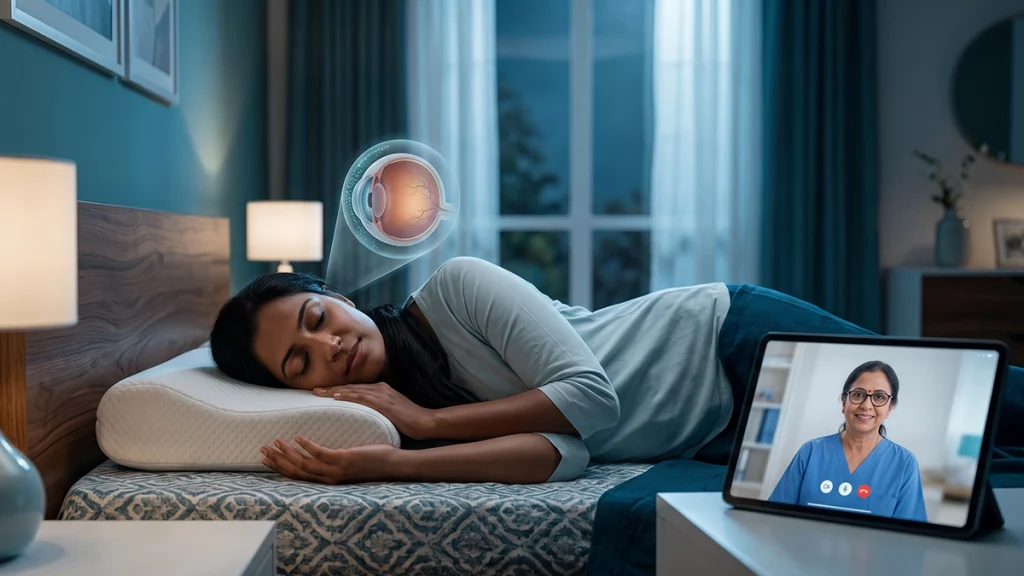
A good night’s sleep is for the health of the whole body which also includes the eyes. But many people are not aware that the way you sleep may also play a role in eye health. Your sleeping position for Eyes may play a role in morning swelling, eye comfort and in some people, eye pressure.
This is especially true of people which already have glaucoma, high intraocular pressure or certain eye conditions. Also reports of Puffy Eyes upon waking may be experienced by those with otherwise healthy eyes which sleep face down or with face pressed into a pillow.
So do we see that sleeping on your back is better for you than side sleeping? Does raising the head of your bed help? We will look at how sleep position may play a role in Eye Health and when you should bring up your sleeping habits with an Eye Doctor.
Does Sleeping Position Really Affect Your Eyes?
Your body does not react exactly the same when you are lying down as it does when you are sitting or standing. Fluid flow and circulation change. Intraocular pressure also varies with body position. We find that lying down may bring about changes to Eye Pressure and some positions can have a larger effect than others. This is not to say that all people have to change what they do in which they lay. But for those with glaucoma or pressure related issues Sleeping Position for Eyes may be of more importance
The National Eye Institute reports that high eye pressure is a very important risk factor for glaucoma as it causes damage to the optic nerve. Also at the same time it is true that not all people with high eye pressure get glaucoma. Also some people may develop glaucoma which in fact does not have high pressure at all. Thus your Eye Doctor takes into account many factors and does not base a diagnosis on a single pressure reading or sleep habit
How Different Sleeping Positions May Affect Eye Health
The ideal Sleeping Position for Eyes depends on your overall health and whether you have an existing eye condition. Each common sleeping position has different advantages and concerns.
| Sleeping Position | Possible Effect on the Eyes |
| Back sleeping | Avoids direct pillow pressure on either eye and may be comfortable for many people |
| Side sleeping | May increase pressure in the lower eye in some people, particularly those with glaucoma |
| Stomach sleeping | May place pressure around the eyes and face, especially when the face presses into a pillow |
| Head slightly elevated | Some studies have reported lower nocturnal intraocular pressure with appropriate head elevation |
Is Sleeping on Your Back Good for Your Eyes?
For a lot of people sleeping on the back is a great Sleeping Position for Eyes as neither eye actually presses into the pillow. Also it may reduce face pressure at night.
Back sleep has at times been a help for people waking with Puffy Eyes also if in the same case they have a comfortable head elevation. Night time fluid accumulation around the eyelids may cause that early morning puffy appearance.
However, it is not true to say that back sleeping is a definitive treatment for glaucoma or elevated Eye Pressure. What we do see is that intraocular pressure fluctuates in a person that goes from a standing to a lying down position.
If you already have glaucoma, your Eye Doctor may give you individual advice based on your pressure pattern, optic nerve health and treatment.
What Happens When You Sleep on Your Side?
Side sleeping is a very natural position for many people. In a person without an eye issue that is not glaucoma this is usually nothing to worry about. When glaucoma is present the picture may be different.
Research reports that which eye is the more dependent or lower one may experience more increase in intraocular pressure when the person is lying on that side. Thus side sleeping is a key topic in the discussion of Sleeping Position for Eyes in some glaucoma patients.
That does not mean whichever eye has glaucoma that it is a rule for all to stop sleeping on the side. We do not have proof for this wide scale advice. Also if one eye is more affected than the other an Eye Doctor may look at sleep habits in addition to pressure readings and other clinical signs..
Your preferred Sleeping Position for Eyes should therefore form one small part of a broader glaucoma management plan.
Is Sleeping on Your Stomach Bad for Eye Health?
Stomach sleeping may cause a greater degree of contact between your face and the pillow. If your eye or the area around it is left pressed for a long time that pressure may not be ideal. In a study which included people with glaucoma or glaucoma related conditions it was found that Eye Pressure went up in prone positions. For this reason it is advised that people with known glaucoma speak to their Eye Doctor.
Stomach sleeping can also contribute to temporary Puffy Eyes because of overnight fluid distribution around the face.
For general Eye Health, try to avoid sleeping with an eye pressed firmly against your pillow, hand or arm for several hours.
Can Elevating Your Head Help?
Head up posture has drawn in interest which some studies report to have lower night time intra ocular pressure when patients sleep with the upper body at right angle. But the pose of the head up has to be comfortable and should not put the neck into a forced position. Also recent research reports that certain high pillow settings may in fact compress the neck and play a different role in eye pressure. Thus putting out multiple pills is not always the answer.
The best Sleeping Position for Eyes should support your head and neck well. If you have glaucoma, consult your Ophthalmologist before making large changes which in turn may affect intraocular pressure
Sleeping Position and Puffy Eyes
Waking up with puffy eyes is a common issue. The skin around the eyes is thin which causes changes in fluid distribution to be easy to see. Your sleeping position for Eyes may play a role in this swelling. Sleeping face down can cause fluid to pool in the face. Propping your head up during sleep may help some people reduce morning puffiness.
Still, Puffy Eyes are not always caused by sleeping position. Lack of sleep, allergies, dietary factors, and other conditions may also play a part.
An Eye Doctor should assess Puffy Eyes that appear suddenly, affect only one side, cause pain, or persist for a long period
Sleep Quality Matters as Much as Position
Position is only one part of healthy sleep. Getting enough good-quality sleep also supports overall Eye Health.
The National Eye Institute reports that adequate sleep is a component of dry eye management. During sleep your eyes have a chance to rest from continuous screen use, environmental irritants and the focus of unbroken vision.
Poor sleep may have your eyes feeling fatigued, heavy or uncomfortable in the morning. Changing your sleeping position for eyes is a poor substitute for which you should get enough of. Also a healthier approach includes healthy sleep habits, sensible screen use, hydration and regular eye exams.
Which Sleeping Position May Be Suitable for You?
There is no single answer that applies to every person. Your current Eye Health, glaucoma status, medical history and comfort all matter.
| Situation | What to Consider |
| Healthy eyes with no diagnosed condition | Choose a comfortable position and avoid prolonged direct pressure on the eyes |
| Frequent Puffy Eyes | Avoid prolonged face-down sleeping and consider comfortable head support |
| Glaucoma | Discuss side, prone and head-elevated sleeping with your Eye Doctor |
| Raised Eye Pressure | Follow your prescribed treatment and ask whether sleep posture is relevant to you |
| Recent eye procedure | Follow the surgeon’s specific postoperative sleeping instructions |
Sleeping Position After Eye Surgery
The best sleeping positions for eyes is a issue which may come up post eye surgery. Your surgeon may tell you to not sleep on one side or put pressure on the operated eye. Some retinal procedures do require very precise positioning. Also other surgeries may have different guidelines.
Do not base your choice of postoperative sleeping position for eyes on what you read in general internet articles. Follow the instructions that your surgeon has given you. If you wake up in a restricted position which you were told to avoid or if you develop any new symptoms, contact your Eye Doctor
Eye Pressure and Glaucoma: Why Regular Checks Still Matter
Changing out your sleeping position for eyes is not a substitute for glaucoma medication, exams or treatment. High eye pressure is a risk factor for glaucoma, but pressure alone doesn’t tell the whole story. Glaucoma can progress very quietly and may not present with noticeable symptoms in its early stages.
An Eye Doctor can do an examination of the optic nerve, perform intraocular pressure measurement and other tests as required. These exams provide a great deal more info related to Eye Health than what may be determined by your sleep position alone. If you are already in glaucoma care follow your medication routine as prescribed. Do not change anything in your regimen because you’ve altered your sleep posture
Practical Sleeping Habits for Better Eye Health
A good sleeping position for your eyes is one that does not put extra pressure on them. Your pillow should support your head well without forcing your face into the bedding. If you regularly experience puffy eyes we would recommend that you look at your sleep position. Also, proper hydration and sufficient sleep is important for overall comfort.
If you are a contact lens wearer remove your lenses at night unless your Eye Doctor has put you in a regime of approved overnight wear. It is very important to maintain healthy daily routines for long term Eye Health.
When Should You Consult an Eye Doctor?
Most people do not have to worry about changing sleep positions. But if you have glaucoma, persistent high eye pressure, recent eye surgery or unexplained vision changes, professional help is important. Also see a health care provider when you have puffy eyes that persist or come with very redness, pain or vision changes.
Your Eye Doctor can identify what is causing your symptoms which may be sleep related, an eye condition or some other cause. Eye health is about finding out what the root cause is not assuming that the sleep position is the issue for all of your symptoms.
Conclusion
Sleep is a key component of health, and your Sleeping Position for Eyes may play a role in eye comfort and intra ocular pressure at times. Back sleeping may also decrease direct pressure on the eyes, but side and face down positions may impact eye pressure in some people.
If you have Puffy Eyes often change in your sleep habits may help that out, but persistent swelling of the eyes requires a proper evaluation. In the case of glaucoma or high intraocular pressure pay special attention to that general sleep advice which may not be suited for you.
Good Eye Health is a result of many factors, not just your sleep position. Regular exams, adequate sleep, healthy daily routines and timely treatment are key. If you are worried about your Sleeping Position for Eyes, glaucoma or changes in vision see an Eye Doctor for that individualized care.
Frequently Asked Questions
1. What is the best sleeping position for healthy eyes?
There is no one size fits all for Sleeping Position for Eyes. Back sleeping which reduces pressure from the pillow on the eyes works for many. For glaucoma patients we recommend you get personalized advice.
2. Can sleeping on one side increase eye pressure?
Studies report that in some people sleeping may raise Eye Pressure in the lower eye. This is very much the case for glaucoma patients although the clinical impact does vary from person to person.
3. Can sleeping face-down affect the eyes?
Face down sleeping may put pressure on the eyes and in some studies has been reported to increase intraocular pressure. People with glaucoma should talk to their specialist about this Sleeping Position for Eyes
4. Does sleeping on your back reduce puffy eyes?
Back sleeping with proper head support may reduce fluid accumulation around the face for some. But Puffy Eyes have many causes, so position alone may not be the solution
5. Should glaucoma patients sleep with their head elevated?
Some reports indicate that eye pressure goes down at night as a result of raising the head which is proper. Also note that pillow size and neck position is a factor. A glaucoma patient is best to ask an Eye Doctor for personal advice instead of using a few extra pillows.
6. Can poor sleep affect eye health?
Yes. Poor sleep quality may lead to tired or uncomfortable eyes. Good night’s sleep is a component of overall Eye Health which also includes regular eye exams and healthy daily routines.
7. Can changing sleeping position treat glaucoma?
No. Changing your Sleeping position for eye health is not a substitute for glaucoma treatment. Continue as prescribed and come in for regular follow up
8. Why do I wake up with puffy eyes?
Temporary puffy eyes may be caused by overnight fluid retention, sleep position, allergies, and also some other reasons. If you experience persistent, atypical swelling get in to see your doctor.
9. Does eye pressure change during sleep?
Eye pressure fluctuates with body position and throughout the day and night. In glaucoma patients we see pressure patterns which may require more frequent monitoring.
10. Should I discuss my sleeping position with my eye doctor?
Yes, especially if you have glaucoma, high intraocular pressure or just had eye surgery. An Eye Doctor can advise if your sleep habits play a role in your particular case
Reference
Government Reference – National Eye Institute (NIH): Glaucoma and Eye Pressure
National Eye Institute – Glaucoma and Eye Pressure
Government Reference – National Eye Institute (NIH): Keep Your Eyes Healthy
National Eye Institute – Keep Your Eyes Healthy
Government Reference – National Eye Institute (NIH): Dry Eye
National Eye Institute – Dry Eye