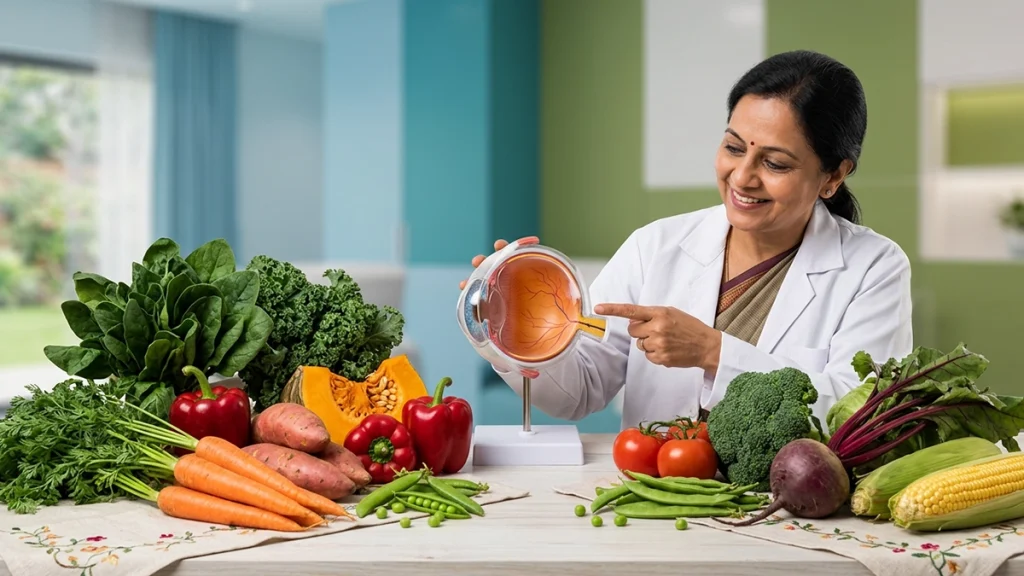
Good health of your eyes is a result of more than just regular eye exams. What you put in your body also is very important in maintaining eye health over a lifetime. Into your diet include the Best Vegetables for Eye Health which can present vitamins, minerals, carotenoids, and antioxidants that in turn support normal eye function.
A healthy Eye Care Diet doesn’t promise perfect eyesight or the prevention of all eye diseases. But it does support overall health and supply the eyes with what they need. Many Vegetables for Vision contain vitamin A precursors, vitamin C, vitamin E, lutein, and zeaxanthin. These nutrients make vegetables a key element of Eye Health.
The Government of India in its National Health Mission includes dark green leafy vegetables which are spinach, fenugreek, drumstick leaves, mustard leaves, amaranth, and coriander as sources of vitamin A. Also included are carrots, tomatoes and sweet potatoes.
Why Are Vegetables Important for Eye Health?
The eyes do well with certain nutrients which are key for normal function. Vitamin A is one which supports good vision, also we see carotenoids like lutein and zeaxanthin present in the retina. The National Eye Institute reports that lutein and zeaxanthin are found in high concentration in the retina and lens. Green leafy vegetables are very much the source of these carotenoids.
This includes Leafy Greens for Eyes in a balanced diet. We see that colorful vegetables also bring in a range of plant nutrients. Instead of putting all eggs in one basket with what is labeled a superfood, go for a variety.
In terms of which Best Vegetables for Eye Health we are supported by choice. Also a nutritious diet supports overall health. What we put in our body may reduce the risk of developing diabetes and high blood pressure which in turn affects the eyes. The National Eye Institute puts forth healthy eating as one piece of the puzzle for protected vision.
15 Best Vegetables for Eye Health
1. Spinach
Spinach is a great base for an Eye Care Diet. It has carotenoids like lutein and zeaxanthin as well as other vitamins and minerals. This is what makes spinach the Best Vegetable for Eye Health.
You can put it in dal, sabzi, soup, paratha or in any home cooked meal. Also by including spinach in your diet regularly it is easy to add more Leafy Greens for Eyes without overhauling your diet.
2. Carrots
Carrots which are what many of us put in our salads or cook as a side dish also are very common as a Vegetables for Vision. In them we get beta carotene which converts to vitamin A in the body.
Vitamin A plays a key role in the health of the eyes. Carrot consumption thus improves Eye Nutrition but do not expect that to do it all, large intake will not in fact improve vision or get rid of the need for glasses.
3. Kale
Kale is also a green veg which has lutein and zeaxanthin. These pigments from the plant are present in the eye’s tissue and have antioxidant properties.
As they become available include kales along with other Leafy Greens for Eyes in your diet. It isn’t that it should replace what we know of as Indian greens. What is important for Healthy Eyes is variety in your diet which this in turn will promote Healthy Eyes.
4. Sweet Potatoes
Sweet potatoes are a great source of beta carotene and may help to add variety to your vitamin A intake. They are also at the top of the list of Best Vegetables for Eye Health which is great for people that don’t like carrots.
You can roast, boil, steam them or include in most dishes. It is best to get your nutrients from a variety of foods as opposed to supplements which should only be taken when advised by a doctor.
5. Broccoli
Broccoli is a source of vitamin C and many other plant compounds. Vitamin C acts as an antioxidant which in turn promotes good tissue health.
Also included in an Eye Care Diet which features leafy greens, pulses, fruits, whole grains, nuts and other healthy foods Broccoli is also a great option in the Vegetables for Vision category.
6. Red Bell Peppers
Red bell peppers add color and vitamin C to your meals. Also they have carotenoids and other plant chemicals. With a variety of vegetable choices your diet will be more well rounded.
Thus red bell peppers may support the Best Vegetables for Eye Health which is a wide scope and not a stand alone solution for Healthy Eyes.
7. Green Peas
Green peas present a great source of plant protein, fibre, vitamins, and carotenoids. Also they go well with many Indian dishes.
Peas to meals may increase dietary variety and support in Eye Nutrition. They do particularly well with other Vegetables for Vision in mixed vegetable dishes.
8. Tomatoes
Tomatoes are a source of vitamin C, beta-carotene, and lycopene. Also they are very easy to include in day to day Indian cuisine.
The Government of India in their eye care training material put out a list which includes tomatoes in the group of yellow and orange veggies and fruits that provide vitamin A related nutrients. Thus tomatoes are a simple inclusion in an Eye Care Diet.
| Vegetable | Important Nutrients | Easy Way to Include It |
| Spinach | Lutein, zeaxanthin, beta-carotene | Dal, sabzi or soup |
| Carrot | Beta-carotene | Salad, sabzi or soup |
| Kale | Lutein, zeaxanthin | Soup or cooked greens |
| Sweet potato | Beta-carotene | Boiled or roasted |
| Broccoli | Vitamin C, carotenoids | Steamed or stir-fried |
| Red bell pepper | Vitamin C, carotenoids | Salad or cooked dishes |
| Green peas | Carotenoids, vitamins | Curries or mixed vegetables |
| Tomato | Vitamin C, beta-carotene, lycopene | Curries, salads or soups |
9. Fenugreek Leaves
Methi is a common choice for Leafy Greens for Eyes in Indian homes. In the National Health Mission methi leaves which are a part of the dark green leafy vegetables group that supply vitamin A related nutrients are included.
When included in a varied diet methi contributes to Eye Nutrition. It may be prepared as a sabzi or added to dals and other home made dishes.
10. Drumstick Leaves
Drumstick or moringa leaves areDrumsticks or Moringa leaves are also a traditional Indian green. They feature in the list of vitamin-A rich leafy vegetables which the Government of India puts forth in their eye care guide. By their nutrient profile they are a good option when you are choosing the Best Vegetables for Eye Health.
Also they can bring variety to your Eye Care Diet. another traditional Indian green. They appear among vitamin-A-rich leafy vegetables in the Government of India Eye Care Diet.
11. Mustard Greens
Sarson or mustard leaves present another option to increase your green veg intake. They are included in the list of vitamin-A rich dark green leafy vegetables which is put forth by the government for eye health.
For families that already include sarson dishes in their diet, these greens may become a familiar source of Eye Nutrition and support a varied diet for Healthy Eyes.
12. Amaranth Leaves
Amaranth also known as cholai is a very important Indian leafy vegetable. It provides beta carotene and other nutrients.
Including amaranth with spinach, methi, and mustard greens in your diet gives you a great variety in Leafy Greens for Eyes. This variety is one reason it is included among theBest Vegetables for Eye Health.
13. Pumpkin
Pumpkin’s orange color is a result of its carotenoid content. It also provides beta-carotene which the body uses to make vitamin A.
Pumpkin is a very simple vegetable to prepare and it is for many age groups. It may be one of the practical Vegetables for Vision included in the routine family menu.
14. Beet Greens
People have a practice of eating beets and not using the greens which is a shame because beet greens are a great addition to the diet of leafy greens and at the same time they pack in some very useful plant nutrients.
Also when prepared well they go great with other Leafy Greens for Eyes which in turn also is great for Eye Nutrition. Also by including a larger variety of vegetables you do increase the diversity of what you are putting into your eyes’ diet.
15. Coriander Leaves
Coriander in large amounts is a no go but it does put in a good nutrient and flavor performance. The government’s eye health care advice includes coriander as a dark green leafy source of vitamin A related nutrients.
Don’t use coriander as a substitute for larger portions of veggies. Do use it in addition to the Best Vegetables for Eye Health to add to the mix in your Eye Care Diet.
Quick Guide to Vegetables and Eye-Supporting Nutrients
| Nutrient | Vegetable Sources | Role in Nutrition |
| Beta-carotene | Carrot, pumpkin, sweet potato, spinach | Can be converted into vitamin A |
| Lutein | Spinach, kale and other leafy greens | A carotenoid found in eye tissues |
| Zeaxanthin | Leafy greens and selected colourful vegetables | A carotenoid concentrated in the retina |
| Vitamin C | Bell peppers, broccoli, tomatoes | Supports antioxidant protection |
| Other plant antioxidants | Colourful vegetables and greens | Contribute to a varied, nutrient-rich diet |
How to Build an Eye-Friendly Vegetable Plate
Eating For Your Eye Health you don’t have to eat the same vegetable every day. Try out a variety of green, orange, red and other colored vegetables in your weekly menu. This will give you a wide range of nutrients.
For optimal Eye Nutrition, put vegetables in the company of other healthy foods which you see as a whole rather than in isolation. A balanced diet may include fruits, whole grains, pulses, nuts, seeds, dairy or suitable alternatives, also other foods that fit your unique nutritional requirements.
Cooking techniques do count. Steaming, quick sautéing, roasting, or what you use in home cooking also which is a great Eye Care Diet or reduced salt, sugar, and unhealthy fat.
For a strong Eye Care Diet it also has to work with your overall health. Diabetics, kidney disease, food allergies, and other health issues may require personalized diet advice.
Can Vegetables Give You Clear Vision?
No veggie has a perfect record for improved eyesight. The Best Vegetables for Eye Health do support healthful nutrition but vegetables do not correct refractive errors like myopia, hyperopia or astigmatism.
Good food also can’t take the place of an eye exam. If you experience blurred, double, or colored vision, pain in your eye, see flashes of light, or it’s a sudden change from what you are used to, see an ophthalmologist. Diet does play a role in Healthy Eyes care but is not a substitute for professional diagnosis and treatment.
According to the National Eye Institute which reports that a healthy diet, exercise, eye protection, and regular eye exams are the elements of good eye health.
Conclusion
The Best Vegetables for Eye Health are common and easy to include in your diet. Spinach, carrots, sweet potatoes, broccoli, tomatoes, pumpkin, methi, mustard greens, drumstick leaves, and other regular produce you can find at the market are great options
A different approach to Eye Nutrition is what you want over which you put all of your eggs in one basket. Rotate in a variety of Vegetables for Vision and different Leafy Greens for Eyes at each meal. Also include appropriate eye exams and healthy lifestyle choices which when combined with a balanced diet will support Healthy Eyes throughout your life.
Good nutrition supports eye health, but it does not replace professional eye care. Persistent blurred vision, eye pain, sudden vision loss, flashes, fl
Frequently Asked Questions
1. Which vegetables are best for eyesight?
Some of the best vegetables for eye health are spinach, carrots, kale, sweet potatoes, broccoli, pumpkin, bell peppers and also Indian leafy greens like methi and amaranth. We see that eating a variety of vegetables for vision care also puts in your body a wide range of nutrients.
2. Are carrots enough to keep the eyes healthy?
No. Carrots provide beta-carotene, also it is true that for good Eye Nutrition you should have a varied diet. Include lots of Leafy Greens for Eyes colorful vegetables, fruits, and other healthy foods in your diet which also may include carrots but don’t depend on them solely.
3. Which leafy vegetables are good for eye health?
Spinach, kale, fenugreek, mustard greens, amaranth, drumstick leaves, and coriastich are a great source of nutrition. Eye care includes a variety of Leafy Greens for Eyes in your diet which is an easy way to achieve a balanced Eye Care Diet.
4. Can eating vegetables improve eyesight naturally?
Vegetables are a source of great Healthy Eyes which do not however have the ability to remove your glasses or to cure an eye disease that you may have. If you are seeing changes in your vision which are either persistent or sudden in nature you should see an eye care professional for an exam.
5. Which vegetables contain vitamin A?
Vegetables like carrots, pumpkin, sweet potatoes, spinach, methi, drumstick leaves, and also other dark leafy greens which are sources of beta-carotene that the body transforms into vitamin A. They are also good Vegetables for Vision within a balanced diet.
6. What should I eat daily for healthy eyes?
Instead of focusing on a single food, include a variety of Best Vegetables for Eye Health, fruits, whole grains, protein sources, and healthy fats in your diet. A diverse Eye Care Diet will supply the nutrients required for good health and normal eye function.oaters, or any other unusual eye symptom warrants a proper evaluation by an eye care professional.