
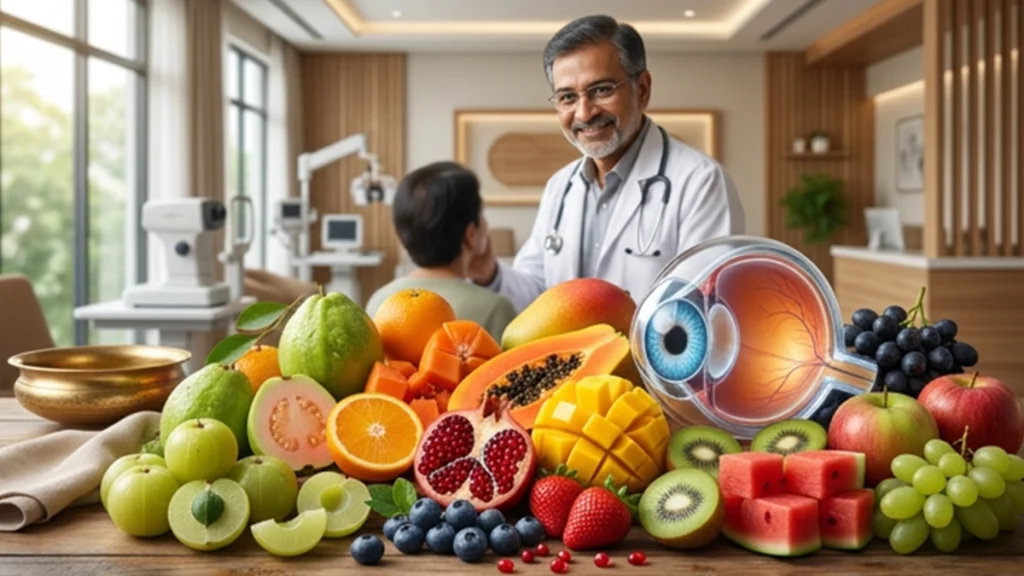
Good health of your eyes is a result of more than just regular eye exams. What you put in your body also plays a role in eye health over a lifetime. A well rounded diet which includes a variety of colored fruits and vegetables can supply vitamins, antioxidants, carotenoids, and minerals that support normal eye function.
Choosing Best Fruits for Eye Health is an easy way to improve the quality of your daily diet. While fruits do not correct refractive errors or cure eye disease they may as well be included in a healthy Eye Care Diet.
The National Eye Institute (NEI) reports that a Healthy Eyes. is a key element in the care of your eyes. Also they put forth that which includes regular eye exams, physical activity, sun protection, and healthy lifestyle choices is very important for long term vision health.
Why Are Fruits Important for Eye Health?
Your eyes require certain nutrients for proper function. Vitamin A which is good for the retina also helps out with low light conditions. Vitamin C is an antioxidant and we also have carotenoids like lutein and zeaxanthin which are present in eye tissue.
The NEA reports that vitamin A is a key player in vision which includes the process of seeing in low light. Also the National Institutes of Health (NIH) notes that which is best for getting your vitamin C from a diet are fruits and vegetables. It is recognized that citrus fruits, kiwi, strawberries, and cantaloupe are among the top.
This is also good Eye Nutrition is concerned that you should include a variety of colors and types of fruit. Instead of putting all your eggs in one basket so to speak, go for diversity.
15 Best Fruits for Eye Health at a Glance
| Fruit | Key Nutrients | Role in a Balanced Eye Diet |
| Orange | Vitamin C, carotenoids | Antioxidant support |
| Amla | Vitamin C, polyphenols | Adds antioxidant-rich variety |
| Papaya | Vitamin C, beta-carotene | Supports balanced nutrition |
| Mango | Beta-carotene, vitamin C | Provides vitamin A precursors |
| Guava | Vitamin C, carotenoids | Nutrient-dense fruit choice |
| Kiwi | Vitamin C, carotenoids | Supports antioxidant intake |
| Strawberry | Vitamin C, antioxidants | Adds vitamin C to the diet |
| Blueberry | Anthocyanins, vitamin C | Provides plant antioxidants |
| Blackberry | Anthocyanins, vitamin C | Adds antioxidant diversity |
| Pomegranate | Polyphenols | Supports overall dietary quality |
| Watermelon | Lycopene, vitamin C | Hydrating fruit choice |
| Cantaloupe | Vitamin C, carotenoids | Provides useful micronutrients |
| Grapes | Polyphenols | Adds plant-based antioxidants |
| Avocado | Vitamin E, lutein, healthy fats | Supports nutrient variety |
| Apricot | Beta-carotene | Provides provitamin A carotenoids |
1. Oranges
Oranges are a great source of what we may term as Vitamin Rich Foods. They supply vitamin C which is a protective antioxidant in the body. The NIH reports that citrus fruits including oranges and grapefruit are to be included in large quantities in the diet for vitamin C.
Adding oranges to your breakfast or as a healthy snack which in turn will have you including more Fruits for Vision in your daily diet.
2. Amla
Amla which is also known as Indian gooseberry is a natural fit for an Indian Eye Care Diet. It has vitamin C and a variety of plant compounds. You may eat fresh amla in small amounts or include it in home prepared recipes.
Do not look at it as a cure for an eye condition. Instead, think of it as one of the Best Fruits for Eye Health which also adds to the nutritional value.
3. Papaya
Papaya is a source of vitamin C and carotenoids which include beta-carotene. The body in need converts beta carotene to vitamin A.
Thus, papaya is a healthy add on to Eye Nutrition also when in company of vegetables, whole grains, proteins, nuts, and seeds.
4. Mango
Mangoes provide beta carotene also which they present at the same time as vitamin C and other plant nutrients. Beta carotene is a precursor to vitamin A.
Including mango in moderate terms of what is doable during the season can add color and variety to a diet for Healthy Eyes.
5. Guava
Guava is a very nutritious fruit which is high in vitamin C. Also it has carotenoids and fibre. Whole guava is a better option daily than sweetened guava drinks.
The whole fruit has more fiber and usually does not have added sugar. It also has a place among the Best Fruits for Eye Health in Indian markets.
6. Kiwi
The NIH reports that kiwifruit is a great source of vitamin C. Also in the fruit are carotenoids and other plant compounds.
It’s a very good Vitamin-Rich Fruits to include in a varied diet.
7. Strawberries
Strawberries are a source of vitamin C and also contain various natural antioxidants. Also according to the NIH strawberries are a part of the diet which includes vitamin C.
Fresh strawberries also bring to the table Eye Nutrition and at the same time add flavor which doesn’t require the use of extra sugar.
8. Blueberries
Blueberries which are known for their anthocyanins, the pigments that give them that rich blue purple color. Also they are a source of vitamin C and other plant compounds.
They do play a role in a healthy Eye Care Diet,which is to say that including blueberries is great but they are not a stand alone solution to preventing or treating an eye disease.
9. Blackberries
Blackberries have anthocyanins, vitamin C, and fibre. They’re also noted for their high content of natural plant pigments which is what gives them their dark color.
Also rotate blackberries with citrus fruits, papaya, guava and other Fruits for Vision which in turn gives the diet a great diversity of nutrients.
10. Pomegranate
Pomegranates have polyphenols and other anti-oxidant agents which is what makes them a great addition to a health conscious diet.
When possible choose the whole arils over sweetened packaged juice. Also the whole fruit provides fiber which in turn supports better Healthy Eyes.
11. Watermelon
Watermelon is a source of vitamin C and lycopene. Also it has high water content which makes it a great choice for hot weather.
Hydration is key to health, watermelon also brings variety to what we may consider the Best Fruits for Eye Health in a balanced Indian diet.
12. Cantaloupe
Cantaloupe is a source of vitamin C and carotenoids. The NIH reports that cantaloupe is a good source of vitamin C.
Its nutrient content which in turn makes it a great option among Vitamin-Rich Fruits to choose from when fresh and in season.
13. Grapes
Grapes have polyphenols and other plant antioxidants. Also red and purple ones bring in different pigments which in turn add to the variety of antioxidants in your diet.
Grapes should be a part of a large Eye Care Diet plan instead of looking at them as a stand alone food for better eye health.
14. Avocado
Avocado is unique as a fruit in that it has healthy fats. Also it is a source of vitamin E and carotenoids which include lutein.
Healthy dietary fats play a role in the absorption of some fat soluble nutrients. For that reason avocados may play a role in balanced Eye Nutrition when included in proper portions.
15. Apricots
Apricots have beta-carotene which is what gives them that orange color. The body uses beta carotene to produce vitamin A.
Thus fresh apricots can bring into your fruit diet a variety of options which in turn are for Fruits for Vision and other colorful plant foods.
Which Nutrients Should You Look for in Fruits?
The Best Fruits for Eye Health are to be included in a wide variety of healthy foods. No single vitamin or nutrient is going to do it all for your eyes.
| Nutrient | Examples of Fruit Sources | Why It Matters |
| Vitamin A precursors | Mango, papaya, apricot, cantaloupe | Support normal retinal function and low-light vision |
| Vitamin C | Orange, guava, kiwi, strawberry, amla | Provides antioxidant activity |
| Lutein and zeaxanthin | Avocado, kiwi and selected fruits | Carotenoids associated with eye tissues |
| Vitamin E | Avocado | Antioxidant nutrient |
| Anthocyanins | Blueberries, blackberries, dark grapes | Plant antioxidant compounds |
| Lycopene | Watermelon | Carotenoid antioxidant |
| Polyphenols | Pomegranate, grapes, berries | Add antioxidant diversity |
Research from the National Eye Institute reports that which also has regard to the health of the retina. The AREDS2 study looked at these carotenoids in a specific supplement which they put forward for certain patients with age related macular degeneration. This is not to say that which goes for all our readers. Patients should speak to an eye doctor before beginning any supplement.
Can Eating Fruit Improve Your Eyesight?
Eating more fruit does not correct for spectacle power, reverse myopia, cure cataracts, or take the place of treatment for retinal disease. Nutrition and medical treatment play different roles.
The Best Fruits for Eye Health which we see in terms of value are those that support general nutritional health. Also a balanced diet plays a role in supporting health issues which affect the eyes.
The NEI reports that diabetes and high blood pressure which are to include in that are players which increase risk of some eye diseases. A healthier diet and exercise play a role in total health which in turn includes eye health.
Thus we may think of Eye Nutrition as a piece of the puzzle in total eye care.
How to Add More Eye-Friendly Fruits to Your Diet
There’s no need to eat 15 different kinds of fruit every single day, variety does in fact matter more. Rotate in the seasonal options which are Vitamin-Rich Fruits and pair those up with veg, whole grains, proteins, nuts, seeds and healthy fats.
Whole fruit is for the most part a good choice which preserves fiber. As for people with diabetes or other health issues it may be best to have individualized diet counseling regarding fruit serving sizes and types.
Also it is very important that an Eye Care Diet supplement regular eye exams which it should not replace.
Diet and Regular Eye Check-Ups Work Together
Even the best diets do not cause diagnosis of glaucoma, diabetic retinopathy, cataracts, retinal disorders, or other eye diseases.
The NEI reports that many eye diseases may develop without early warning signs. It puts forth that comprehensive dilated eye exams are recommended to find out many of these issues at an earlier stage.
At ASG Eye Care we have professionals that our patients may see when they notice issues like persistent blurred vision, eye discomfort, flashes, floaters, difficulty with night time vision, or sudden changes in eyesight.
Choosing which are the Best Fruits for Eye Health,, also adapt to healthy daily routines, and get the right eye exams which in turn will present a full program for Healthy Eyes care.
Conclusion
The Best Fruits for Eye Health are not miracle foods. What they do is add to a balanced diet which is what really counts.
Oranges, amla, papaya, mangoes, guava, kiwi, strawberries, berries, pomegranate, watermelon, cantaloupe, grapes, avocado, and apricots all are great for dietary variety. When you include these in a wide range of other nutritionally dense choices you support Healthy Eyes and overall health.
For best results pair Good Eye Nutrition with regular eye exams. If you notice any persistent or sudden vision changes see an ophthalmologist instead of counting on diet change to solve the issue.
Also Read :
Best Vegetables for Eye Health,
10 Best Juices for Eye Health,
Best Diet Plan for Healthy Eyes and Vision,
10+ Eye Health Tips for Kids and Adults,
Top Eye-Healthy Foods Every Child Needs
Frequently Asked Questions
1. Which fruit is best for eyesight?
There is not a single fruit that does it best. We have oranges, guava, papaya, mango, kiwi, berries, and other Fruits for Vision which each present a different array of nutrients. It is better to eat a variety of fruits than to put all your eggs in one basket.
2. Which fruits contain vitamin A for the eyes?
Mangoes, papayas, apricots, and cantaloupe have carotenoids like beta-carotene in them. The body is able to turn beta-carotene into vitamin A which in turn supports normal vision.
3. Are oranges good for eye health?
Yes. Oranges are a great source of Vitamin-Rich Fruits which is what they do best in terms of nutrition. NIH reports that citrus fruits are very important in the diet as a source of this anti-oxidant vitamin.
4. Are berries good for the eyes?
Berries present vitamin C and anthocyanins which are types of plant pigments. They play a role in Eye Nutrition when incorporated into a varied and balanced diet.
5.Can fruits improve blurred vision?
Fruit is not a solution for blurred vision which is a result of refractive errors, cataracts, glaucoma, retinal issues or other eye conditions. Persistent or sudden blurred vision requires an eye exam.
6. Can I eat fruits every day for eye health?
For many people fruit is a component of a healthy daily diet. What is right for you depends on your overall diet, medical history, blood sugar levels, and nutrition requirements.
7. Is fruit juice as good as whole fruit?
Whole fruit is a great daily choice which includes fiber. Also note that many packaged fruit drinks have added sugars. Choose whole fruits for Vision whenever you can.
8. Do I need eye supplements if I eat fruit?
Not at all. Supplements have specific uses and do not in all cases substitute for food. For some issues the National Center for Complementary and Integrative Health reports the science behind eye supplements is not the same. See a specialist before starting on high dose eye supplements.
9. What should a good eye care diet include?
A well rounded Eye Care Diet includes a variety of fruits and vegetables with proper protein, whole grains, healthy fats, and other nutrient dense foods. The NEI also puts out there is a strong connection between what you eat and long term vision health.
8. Are fruits enough to keep eyes healthy?
No. The Best Fruits for Eye Health are a great addition to a healthy diet, but it is also true that for good vision other practices are key. Get your eyes checked regularly, exercise, wear protection from the sun’s UV rays, take breaks from your screens, and manage any health conditions you may have.