Your eyes often present small signals which may indicate a bigger issue is at hand. You may see that your vision is blurred when reading, get headaches after time in front of the computer, or that you are more sensitive to light than usual. Some people dismiss these as unimportant. But certain Eye Checkup Signs do require attention, in particular when they present suddenly or get worse over time.
Not all vision changes are a sign of a serious eye disease. Fatigue, dry eyes, refractive errors, extended screen time, and many other causes present Temporary Eye Symptoms. But persistent or sudden changes require a professional evaluation. An Eye Doctor will do an exam of the eyes to determine if the issue requires treatment, close watch, or a change in prescription.
Getting to know which Eye Checkup Signs to look for may put you in the know of when to not wait for your routine appointment. Here are ten which you should pay attention to.
Why Should You Pay Attention to Eye Checkup Signs?
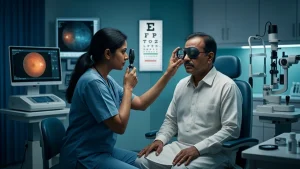
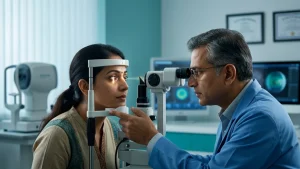
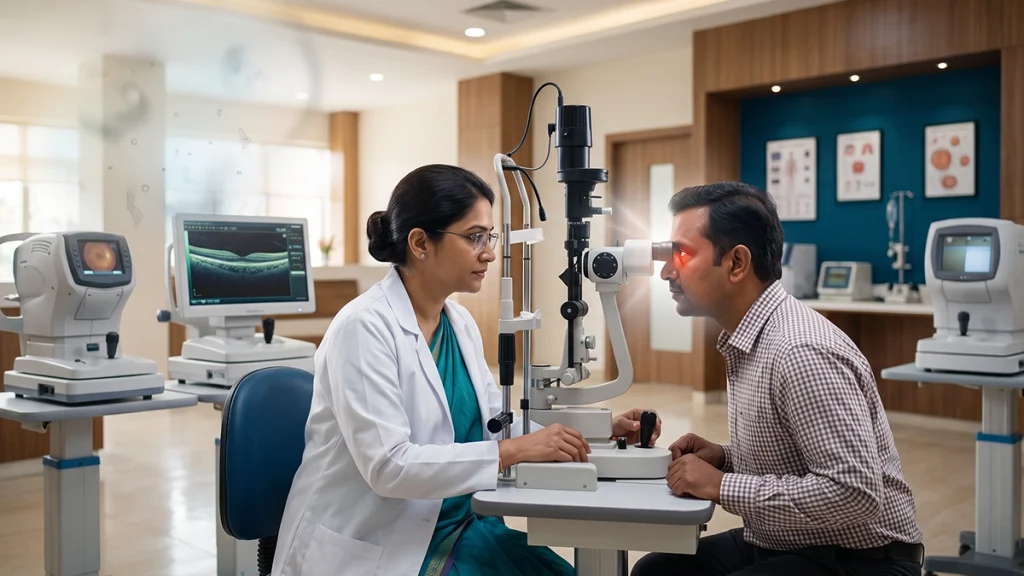
Many eye issues present no telltale signs in the early stage of development. Also some may at first present with symptoms that people put down to tiredness or aging. A full eye exam which is conducted by an Eye Doctor will assess your vision as well as the internal structures of the eye.
Regularly at which time is the best opportunity to catch the early signs of some vision problems which may not yet be noticeable to you. If new eye symptoms present between your scheduled visits see us in which we can do an earlier exam.
| Eye change | Why an eye check may be needed |
| Sudden blurred vision | May require assessment for an eye or health-related problem |
| Persistent eye pain | Can occur with several eye conditions |
| New flashes or floaters | May require a retinal examination |
| Double vision | Needs evaluation to identify the cause |
| Redness with pain | May indicate inflammation, infection, or another problem |
1. Your Vision Has Suddenly Become Blurry
Sudden and persistent blurred vision is an important issue which you should pay attention to in Eye Checkup Signs. You may have trouble reading small print, recognizing faces, or seeing road signs clearly. At times the issue presents in only one eye.
Blurred vision is a symptom which may result from a change in your glasses prescription, dry eye, cataract, or other ophthalmic conditions. Also some health issues may play a role. If the blurring happens suddenly it is very important to arrange for an exam.
Do not think that all changes mean you will require stronger glasses. An Eye Doctor is able to assess the cause of your vision problems and will put you into the best care.
2. You Are Getting Frequent Headaches
Headaches are not of the eye in all cases. But we do see patients that report to us of getting headaches during or after they have been reading, using a computer, driving, or doing close work which in turn may be related to visual strain or an uncorrected refractive error. You may notice that you are squinting more at times or that you are sitting in to see what is on a screen. These subtle Eye Symptoms may in fact be your eyes’ way of telling you that they are working harder to produce clear vision.
Recurrent headaches together with issues in focus are signs which should be brought up at your Eye Checkup Signs. At the exam your doctor may determine if your prescription has changed or that some other issue is at play.
3. You See New Floaters or Flashes of Light
Floaters present as dots, threads, cobwebs or little shapes that drift in your field of vision. Many people report seeing them from time to time. But a sudden increase in floaters or new flashes of light is an issue that requires prompt attention. These Eye Symptoms present when the vitreous gel within the eye changes with age. In some cases sudden flashes and floaters may be a result of a retinal tear or retinal detachment.
A sudden appearance of floaters, repeated flashes, or a dark curtain like shadow in your field of vision should not be put off as a routine issue of the eye. These are signs to head straight to Vision Problems. Prompt attention to these Eye Checkup Signs issues is required for which quick medical care is advised. Delay in treatment may cause permanent damage to your vision from retinal detachment.
4. You Have Persistent Eye Pain
Mild tiredness after a long day is a different issue from persistent or severe eye pain. Pain may be on the surface of the eye, at the back of it, or around the eye socket. Eye pain has a number of causes. Dryness, inflammation, infection, injury and certain other eye health issues can produce discomfort. Pain that also includes redness, blurred vision, nausea or light sensitivity requires attention.
Persistent pain is an Eye Checkup Signs that should not be treated only with over the counter eye drops. A visit to the Eye Doctor is required to determine the cause before proper treatment may be put in place.
5. Your Eyes Stay Red for a Long Time
Temporary redness may present after a night of poor sleep, exposure to dust, or extended screen time. Redness that is persistent, recurring, or which comes with pain needs to be looked at more closely. We see persistent redness show up with dry eye, allergy, inflammation, infection, or issues with the cornea. Contact lens wearers should pay special attention to painful redness as some infections do attack the cornea.
Redness which at this point is a more serious Eye Checkup Signs may present with discharge, pain, light sensitivity, or vision changes. Instead of repeatedly using eye drops as a home solution, get these Eye Symptoms checked out.
6. You Are Becoming More Sensitive to Light
Do normal indoor lights suddenly feel uncomfortable? Do you find yourself squinting outdoors even when the sunlight is not particularly strong? Increased light sensitivity, also called photophobia, can accompany several eye conditions.
Occasionally sensitivity issues may present with fatigue or headaches. Persistent or sudden photophobia requires evaluation, especially when it is associated with pain, redness, or blurred vision. These combined Eye Symptoms may point out the need for a medical assessment. Treat unexplained light sensitivity as a reason to bring up with your Eye Doctor at your next visit instead of just avoiding bright environments.
7. You Are Seeing Double
Seeing double is a condition in which you see two of one image. It may present in one eye at a time or only when both eyes are open. This is a symptom which should not be ignored. Double vision may be a result of a number of eye related or neurological issues. An exam helps to determine if the issue is with alignment of the eyes, focus, the muscles, the nerves, or a different base issue.
If at the onset of double vision you are present in the emergency room is recommended. In a group of Vision Problems a very sudden change like this requires prompt assessment. It is also a case of an Eye Checkup Signs that the cause is which you should know as opposed to what you can do to live with it.
8. You Struggle to See at Night
Driving at night may slowly become a struggle. Head lights may appear very bright, or you may have trouble making out objects in the dark. Night vision issues may present with refractive errors, cataracts, and other health issues which affect vision. Some people only notice their vision problems when they are on the road because low light conditions bring forward the issue.
Increased night time vision issues is thus one of the tell tale Eye Check up Signs to note. An Eye Doctor may test visual acuity and other elements of eye health to determine what is causing the change in night vision.
9. You Notice Halos Around Lights
Seeing light rings or halos around headlights, streetlights and other bright sources is at times present as a result of glare. But in which case halos are a new or persistent issue, they do require a health care evaluation. Halos that present with a variety of Vision Problems including refractive changes and issues which affect the cornea or the lens are of note. Also the issue’s importance is in what it is associated with. For instance halos in association with very painful eyes, redness, headache, nausea or a sudden drop in vision should see the doctor immediately. These associations are emergency Eye Checkup Signs and do not wait for a routine appointment.
10. Your Prescription Seems to Change Frequently
Nearsightedness and farsightedness may fluctuate which is normal but also bear in mind that which is out of the ordinary may indicate a problem. If you notice your vision has changed since your last prescription update, it’s best to get in touch with an Eye Doctor. Some eye issues and health issues may cause changes in your eyesight. Do not go around getting new prescriptions without first determining what is causing the change in your vision.Recurring Vision Problems are valuable Eye Checkup Signs because they may tell your doctor that a more detailed examination is necessary.
When Do Eye Symptoms Become an Emergency?
Some Eye Symptoms can wait for a scheduled consultation, while others need urgent assessment. The speed and severity of the change often matter.
| Situation | Suggested response |
| Mild, gradual difficulty reading | Schedule an eye examination |
| Repeated headaches with visual strain | Arrange an Eye Doctor consultation |
| Persistent redness or discomfort | Seek an eye examination |
| Sudden increase in flashes or floaters | Seek prompt ophthalmic assessment |
| Dark curtain or shadow over vision | Seek urgent eye care |
| Sudden loss of vision | Seek emergency medical care |
| Severe eye pain with sudden vision change | Seek emergency medical care |
A sudden dark shadow or black out in your field of vision is very much so. Also report to your doctor any new flashes which may be accompanied by many floaters as this may be a sign of a retinal issue. These Eye Checkup Signs require prompt evaluation.
Why Regular Eye Checkups Matter Even Without Symptoms
Waiting for the telltale signs of Eye Symptoms may not be sufficient for your eye health. Some eye diseases progress very stealthily. Glaucoma in particular may present no early warning signs.
A full eye exam is a chance for your doctor to see beyond 20/20 vision. As per your health we will check out your visual acuity, refractive error, eye pressure and internal eye structures. Also, the more often you should come in for an exam the presence of diabetes, high blood pressure, a family history of eye issues, past eye surgery, or present vision problems. Your Eye Doctor will put together a routine for you based on what is unique to your health.
Recognising Eye Checkup Signs and going for regular exams which in turn you do for unexpected changes in your vision and at the same time we have issues that are identified before they become apparent.
Conclusion
Good health of your eyes is a thing that you may not notice until you begin to have issues with daily tasks. Noticing what is changing may help you catch an issue before it gets worse. Persistent blurring, pain, double vision, night vision issues, redness, light sensitivity, flashes, floaters and any other atypical Eye Symptoms should not be what you accept as normal.
Recognizing Eye Checkup Signs doesn’t mean that you should try to diagnose yourself. What it does do is to help you identify when a professional assessment is in order. If you are seeing persistent or sudden Vision Problems, see an Eye Doctor for the right exam.
Routine eye exams still play a key role in the absence of any apparent vision issue. With the addition of paying attention to Eye Checkup Signs at the first instance of them, they may support early detection, appropriate treatment, and in turn better long term eye health.
Frequently Asked Questions
1. What are the most common Eye Checkup Signs?
Common Eye Checkup Signs include persistent blurred vision, frequent headaches, eye pain, double vision, prolonged redness, increased light sensitivity, halos, difficulty seeing at night, and new flashes or floaters. Sudden changes require faster assessment than gradual ones.
2. Should I visit an Eye Doctor if my vision suddenly becomes blurry?
Yes. Sudden blurred vision which is to be evaluated right away, especially if it is in one eye or is present with pain, flashes, floaters, weakness, or any other acute symptom. A visit to the Eye Doctor will determine if the issue is of ocular origin or if a more extensive health evaluation is required.
3. Are floaters always a sign of serious Vision Problems?
No. Many floaters are a common occurrence and are usually harmless. But if you see a great increase in the number of floaters, flashes of light, or a dark curtain which is blocking your field of vision that comes on very quickly, this may be a sign of a retinal issue.These Vision Problems need prompt assessment.
4. Can frequent headaches be related to Eye Symptoms?
Sometimes. Uncorrected refractive errors and visual stress also present a cause for headaches. But it is also true that there are many causes for headaches. An eye exam may help to determine if Eye Symptoms or issues with focus are at play.
5. Is eye redness enough reason to get an eye checkup?
Occasionally mild redness will go away on its own. Persistent redness requires an evaluation, in particular if you also have pain, discharge, blurred vision, or light sensitivity. An Eye Doctor is able to determine the cause and put forth the proper treatment.
6. How often should I get an eye checkup?
Which interval is appropriate for you will depend on your age, eye health, overall health, family history of eye disease, and present health issues. Some people may require more frequent exams. Your eye care professional will be able to put together a proper schedule for you.
Medical References
National Health Mission – Eye Care Training Manual for Medical Officers at AB-HWC
National Health Mission Eye Care Training Manual
Centers for Disease Control and Prevention – Taking Care of Your Eyes
CDC – Taking Care of Your Eyes