Glaucoma is described as a silent disease of the eye which may not present any symptoms in its early stages. By the time a person notices vision changes, some damage to the optic nerve may already be present. What also is important is to know the glaucoma risk factors which may put some people at a greater risk to have more frequent or earlier eye check ups.
According to the National Eye Institute (NEI) glaucoma is a disease which damages the optic nerve and causes permanent vision loss. A comprehensive dilated eye exam will also help to catch the disease in early stages before large scale symptom development. People with important glaucoma risk factors should discuss an appropriate glaucoma screening schedule with an ophthalmologist.
Why Are Glaucoma Risk Factors Important?
Not all people develop glaucoma at the same rate. Age, family history, eye pressure, ethnicity, and certain health and eye issues play a role. Identifying which of these glaucoma risk factors helps doctors determine at what age to start monitoring and how often a person should have a glaucoma eye test.
High eye pressure is a very large risk factor, but it does not tell the full story. Some that have increased eye pressure will never get glaucoma, while others will develop it out of the blue even when their pressure is in the normal range. This is why we can’t rely only on eye pressure to glaucoma diagnosis.
| Glaucoma risk factors | Why they matter |
| Increasing age | Glaucoma becomes more common with age |
| Family history | Having a close relative with glaucoma can increase risk |
| High eye pressure | Increased pressure may place the optic nerve at greater risk |
| Diabetes | Diabetes is associated with increased risk of some forms of glaucoma |
| Certain ethnic backgrounds | Risk and age of onset can vary between populations |
| Other eye conditions | Previous eye problems or certain anatomical features may influence risk |
Who May Need Earlier Glaucoma Screening?
People that have a large family history of the disease should pay attention to glaucoma risk factors. If a parent or sibling has glaucoma it is sensible to discuss early screening with an eye specialist. The NEI reports family history as a very important factor which calls for more frequent monitoring.
Age is a factor. Also the NEI reports that for some high risk groups annual comprehensive dilated eye exams are recommended which may stretch out to every 1 to 2 years. Your ophthalmologist may recommend a more frequent monitoring schedule when you have a number of glaucoma risk factors present.
People who have diabetes, high intraocular pressure, large refractive errors, or other eye issues may also require a separate assessment. We identify these glaucoma risk factors which do not in and of themselves mean that a person has glaucoma. Instead they are that which may prompt us to perform a more frequent follow up in hopes of an early glaucoma diagnosis should changes occur.
What Happens During a Glaucoma Eye Test?
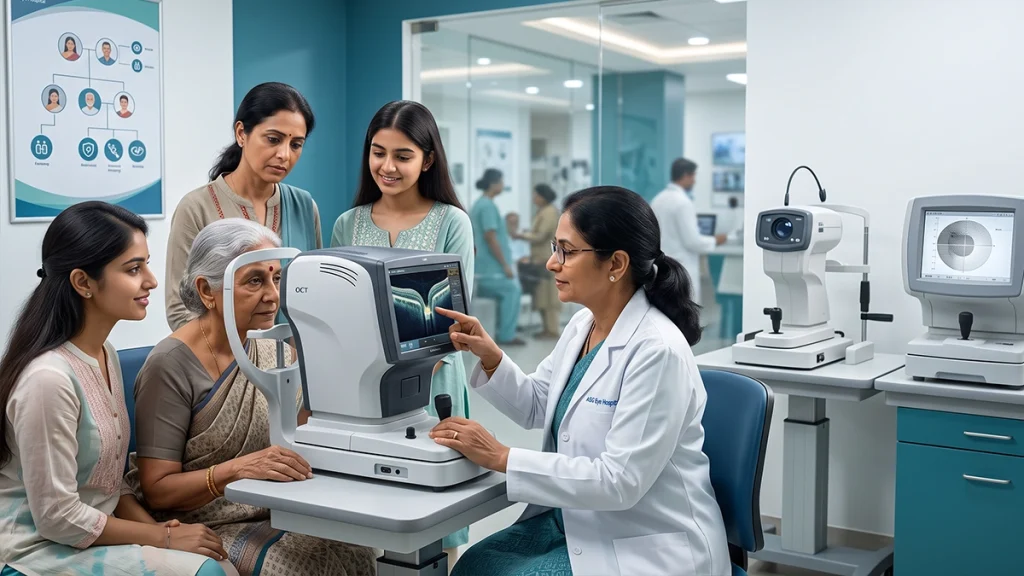
A proper glaucoma eye test goes beyond the assessment of your ability to see letters on a chart. What we do is check eye pressure, the optic nerve, peripheral vision and other structures which may be at risk based on that particular patient’s glaucoma risk factors.
| Examination | What it helps assess |
| Tonometry | Measures pressure inside the eye |
| Dilated eye examination | Allows detailed examination of the optic nerve and retina |
| Visual field testing | Checks peripheral or side vision |
| Optic nerve assessment | Looks for signs of structural damage |
| Additional imaging/testing | Helps document and monitor suspicious changes when required |
These assessments which we do for the ophthalmologist to see if we should put a patient on a watch list or in fact give them a glaucoma diagnosis. Also by doing regular testing we are able to see trends over time which in turn allows us to make better decisions rather then going off of a single data point.
Can Glaucoma Be Prevented?
There are no certain methods of glaucoma prevention. But we see that early detection and proper treatment may save some vision. The NEI reports that early treatment may stop or slow down further damage.
For individuals that have identified glaucoma risk factors practical glaucoma prevention mostly involves regular eye exams and following medical advice. Patients which are in treatment should also go to their scheduled follow ups and use as directed the prescribed medicines.
Why Should You Not Wait for Symptoms?
Open angle glaucoma often at first does not present with any symptoms. By the time vision which is central vision or peripheral begins to be affected diagnosis may have been delayed. At which point routine glaucoma screening takes on great value in people that have glaucoma risk factors.
At ASG Eye Hospital, in our facility we evaluate what your individual glaucoma risk factors are and we will recommend if you should have a full glaucoma eye test or if we should just do more of a watchful monitoring.
Conclusion
Knowing your glaucoma risk factors is key to making better decisions regarding your eye care. If you have a family history, are of advanced age, have high eye pressure, diabetes or other related conditions we advise you to seek advice before you see any vision problems.
Regular glaucoma screening, a full glaucoma eye test, and prompt specialist assessment may support early diagnosis. While it is at present not possible to glaucoma prevention completely, we do see early identification of the disease and starting appropriate treatment which in turn may preserve vision into the future.
Frequently Asked Questions
1. What are the most important glaucoma risk factors?
Important variables which increase glaucoma risk factors are age, family history, high eye pressure and certain medical or eye conditions. Your individual risk should be evaluated by an eye specialist.
2. How often should glaucoma screening be done?
Glaucoma screening frequency is based on age, medical history and individual risk. High risk individuals may require more frequent exams than the general population.
3. Can normal eye pressure rule out glaucoma?
No. Glaucoma at times develops in the absence of what is considered normal eye pressure. A full glaucoma eye test looks at more than pressure.
4. Does glaucoma prevention stop the disease completely?
There is not a sure way to glaucoma prevention. Early detection, proper treatment and regular follow up can help to reduce the risk of avoidable vision loss.
5. Is glaucoma diagnosis possible before symptoms appear?
Yes. A full exam can identify early signs of the disease before the patient sees large scale vision issues which in turn puts great stress on the importance of timely glaucoma diagnosis.
Government & Medical Authority References
National Eye Institute (U.S. Government) — Glaucoma
https://www.nei.nih.gov/eye-health-information/eye-conditions-and-diseases/glaucoma
National Eye Institute — Detection of Glaucoma and Adult Vision Screening
https://www.nei.nih.gov/about/education-and-outreach/glaucoma-resources/national-eye-institute-statement-detection-glaucoma-and-adult-vision-screening
National Eye Institute — Get a Dilated Eye Exam
https://www.nei.nih.gov/eye-health-information/healthy-vision/finding-eye-doctor/get-dilated-eye-exam