Waking up and finding that you have perfect vision in one eye but in the other your vision is blurred out may be a cause for worry. At times what we may see as One Eye Blurry is due to a simple refractive error or dryness. Also at times this may be a sign of an eye issue which requires medical care. What is most important is to not ignore a change in your vision which is new or unexplained.
Blurry Vision in One Eye may present slowly over time or all of a sudden. What causes it may be the cornea, lens, retina, optic nerve or another element of the visual system. Some Vision Problems improve with the use of glasses or simple treatment. In the case of certain eye diseases prompt diagnosis is required to save sight.
What Does One Eye Blurry Mean?
When One Eye Blurry occurs, may see a foggy, out of focus,arrière or distorted image. You will notice this while reading, driving, using a screen or when you cover your good eye.
The National Eye Institute reports that which causes the eye to focus light properly on the retina is what we term a refractive error. Issues with the eye’s length, corneal shape, or the aging lens may cause these. If you are seeing blurred vision in one eye that doesn’t improve with blinking or rest, an eye exam is recommended to determine the cause.
Common Causes of One Eye Blurry
Several conditions can make One Eye Blurry. Also very typical are refractive errors like myopia, hyperopia and astigmatism. It is not uncommon for each eye to require a different prescription.
Dryness can also cause temporary Vision Problems. When the tear film becomes unstable, vision may fluctuate and improve after blinking.
Cataracts may cause Slow One Eye Blurry which is a result of one lens becoming more cloudy than the other. The Government of Tamil Nadu’s blindness control info reports blurred vision as a symptom of cataract. Also they note that cataract symptoms usually develop slowly and without pain.
Retinal issues may also present as Blurred Vision in One Eye. In the case of Macular problems what you may see is straight lines which appear wavy or else have an effect on the fine detail of your central vision. Also reports from the National Eye Institute state that Macular edema can produce progressive blurred vision.
| Possible Cause | How Vision May Change |
| Refractive error | Distant or near objects appear unclear |
| Dry eye | Intermittent or fluctuating blur |
| Cataract | Gradual cloudy or hazy vision |
| Retinal problem | Blurring, distortion, flashes or floaters |
| Uveitis | Blur with redness, pain or light sensitivity |
| Glaucoma | Visual changes that may occur with raised eye pressure |
Can One Eye Blurry Be a Sign of an Eye Disease?
Yes. Although in many cases One Eye Blurry is a minor issue which does not indicate serious eye diseases, persistent changes should be brought to the attention of a health care professional. Uveitis, glaucoma, diabetic retinopathy, retinal disorders, and optic nerve issues can cause visual impairment. For instance Diabetic retinopathy may over time cause blurred vision and other vision problems. It may affect one or both eyes.
A sudden onset of floaters and flashes which also includes blurred vision in one eye is a symptom that requires attention. The National Eye Institute reports that these may present with a retinal tear or retinal detachment. Also reported is a dark curtain like shadow.
When Is One Eye Blurry an Emergency?
Sudden onset of One Eye Blurry shouldn’t be put off, in fact if the change is serious that is of great importance. Go to the emergency room immediately if you have Blurred Vision in One Eye which is a result of sudden vision loss, severe eye pain, flashes, many new floaters, or a dark curtain coming over your field of vision. Retinal detachment may cause permanent sight loss if left untreated. Also acute angle closure glaucoma may also cause severe pain and blurred vision. Without prompt treatment this too may cause permanent sight loss.
| Situation | Recommended Action |
| Mild temporary blur | Monitor and arrange an examination if it continues |
| Persistent One Eye Blurry | Book a comprehensive eye examination |
| Blur with redness or discomfort | Consult an ophthalmologist promptly |
| Sudden blur with flashes or floaters | Seek urgent eye care |
| Sudden vision loss or severe pain | Seek emergency medical attention |
How Is One Eye Blurry Diagnosed?
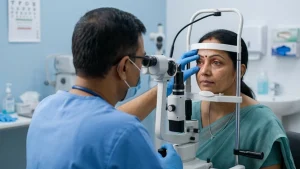
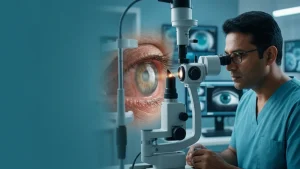
An ophthalmologist will test visual acuity, spectacle power, eye pressure, pupil reactions, cornea, lens, retina, and optic nerve. Also we may need to do extra tests when doctors are looking at specific Eye Diseases. Proper diagnosis is important because the same Vision Problems may have many different causes.
Treatment for One Eye Blurry
Treatment is based totally on diagnosis. We may correct refractive errors with glasses or contact lenses. Also we may put forward appropriate treatment for dry eye or inflammation. Cataracts which greatly affect daily vision may require surgery. Retinal or glaucoma related Vision Problems require condition specific care. Early in assessment of Blurred Vision in One Eye may help doctors to identify conditions before more extensive visual damage occurs.
Conclusion
Having One Eye Blurry may be a result of something as simple as a refractive error or dry eye. Also it may be a sign of a problem with the lens, retina, optic nerve, or eye pressure. Do not delay in seeing an eye care professional when the issue persists.
If you experience Blurred Vision in one eye that is accompanied by pain, flashes, floaters, or sudden vision loss, get in to see a health professional as soon as you can. At ASG Eye Hospital we do comprehensive exams which can help determine the cause of your single eye blur and we will guide you on the best care for your long term eye health.
FAQs
1. Can One Eye Blurry happen because of tiredness?
Eye strain and dryness may cause temporary visual blur. In the case of persistent One Eye Blurry you should see a professional.
2. Why is my One Eye Blurry suddenly?
Sudden Blurred Vision in One Eye is a symptom of many issues. Some require immediate care which is the case when you also experience flashes, floaters, severe pain, or vision loss.
3. Can glasses correct One Eye Blurry?
Yes when it is because of refractive error. An eye exam will determine if prescription lenses will help.
4. Can cataracts affect only one eye first?
Yes. Cataracts do not always progress the same in each eye, what may be a blurred vision in one before the other is affected.
5. Should I visit an eye doctor for One Eye Blurry?
Yes in particular when the change is persistent, recurring, or sudden. An ophthalmologist is able to diagnose Eye Diseases and put forth the best treatment.
Government & Medical Reference Links
Government of India – Central Government Health Scheme, “Common Eye Ailments – Need to Prioritize the Symptoms”:
CGHS – Common Eye Ailments
Government of India – Ministry of Health & Family Welfare, Standard Treatment Guidelines: Ophthalmology:
MoHFW – Standard Treatment Guidelines for Ophthalmology