Vision is one of our most precious senses, allowing us to navigate the world around us with ease. However, as we age, our eyes undergo changes, and one common condition that affects many individuals is cataracts. Cataracts are a clouding of the eye’s natural lens, leading to blurred vision and, if left untreated, can significantly impact daily life. In this article, we will delve into the different types of cataract disease, empowering you with knowledge to make informed decisions about your eye health.
Age-Related Cataracts
The most common type of cataract is age-related, they get their name from the fact that they usually occur as a normal part of aging. Over time, the proteins in the eye’s lens can clump together, forming cloudy areas that obstruct clear vision. Age-related cataracts often progress slowly, and symptoms may include difficulty seeing in low light, increased sensitivity to glare, and a gradual decline in overall vision.
Congenital Cataracts
Unlike age-related cataracts, congenital cataracts are present at birth or develop during childhood. They may be caused by genetic factors, infections during pregnancy, or other developmental issues. Detecting congenital cataracts early is crucial, as they can interfere with the normal development of a child’s vision. Prompt intervention, often through surgery, can help restore and preserve vision in affected children.
Traumatic Cataracts
Traumatic cataracts result from eye injuries, such as blunt force trauma or penetrating injuries. The trauma can cause damage to the eye’s lens, leading to the development of cataracts. Prompt medical attention is essential in cases of eye injury to minimize the risk of cataract formation and other complications. Protective eyewear can also play a vital role in preventing traumatic cataracts, especially in activities where eye injuries are more likely.
Secondary Cataracts
Secondary cataracts can develop as a result of other eye conditions or medical treatments. Conditions such as diabetes or the long-term use of certain medications, such as steroids, can contribute to the formation of cataracts. Additionally, cataracts may develop as a complication of eye surgery, particularly if there is an issue with the artificial lens implanted during cataract surgery. Managing the underlying condition and regular eye check-ups are essential in preventing and addressing secondary cataracts.
Radiation Cataracts
Exposure to high levels of ionizing radiation, whether from medical treatments or environmental factors, can lead to the development of radiation cataracts. Protective measures, such as shielding during medical procedures involving radiation, are crucial to minimize the risk. Understanding the potential risks and benefits of radiation exposure is vital in preventing the onset of radiation cataracts.
Nuclear cataracts
These cataracts form in the center of the lens, causing a yellowish/brown color in the center (core). This type can also cause myopia. The thicker the smear, the more blurred the vision over time and the more difficult it is to distinguish colors.
Cortical cataracts
They form around the edges of the nucleus (lens), creating a wedge shape or strip along the outer shell of the lens. Cataracts begin as a whitish color and progress slowly, with streaks bordering closer to the center of the nucleus. It then gradually affects the ability of the light to pass through the center of the lens.
Posterior subcapsular cataracts
This type of cataract affects the back of the lens and usually develops more quickly than nuclear or cortical cataracts. Cataracts initially form as a small opaque area at or near the back of the pupil of the eye, but usually directly in the path where light normally enters. This type interferes with reading, causes halos and glare (especially around lit areas at night), and can impair vision in bright light.
How to Diagnose Cataract
Diagnosing cataracts typically involves a comprehensive eye examination.
- Visual Acuity Test: This test assesses how well you can see at various distances using an eye chart.
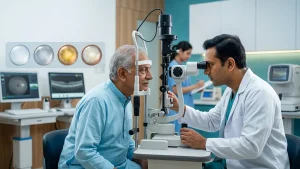
- Slit-Lamp Examination: A slit lamp is a microscope that allows the eye doctor to examine the front part of your eye, including the lens where cataracts may be forming.
- Retinal Exam: The doctor may dilate your pupils using eye drops to examine the back of your eye, including the retina.
- Tonometry: This measures the pressure inside the eye and may be done to check for glaucoma, which can occur alongside cataracts.
- Contrast Sensitivity Test: This measures your ability to differentiate between light and dark, which can be affected by cataracts.
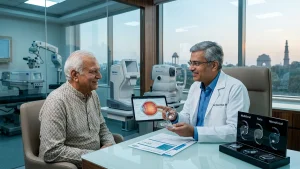
If cataracts are detected, your eye doctor will discuss treatment options with you. In the early stages, vision improvement may be possible with glasses or contact lenses. However, as cataracts progress, surgery may be recommended to remove the cloudy lens and replace it with an artificial one.
Regular eye exams are crucial, especially as you age, to monitor your eye health and catch conditions like cataracts early on. If you’re experiencing changes in your vision or have concerns about your eyes, it’s essential to consult with an eye care professional for a thorough examination and appropriate guidance.
Cataract Treatment Options
The primary treatment for cataracts is surgery. Cataract surgery is a common and generally safe procedure that involves removing the cloudy natural lens and replacing it with an artificial intraocular lens (IOL). Here are some key points about cataract surgery and other treatment options:
- Cataract Surgery:
- Phacoemulsification: This is the most common surgical method. It involves using ultrasound to break up the cloudy lens, which is then suctioned out.
- Extracapsular Cataract Surgery (ECCE): In this procedure, the surgeon removes the entire lens in one piece. This technique is used in certain cases where phacoemulsification may not be suitable.
- Intraocular Lens (IOL) Implants: After the cloudy natural lens is removed, an artificial lens is usually implanted to restore clear vision. IOLs come in different types, including monofocal (correcting vision at one distance), multifocal (correcting vision at multiple distances), and Toric (correcting astigmatism).
- Laser-Assisted Cataract Surgery: Some surgeons use lasers to assist in various steps of cataract surgery, including creating incisions and softening the cataract for easier removal. However, traditional surgical methods are still widely used.
- Preventive Measures: While there is no proven medical treatment to prevent or reverse cataracts, protecting your eyes from excessive sunlight exposure, not smoking, and maintaining a healthy lifestyle may contribute to overall eye health.
- Glasses or Contact Lenses: In the early stages of cataracts, vision may be improved with prescription glasses or contact lenses. However, as cataracts progress, surgery is often the most effective option.
Symptoms of Cataracts
Cataracts often develop slowly and may not cause noticeable symptoms in the early stages. As they progress, however, the following symptoms may become more apparent:
- Cloudy or Blurred Vision: One of the most common symptoms is a gradual loss of clarity in vision. You may notice that your vision becomes increasingly hazy or blurry.
- Sensitivity to Light: Individuals with cataracts may become more sensitive to bright lights, glare, or sunlight. This can make driving or being outdoors uncomfortable.
- Difficulty Seeing at Night: Night vision may be affected, and you may find it challenging to see clearly in low-light conditions.
- Fading or Yellowing of Colors: Colors may appear less vibrant or may take on a yellowish tint.
- Double Vision: Cataracts can cause double vision or multiple images to appear, especially in one eye.
- Frequent Changes in Eyeglass Prescription: If you notice that your prescription glasses need frequent adjustments and no longer provide clear vision, it could be a sign of cataracts.
- Halos Around Lights: You may see halos or circles around lights, especially at night.
it’s crucial to consult with an eye care professional for a comprehensive eye examination. An eye doctor can determine the cause of your symptoms and recommend appropriate treatment options, which may include cataract surgery if necessary. Early detection and intervention can lead to better outcomes in managing cataracts.
Conclusion:
Cataracts are a common and treatable eye condition that can affect individuals of all ages. Understanding the different types of cataracts is essential in recognizing symptoms early and seeking appropriate medical attention. Regular eye check-ups, lifestyle adjustments, and protective measures can contribute to maintaining clear vision and preventing the progression of cataracts. By staying informed about the various types of cataract disease, you can make proactive choices to protect your eye health and ensure a clear and vibrant view of the world.