
Maybe you are in a meeting, or on the phone, or in bed when all of a sudden your eyelid starts to tic. That tic can be driving, on a very busy and stressful day.
The good news is that this is a very common issue. We all know that stress and eye twitching have a connection, which is usually harmless. In this guide we will explain what causes it, what makes the twitching worse and what you can do to stop it fast.
What Is Eye Twitching?
Eye twitches are brief repeated contractions of the eyelid muscle. In the medical field they term it eyelid myokymia which we see to affect the upper lid of one eye most. Also we see that the most common causes are fatigue, stress, caffeine and large amounts of alcohol. Also it is reported that in the great majority of cases this twitch goes away within a week.
If you are constantly asking yourself why is my eye twitching, you are not the only one. Most of the time, the answer is stress and eye twitching tied to your daily routine.
6 Common Causes of Eye Twitching
Stress is the first cause. When stressed out your body produces stress hormones which put the small muscles around your eyes in a state of high alert. That is why eye twitching from stress is a very common issue during exams, deadlines, or family issues. The connection between stress and eye twitching is very much a daily issue in eye care.
The issue of anxiety, which is a second cause, we see of the body being tense for long periods. Many report that they have anxiety eye symptoms like eye twitching, dry eyes and light sensitivity. As with stress and eye twitching, which is a tell sign of anxiety, these symptoms tend to subside once the worry dies down.
The third cause is poor sleep. Tired muscles are more likely to misfire, and lack of sleep eye twitching is very common in new parents, students and night-shift workers.
The fourth cause is caffeine. Coffee, tea, energy drinks and cola all stimulate your nerves, and large amounts can set your eyelid twitching. The eye twitching caffeine connection surprises many people who drink several cups a day.
The fifth cause is dry or irritated eyes. MedlinePlus reports that irritation of the eye surface can trigger twitching.
The sixth cause is screen strain. Spending long hours on a phone or laptop tires the eyes and lowers how often you blink. This digital eye strain can also contribute to twitching.
| Cause | How It Triggers Twitching | Common Signs |
| Stress | Keeps nerves and muscles on alert | Tense, busy days |
| Anxiety | Holds the body in constant tension | Dry eyes, light sensitivity |
| Poor sleep | Tired muscles misfire | After late nights |
| Caffeine | Overstimulates the nerves | After several cups of coffee |
| Dry or irritated eyes | Irritates the eye surface | Gritty, burning or red eyes |
| Screen strain | Tires eyes, cuts blinking | After long screen hours |
5 Quick Fixes That Actually Help
The first step is better sleep. Go to bed at the same time every night and make your room dark and quiet. Good sleep often puts an end to lack of sleep eye twitching within a few days. As you learn how stress and sleep feed into each other you can break the cycle.
The second solution is to reduce caffeine and alcohol, which MedlinePlus reports to be common triggers. To break the eye twitching caffeine connection, try trading out that cup of coffee for water or herbal tea. Many people see improvement in a few days.
The third step is to quiet your mind. Try slow breathing, a short walk, or a few minutes of quiet to reduce your stress hormones and ease other anxiety eye symptoms. Since stress and eye twitching go hand in hand a calmer mind often means a calmer eyelid.
The fourth fix is lubricating eye drops. MedlinePlus says they are a good option for twitching caused by irritation. If your eyes have been dry for weeks, proper dry eye treatment at ASG can give you long-term relief.
The fifth tip is to take regular screen breaks. Every 20 minutes step away from the screen for 20 seconds, also do remember to blink which should be fully and frequently. This small change in routine lessens strain and also helps quiet the twitch.
| Quick Fix | How to Do It | Best For |
| Better sleep | Fixed bedtime, dark and quiet room | Late nights |
| Less caffeine and alcohol | Swap one cup for water or herbal tea | Coffee or alcohol |
| Calm your mind | Slow breathing, short walks | Stress and anxiety |
| Lubricating eye drops | Use as advised on the pack | Dry or gritty eyes |
| Screen breaks | Look away every 20 minutes | Long screen hours |
When Should You See a Doctor?
Some signs are a cause for a check up. MedlinePlus reports that if the twitch goes on for more than a week you should see a doctor. Also get a visit in if your eyelid fully closes or if the twitching spreads to other parts of your face.
Other warning signs include redness, swelling, discharge or an upper eyelid that droops. In rare cases, constant twitching is a sign of blepharospasm. The National Institute of Neurological Disorders and Stroke describes this as a nerve-related condition. It is more common in middle-aged and older women, and doctors often treat it with Botox injections.
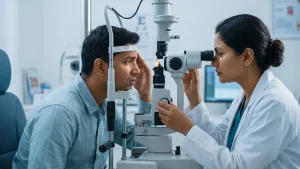
At ASG Eye Hospital, our doctors can tell you whether the cause is simply stress and eye twitching.
Conclusion
The connection between stress and eye twitching is your body’s way of telling you to slow down. For the most part, better sleep, less caffeine and a calmer mind will fix it. Note that anxiety eye symptoms and lack of sleep eye twitching are signs of the same need for rest. Reduce your caffeine habit, which brings on eye twitching caffeine, and give your screen regular breaks. If eye twitching from stress persists for more than a week, book in at ASG Eye Hospital and our doctors will check if there is anything else that requires care. Small changes today bring you calm eyes tomorrow, and good stress and eye twitching habits protect your comfort for years.
Frequently Asked Questions
1. How long does eye twitching from stress last?
In most cases, eye twitching from stress clears up within a few days to a week.
2. Can lack of sleep eye twitching become serious?
Rarely. Lack of sleep eye twitching usually goes away once you get good rest. See a doctor if it goes on past a week.
3. What are other anxiety eye symptoms?
Common anxiety eye symptoms include twitching, dry eyes, blurry vision and light sensitivity.
4. How much caffeine causes eye twitching?
It varies from person to person. If you see an eye twitching caffeine link, cut back slowly and note any changes.
5. Is stress and eye twitching a sign of a nerve problem?
Almost never. Stress and eye twitching usually means your body needs rest. Long-lasting spasms are rare, but they do need an eye check.
6. Can twitching affect both eyes?
Usually, it is just one eye. If you have eye twitching from stress in both eyes for weeks, see a doctor.
References
- Eyelid twitch, MedlinePlus, U.S. National Library of Medicine
https://medlineplus.gov/ency/article/000756.htm - Benign Essential Blepharospasm, National Institute of Neurological Disorders and Stroke, U.S. National Institutes of Health
https://www.ninds.nih.gov/health-information/disorders/benign-essential-blepharospasm