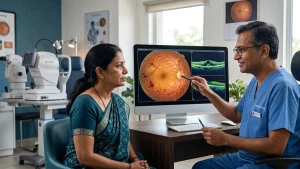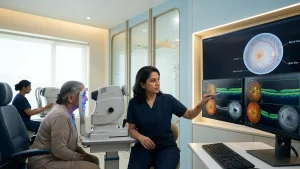
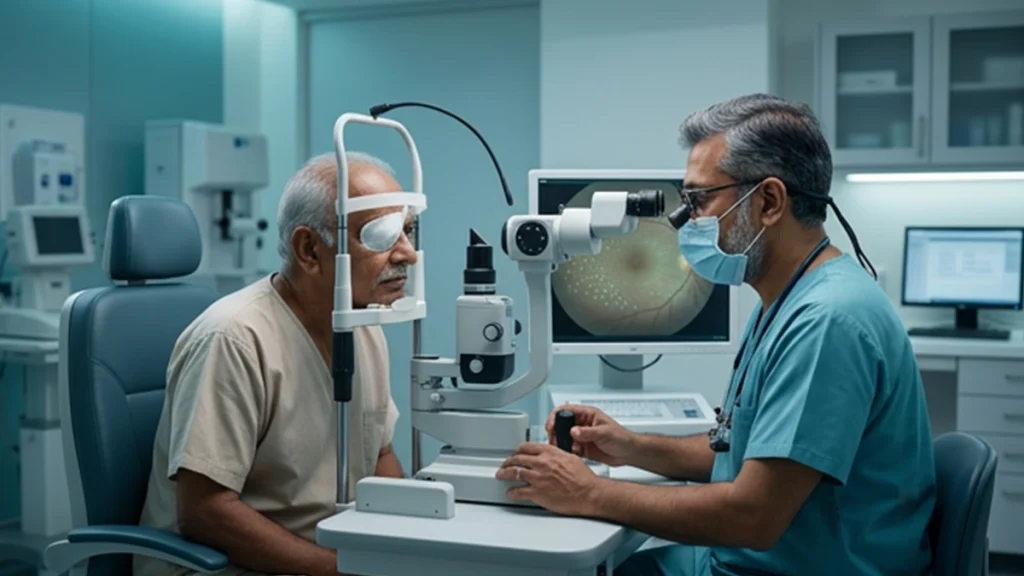
Diabetes related eye disease may go on for a while before it affects vision. In late stages we see the growth of abnormal blood vessels over the retina which in turn increases the risk of serious complications. PRP laser for diabetic retinopathy is a well known treatment which does a great job at controlling those abnormal vessels and in turn reduces the risk of severe vision loss.
Also known as panretinal photocoagulation, this treatment has been a mainstay in the management of advanced diabetic retinopathy for many years. However we don’t see this as a first option for all diabetics. That a retina specialist determines when treatment is required after performing a retina exam which also includes assessment of the stage of the disease.
What Is PRP Laser for Diabetic Retinopathy?
PRP laser for diabetic retinopathy directs controlled energy at specific parts of the peripheral retina. This reduces the signal that drives abnormal blood-vessel growth.
In the case of proliferative diabetic retinopathy which is characterized by reduced retinal blood flow we see the development of fragile new vessels. These may bleed into the vitreous or play a role in retinal complications. Panretinal photocoagulation is a treatment which targets the affected peripheral retina at the same time that it protects the central macula as much as possible.
The retina laser does not cure diabetes or reverse all existing retinal damage. Instead, it aims to control disease progression and protect useful vision.
| Stage of Diabetic Retinopathy | Role of PRP |
| Mild to moderate non-proliferative disease | Usually monitored rather than routinely treated with PRP |
| Severe non-proliferative disease | May be considered in selected high-risk situations |
| Proliferative diabetic retinopathy | PRP laser for diabetic retinopathy may be recommended |
| Advanced disease with complications | PRP may form part of a broader treatment plan |
When Is Panretinal Photocoagulation Recommended?
Doctors commonly consider PRP laser for diabetic retinopathy which has developed abnormal new blood vessels in the retina or optic disc. This stage is known as proliferative diabetic retinopathy. If left untreated these fragile vessels may bleed which in turn causes vision loss.
Indian diabetic retinopathy guidelines report that panretinal photocoagulation is the primary treatment for high risk proliferative disease. Also it may be put into practice in some that have severe non proliferative retinopathy which will depend on the person’s situation.
A retina specialist may at times recommend PRP laser for diabetic retinopathy in the setting of extensive neovascularization. Also at play are retinal signs, past bleeds, macular involvement and the patient’s ability to get to follow up visits.
What Happens During PRP Laser Treatment?
Before a PRP laser for diabetic retinopathy the ophthalmologist will dilate the pupil and use anesthetic eye drops. Also a special contact lens may be used by the doctor to better see the retina and for precise delivery of the laser.
During the performance of panretinal photocoagulation the doctor will apply a series of very controlled laser points to the peripheral retina. Flashes of light are typical and some patients report only temporary discomfort.
The National Eye Institute says scatter laser treatment may take more than one session. Blurred vision can last through the rest of the day after treatment.
| During and After Treatment | What Patients May Experience |
| During the retina laser | Bright flashes or mild discomfort |
| Immediately afterwards | Temporary blurred vision |
| Treatment schedule | One or more sessions may be required |
| Follow-up | Retina examinations to assess treatment response |
Benefits and Possible Risks of PRP
The primary use of PRP laser diabetic retinopathy is to reduce risk of severe vision loss from advanced disease. Research reports that laser photocoagulation is an effective treatment for proliferative diabetic retinopathy.
However there are issues with panretinal photocoagulation. While the treatment affects the peripheral retina some patients report diminished night or side vision. Also reported by the National Eye Institute are changes in color and side vision. This is why the PRP laser for diabetic retinopathy should be a result of a full retinal assessment and not a one size fits all approach.
PRP Laser or Anti-VEGF Injections?
Modern in the management of proliferative diabetic retinopathy we see use of PRP laser for diabetic retinopathy, anti-VEGF injections or a mix of the two. What we are seeing in clinical research is that both PRP and anti-VEGF therapy have a role to play in the management of proliferative disease. Which treatment we choose is based on retinal findings, presence of diabetic macular edema, reliability of follow up and other individual patient factors.
At ASG Eye Hospital we have retina specialists who evaluate for diabetic retinal changes and to determine which may be the best option for retina laser, injection or another approach.
Conclusion
PRP laser for diabetic retinopathy is still a key treatment for advanced diabetic eye disease. Panretinal photocoagulation which in turn reduces the issue of abnormal retinal blood vessels, especially in proliferative diabetic retinopathy.
Early detection is key. For people with diabetes we see to it that they have regular dilated retinal exams, even when they report that their vision is fine. If at a later date we see advanced changes we are able to determine at that point what the best approach is which may be PRP laser for diabetic retinopathy, anti-VEGF therapy or some other treatment.
Frequently Asked Questions
1. Is PRP laser painful?
Most patients do well with PRP laser for diabetic retinopathy which is used in association with anaesthetic eye drops. Some may report a mild stinging or uncomfortable sensation during the procedure.
2. Can PRP laser restore lost eyesight?
Panretinal photocoagulation is mostly for the purpose of controlling advanced diabetic retinopathy and to reduce the risk of more severe vision loss. It does not always restore vision that has been damaged by the retinal.
3. How many PRP sessions are required?
The number of treatments required varies by the degree of the disease and response to treatment. PRP laser for diabetic retinopathy may require multiple sessions.
4. Is PRP used for every diabetic retinopathy patient?
No. Doctors most often consider PRP laser for diabetic retinopathy for proliferative diabetic retinopathy and select high-risk cases.
5. Do I still need check-ups after PRP?
Yes. Regular retinal examinations remain important after PRP laser for diabetic retinopathy because diabetes can continue to affect the retina.
Medical & Government References
National Eye Institute – Laser Treatment for Diabetic Retinopathy
https://www.nei.nih.gov/eye-health-information/eye-conditions-and-diseases/diabetic-retinopathy/laser-treatment-diabetic-retinopathy
PubMed – Panretinal Photocoagulation vs Intravitreous Ranibizumab for Proliferative Diabetic Retinopathy
https://pubmed.ncbi.nlm.nih.gov/26565927/