Uncontrolled eye movements can present in activities like reading, focusing, while walking, or to just looking at a still object which is difficult. A condition which includes such movements is nystagmus. It may present at birth or develop later because of an eye, inner ear, neurological, or some other health issue.
Understanding the nystagmus meaning, possible nystagmus causes, and what care is available will help patients know when to seek out an eye exam. While the condition presents itself differently in each person a full evaluation will determine the type of nystagmus and also if there is an underlying issue that needs to be treated.
What Is Nystagmus?
So, what is nystagmus? The nystagmus definition for a set of eye conditions that see the eyes moving back and forth or in other planes which the person has no control over. Eyes may also rotate, move up and down or in multiple directions at once.
Another simple way to define nystagmus is a disorder which causes the eye to move in an irregular and abnormal fashion. This may also include the loss of balance in what is being looked at. Some report a drop in visual acuity, in other people there is the issue of the world appearing to move which is what we call oscillopsia which in particular plays out in cases of acquired nystagmus.
Types of Nystagmus
Doctors put categories based on age at which the nystagmus presents, direction of eye movement, waveform, and what is the base cause. Identifying the pattern which further investigation to do is made easier.
| Type | Typical Characteristics |
| Horizontal nystagmus | Eyes move repeatedly from side to side |
| Vertical nystagmus | Eyes move upward and downward |
| Pendular nystagmus | Eye movements have relatively similar speeds in both directions |
| Jerk nystagmus | A slower movement occurs in one direction followed by a quicker corrective movement |
| Bruns nystagmus | Gaze-dependent pattern that may occur with certain cerebellopontine angle disorders |
| Miners nystagmus | Historical occupational form associated particularly with underground miners |
Horizontal nystagmus is a finding which may be reported by an ophthalmologist in the course of an eye movement exam. The direction of the nystagmus though does not in and of itself point to a cause.
What Causes Nystagmus?
The possible nystagmus causes itself are very telling. In infants it may appear with developmental issues of the eyes or visual pathways. Also in some cases a genetic cause may be present.
Acquired nystagmus has various causes. Issues with the vestibular system, brainstem, cerebellum, certain neurological diseases, head injuries, stroke, medications, or other health conditions may play a role. While it is a fact that newly developed abnormal eye movements may indicate a serious underlying issue they should not be brushed off.
Symptoms Associated With Nystagmus
The primary symptom is repetitive eye movement. Also what a patient experiences is very different. They may report blurred or reduced vision, trouble with visual focus, sensitivity to glare, balance issues, or oscillopsia. Some people rotate or tilt their head in which their eye movements decrease in a certain gaze position. That position which we sometimes term the null point may give better vision.
How Is Nystagmus Diagnosed?
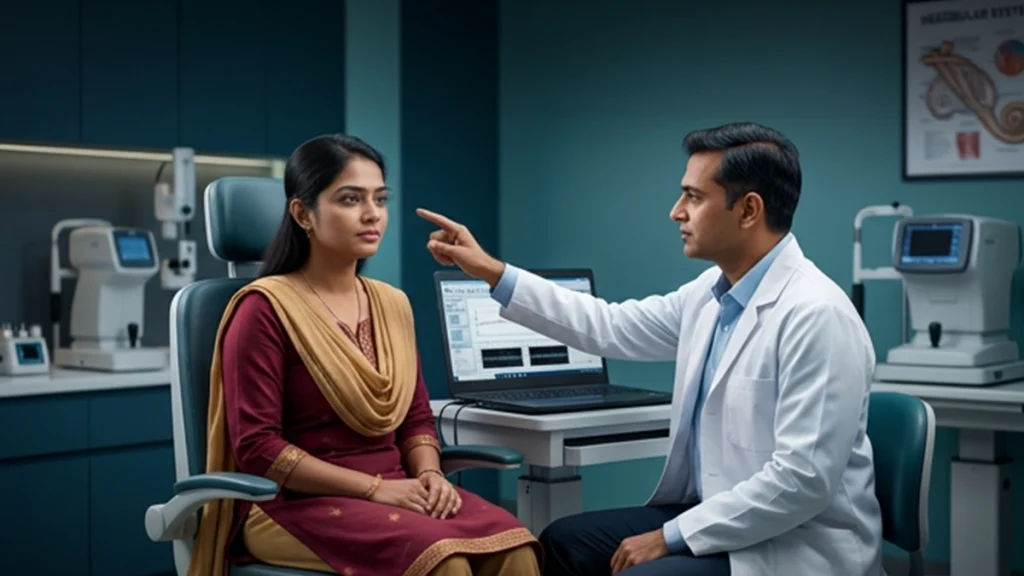
A nystagmus test does not stand alone as a single type of study. An ophthalmologist will check vision and also pay close attention to the direction, speed, frequency, and pattern of eye movements. Also the exam may look at eye alignment, refractive error, ocular health, and neurological signs.
| Diagnostic Approach | What It May Assess |
| Eye and vision examination | Visual acuity, eye health and refractive error |
| Eye-movement assessment | Direction, frequency and characteristics of nystagmus |
| Neurological assessment | Possible nervous-system involvement |
| Imaging or additional investigations | Potential structural or neurological causes when clinically indicated |
Depending on the results the doctor may suggest further tests or a referral to another specialist. In modern evaluation we may see eye tracking, electrophysiological testing, imaging, or genetic studies in selected cases.
Nystagmus Treatment
The appropriate nystagmus treatment depends on the type of nystagmus, associated symptoms, and cause. There is no single cure that fits all. Corrective glasses or contact lenses may help with vision if there are refractive errors. Also we see that tinted lenses, prisms, low vision devices or modifications in head position help some patients. Some cases of acquired nystagmus do respond to medications, and in certain situations like when an abnormal head posture is very difficult, we may look at surgical options. Always a specialist evaluation should guide the treatment.
Conclusion
Nystagmus is beyond what may at first appear to be an odd eye movement. Its pattern actually gives us useful information which pertains to the eyes, visual pathways, vestibular system, and nervous system. We see some people develop this early in life, while for others it comes on suddenly in adulthood.
If you experience unexpected repetitive eye movements which present with blurred vision, imbalance, dizziness or any other neurological signs do not delay in getting evaluated. At ASG Eye Hospital we do a complete exam which helps us determine the type of issue you have, investigate what may be causing it and put you on the best management plan.
Frequently Asked Questions
1. What is the simple nystagmus meaning?
The nystagmus meaning refers to an uncontrolled, repeated movement of the eyes. This may present as a horizontal, vertical, rotational, or combined movement.
2. Is horizontal nystagmus dangerous?
While horizontal nystagmus is present it does not in itself mean a serious issue. That said sudden or new eye movements require a medical work up as the base cause may require attention.
3. What are common nystagmus causes?
Possible nystagmus causes include development of eye or visual pathway issues, balance disorders, neurologic conditions, head injury, stroke, and certain medications. What that causes varies from person to person.
4. How is a nystagmus test performed?
In a nystagmus test or eye movement assessment the health care provider notes how the eyes move at different points of focus. Also at this time other eye, neuro, imaging or other tests may be recommended if needed.
5. Can nystagmus be treated?
Yes we do have treatments which may improve visual function or reduce symptoms. Nystagmus treatment is based on the type and cause and may include glasses, medication, visual aids, or in some cases surgery.