As people age the eyes go through many changes which also include the development of cataracts. In the nucleus the eye’s natural lens’ core a nuclear cataract forms and usually develops slowly. Over time the center of the lens hardens and becomes cloudy also which in turn takes on a yellow or brown color. Also vision may fade out slowly which in turn makes reading, driving and other daily activities more difficult.
The terms used for nuclear sclerosis and nuclear sclerotic cataract are to describe what we see in age related lens changes. At first these early changes may not cause great issue but a mature nuclear cataract may greatly reduce vision.
What Is a Nuclear Cataract?
A nuclear cataract is a cataract which develops in the center of the natural lens. The lens usually is clear which allows light to pass through to the retina. As we age the structures in the lens change. The center of the lens may become more dense and less clear.
This process is a nuclear sclerosis. As the changes progress and affect vision, at that point a doctor may diagnose a nuclear sclerotic cataract. At NCBI MedGen we are told of a nuclear cataract which is that of clouding in the lens nucleus which may go from transparent to yellow and at times brown.
An NS cataract is therefore different from a cortical cataract, which affects the outer lens cortex. It also differs from a posterior subcapsular cataract, which develops near the back of the lens.
| Cataract Type | Area of Lens Affected | Common Visual Problem |
| Nuclear cataract | Central nucleus | Blurred distance vision, colour changes |
| Cortical cataract | Outer lens cortex | Glare and light scatter |
| Posterior subcapsular cataract | Back of lens | Glare and difficulty with near vision |
A coronary cataract is also a type of lens opacity which should not be put in the same category as nuclear cataract. Also you may come across the term cortical sclerosis in your search, but cortical and nuclear lens changes refer to different parts of the lens.
Symptoms of Nuclear Cataract
A nuclear cataract is a very slow developing condition which a person may not notice in the early stages. Vision may become slightly blurred, colors may appear more washed out. Also reported is greater trouble seeing road signs or faces at a distance. As the nuclear sclerosis progresses the lens may turn more yellow. Night time driving becomes an issue because of headlight glare. Also a person may require frequent changes to their glasses. Cataracts produce blurred vision, glare, halos, faded colors and night time vision issues.
Interestingly that which we see in nuclear sclerotic cataract is an increase in short sightedness. Some older people may all of a sudden find that they don’t need their reading glasses for which they usually depend on for correction. This is what we term as “second sight”. It is important to note that this temporary improvement does not mean the nuclear cataract is in any way improving.
How Does Nuclear Cataract Progress?
And in the early stage of nuclear cataract there may be only mild visual changes. As time passes the lens nucleus does become harder and more discolored. In advanced nuclear sclerosis a brown tint may appear and visual clarity may be greatly reduced.
| Stage | Typical Lens Change | Possible Effect on Vision |
| Early | Mild central hardening | Minor prescription changes |
| Moderate | Increased yellowing and clouding | Blurred vision and glare |
| Advanced | Dense yellow-brown nucleus | Significant reduction in vision |
Age is a key element in nuclear senile cataract. That is why doctors also use the term age related to nuclear cataract. In medical records you may see terms like nuclear sclerosis ICD 10, age related nuclear cataract ICD 10, or senile nuclear sclerosis ICD 10. The exact coding depends on the diagnosis, affected eye and clinical documentation which is why patients should not interpret a code without professional guidance.
How Is Nuclear Cataract Diagnosed?
An ophthalmologist at a full eye exam may identify a nuclear cataract. The assessment will include visual acuity test, refraction and study of the lens with a slit lamp
The doctor will assess the extent of nuclear sclerosis and check whether another eye condition is contributing to the vision problem. Regular examinations are particularly useful since a nuclear cataract can progress in its early stages without causing noticeable symptoms
Treatment for Nuclear Cataract
Early in the development of nuclear cataract intervention may not be immediate surgery. We may see some benefit in updated glasses, better reading lights and glare reduction when symptoms are still mild. Of note these measures do not restore the clear lens.
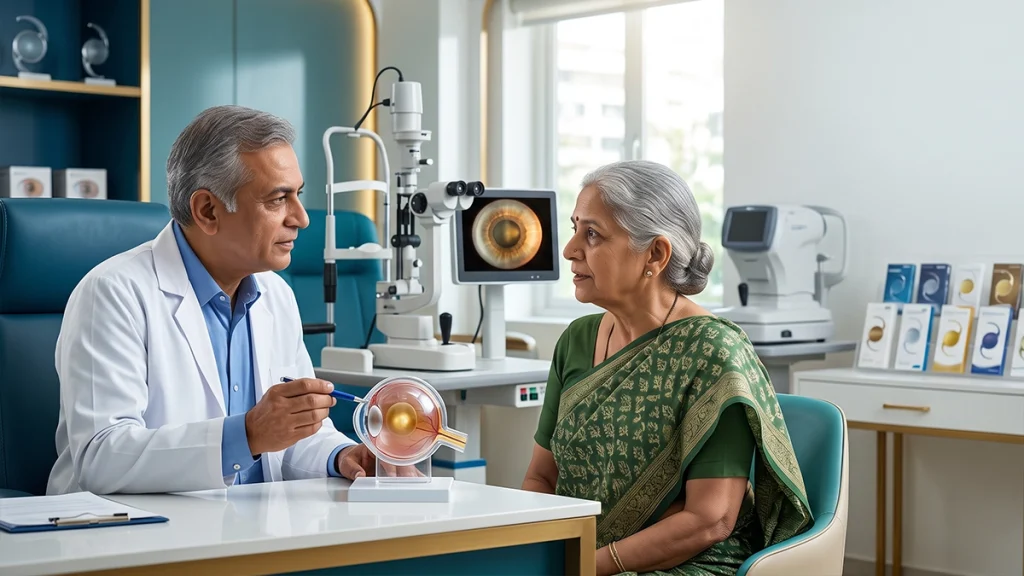
When a sclerotic cataract starts to disrupt everyday activities, surgery may be considered. The ophthalmologist removes the cloudy natural lens during the procedure and replaces it with a clear artificial intraocular lens. This is the established treatment for cataract-related vision problems.
The choice to perform a nuclear cataract procedure at the eye is based on how it affects the person, not just age. An ophthalmologist will determine the right time for surgery after a full eye exam and a discussion of the patient’s visual requirements.
Conclusion
A nuclear cataract which develops slowly in the center of the natural lens and is a common feature of aging. In the early stage of nuclear sclerosis only slight changes may be seen, but as it progresses color perception, distance vision and night time driving may be affected.
Recognizing signs of issues early allows patients to take note of vision changes and seek treatment at the appropriate time. If you notice blurred vision, glare, or frequent changes in prescription for glasses, an eye exam at ASG Eye Hospital may be able to determine if you have a nuclear cataract or some other eye issue.
Frequently Asked Questions
1. Is nuclear cataract the same as nuclear sclerosis?
Nuclear cataracts present when the lens nucleus which has hardened and turned yellow with age becomes cloudy enough to affect vision. We also term this condition nuclear sclerosis or nuclear sclerotic cataract.
2. Does a nuclear cataract progress quickly?
A nuclear cataract develops slowly. Also the rate of progression which is variable among people. Regular eye exams are recommended to detect vision changes and lens clarity.
3. Can glasses cure nuclear cataract?
Glasses may temporarily improve vision during the early stages of a nuclear cataract, but they cannot clear the cloudy lens.
4. Is nuclear cataract common with ageing?
Yes. Nuclear senile cataract is a disease of age. As we age the natural lens of the eye changes which in turn increases the risk of cataracts.
5. When should nuclear cataract surgery be considered?
Surgery may also be used when a nuclear cataract impacts tasks like reading, driving, work, or identifying faces. This is at the discretion of the ophthalmologist who will also determine the appropriate time.
Government and Authoritative References
NCBI MedGen – Nuclear Cataract:
Nuclear Cataract – National Center for Biotechnology Information (NCBI)
NHS – Cataracts in Adults:
Cataracts in Adults – NHS
Moorfields Eye Hospital NHS – Cataract:
Cataract Information – Moorfields Eye Hospital