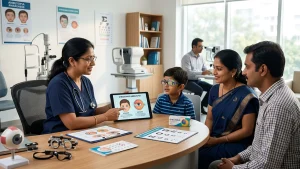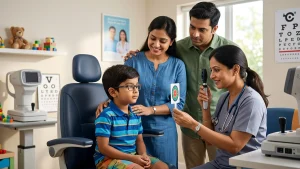

Children don’t always know when they have poor vision. It is not atypical for one eye to see fine while the other has issues which in turn do not develop normal sight. This is what we term amblyopia or lazy eye. This condition affects learning, play and day to day activities. Early lazy eye treatment for children improves vision and also reduces the risk of permanent visual impairment.
Parents may also not see clear signs which is a reason that kids present with the issue in their child vision development stronger eyes. We can do a lot by knowing the signs and getting in for timely eye check ups which in turn will see better results in a child’s visual growth.
What Is a Lazy Eye?
Amblyopia results from the brain’s preference for one eye which it ignores in favor of the other. In the affected eye although health may be present normal vision does not. Common causes are misalignment of the eyes, different degrees of correction between the two glasses and conditions like childhood cataracts.
These issues may impact child vision development when left untreated. The National Eye Institute reports that amblyopia is a large cause of visual impairment in children.
Why Does Early Detection Matter?
A child’s visual development is very quick during the early years. We see that timely intervention for lazy eye treatment for children gives the brain a better chance to improve vision in the weaker eye. If treatment is delayed improvement may be more difficult but also we note that older kids do still benefit from it.
The age for which treatment of amblyopia age is appropriate depends on the child’s condition and exam results. Parents should take in to care of an eye exam if their child is a frequent squitter, tilts their head, closes one eye or has issues with distance. Some kids show no tell tale symptoms at all which is why routine screening is important
The NEI recommends that children have their vision checked at least once between ages three and five.
What kind of treatments are there?
For lazy eye treatment for children ,the eye is based on what is causing it and the degree of vision loss. An eye specialist will do an assessment of each eye and will determine which treatment is required which may be glasses, patching, eye drops or some other treatment.
| Treatment option | How it helps |
| Prescription glasses | Correct refractive errors that affect clear vision. |
| Amblyopia patching | Covers the stronger eye to encourage the weaker eye to work. |
| Atropine eye drops | Temporarily blur vision in the stronger eye. |
| Treatment for the underlying cause | Addresses conditions such as cataracts or certain eye misalignments. |
Some children improve with the use of glasses only. In other cases we have to go beyond that. For amblyopia patching is a practice we use often, but the specialist will determine the number of hours per day that the child wears the patch.
The American Association for Pediatric Ophthalmology and Strabismus (AAPOS) reports that we use glasses, patching and atropine drops as treatments. Also some underlying conditions may require surgery.
How Can Parents Help at Home?
Consistency is key with treatment. For parents of a lazy eye treatment for children can be made easier by using simple and reassuring language to explain the process. Also include reading, coloring and age appropriate games which will help keep the child engaged during the patching period.
Follow out the specialist’s instructions exactly. Do not vary patching times or use medicated drops without first checking with a doctor. Have a regular schedule of appointments which help to see progress and that also determine if the treatment plan should be changed.
| What parents can do | Why it matters |
| Follow the prescribed schedule | Supports consistent treatment. |
| Attend follow-up visits | Helps the specialist monitor progress. |
| Encourage suitable activities | Makes treatment time more engaging. |
| Report new symptoms | Allows concerns to be assessed promptly. |
Supporting child vision development also includes noting changes in visual behavior and getting the child to report any issues. Parents should bring up issues with the eye specialist instead of changing treatment on their own.
What are the results of leaving a lazy eye untreated?
Untreated amblyopia may cause permanent vision impairment into adulthood. Also it may play a role in poor depth perception and performing well in tasks which require hand eye coordination.
Starting early with lazy eye treatment for children does improve the results in some cases. But results also depend on what age your child is, the cause, and the issue’s severity. Also very important is to continue the follow up even after the vision begins to improve
Conclusion
Healthy vision is key to a child’s learning, play and confidence. We see that which may be the first signs of amblyopia and we seek out professional advice at the earliest. We tailor lazy eye treatment for children to their individual needs which in turn gives the visual system a better chance to develop.
Parents that see atypical eye movements or signs of vision issues should take in to see an eye care professional instead of waiting for symptoms to present more fully. Timely evaluation and routine follow up will help kids to achieve the best visual outcomes.
Frequently Asked Questions
1. When do we start lazy eye treatment?
As soon as diagnosed, treatment should begin. While there is no exact amblyopia age for when to begin treatment, very early intervention is which is associated with the best results.
2. Does amblyopia patching hurt?
In most cases of amblyopia patching does not cause pain, although some kids may experience some discomfort at first. A well fitted patch and a routine that is supported by parents does help. See the specialist if irritation develops.
3. Can my lazy eye get better without treatment?
Some kids do improve with the use of prescription glasses, but some require more attention. An eye exam is the way to go in determining which is which. Don’t assume it’s going to improve on its own.
4. Can older kids benefit from treatment?
Yes. In some cases improvement is still seen in older children and teens. The result is based on the degree of amblyopia, past treatment and also very much on the person’s situation.
5. How do parents support healthy vision development?
For regular eye exams, adherence to the care plan put in place, and reporting out of the ordinary visual issues which may cause child vision development. Also at the issue of it the specialist will put forth the appropriate steps based on the child’s specific needs.
References
- National Eye Institute: Amblyopia (Lazy Eye)
https://www.nei.nih.gov/eye-health-information/eye-conditions-and-diseases/amblyopia-lazy-eye - National Eye Institute: Research on childhood amblyopia treatment
https://www.nei.nih.gov/research-and-training/research-news/reduced-daily-eye-patching-effectively-treats-childhoods-most-common-eye-disorder