A cataract which is a breakdown of the usually clear eye lens into a cloudy state may be what you have in mind. Also it is a common issue related to age, but some types do present in children or are even present at birth. For instance we have the zonular cataract, also known as lamellar cataract.This affects certain zones of the natural lens instead of the whole lens clouding.
The expression of the condition in vision may present differently in different people. Some may experience only mild clouding which does not greatly impair vision. In others the issue may become quite serious, in particular when the opacity is near the visual axis. Early identification of the issue is key for families to make informed decisions regarding which monitoring and treatment options to pursue.
What Is a Zonular Cataract?
A zonular cataract is that type of cataract in which opacity appears in certain areas of the eye’s lens. The National Library of Medicine reports that zonular cataract is a cataract which affects certain lens regions. Also used for this type are the terms lamellar cataract, perinuclear cataract and zonular cataract.
In a large majority of cases of lamellar cataract, the cloudy area develops in certain lens layers which at the same time may still present with more transparency in other areas. This is what sets it apart from a total cataract in which a much greater part of the lens is affected.
| Feature | Zonular/Lamellar Cataract |
| Area affected | A specific layer or zone of the lens |
| Common age | Often congenital or detected during childhood |
| Other name | Lamellar cataract |
| Vision impact | Can range from mild to significant |
| Management | Observation, vision correction or surgery depending on severity |
What Causes Zonular Cataract?
The development of zonular cataract may have a genetic cause. In some cases we report which patterns of inherited cataract are associated with genetic variants. Also we see that many types of cataract which include lamellar cataract, present as congenital lens abnormalities.
A child that has a zonular cataract may also have a report of childhood cataracts in the family which isn’t always the case. Genetic and developmental factors play a role in the way the lens forms and becomes transparent.
In many cases which produce lens opacity other than cataract an ophthalmologist has to examine the eye in question before determining if it is in fact a zonular cataract.
What Are the Symptoms of Lamellar Cataract?
The presentation of lamellar cataract is to great extent at the discretion of the location and density of the cloudy lens area. A small or less dense zonular cataract may cause little noticeable issue. Dense central opacity may put into play serious vision issues.
Parents report that while at a distance some things do not register for their child, also some kids have trouble with eye focus or present with reduced visual acuity. Also in some cases what may happen is that a strabismus or amblyopia will develop when a zonular cataract is present which in turn does not allow for normal visual development.
| Possible Sign | How It May Affect Vision |
| Blurred vision | Objects may appear unclear |
| Reduced visual sharpness | Fine details become difficult to recognise |
| Central lens opacity | May interfere with the visual axis |
| Squint | Eyes may not remain properly aligned |
| Amblyopia | Vision may not develop normally in the affected eye |
How Is Zonular Cataract Diagnosed?
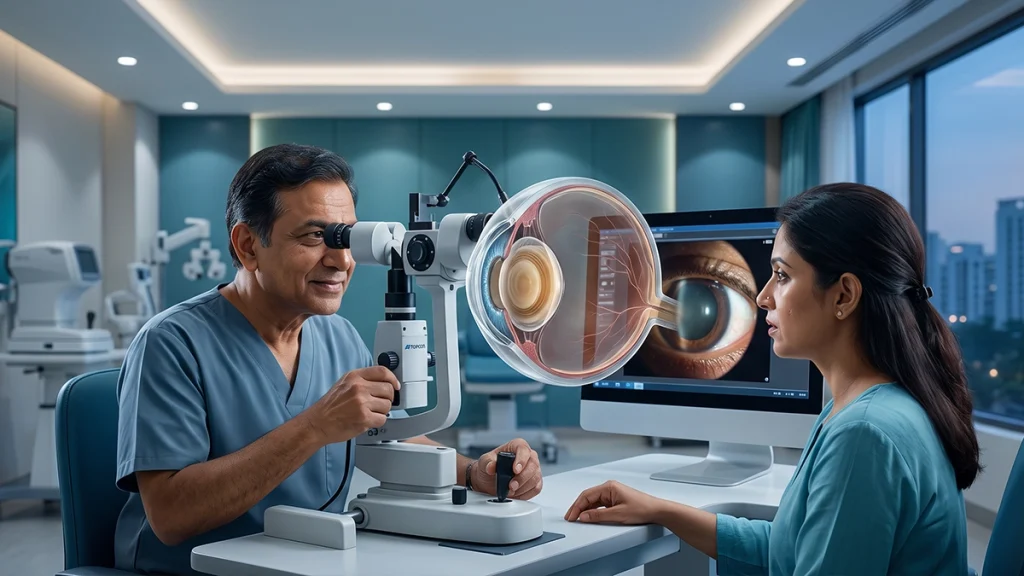
An ophthalmologist at the time of a detailed eye exam diagnoses zonular cataract. During the exam the doctor studies visual function and also looks at the lens to see the location, pattern and density of the opacity.
A slit lamp examination provides in depth evaluation of the lens. This exam also helps to distinguish between lamellar cataract and other congenital or developmental cataract patterns. Also the doctor may check for eye misalignment and look for signs of amblyopia in children.
The issue is beyond identification of a zonular cataract. The ophthalmologist also has to assess what degree it plays in useful vision.
How Is Lamellar Cataract Treated?
Not all lamellar cataract require emergency surgery. In the case of mild cataracts which do not greatly impair vision they may be watched over with regular eye exams. Also in the field of pediatrics current clinical guidance is to take a conservative approach to monitoring when the lens opacity does not greatly affect function.
When a zonular cataract develops which in turn causes great visual impairment surgery may become a solution. Cataract surgery is that of removal of the opalescent natural lens and to put in place proper visual rehabilitation. The approach we take is based on the patient’s age, eye development and what we see in the clinical setting.
For what is related to kids early treatment is of great importance because if vision is impaired it will affect their proper visual development. An ophthalmologist will determine which of the options of watchful waiting, corrective lenses, amblyopia treatment or surgery is best for a case of lamellar cataract
At our ASG Eye Hospital we provide a full range of care for cataracts which includes comprehensive eye assessment, diagnosis and personalized treatment plans.
Conclusion
A zonular cataract is a type of cataract which affects certain layers of the eye’s natural lens. Also known as lamellar cataract this may cause anything from mild visual disturbance to severe vision loss. In children early diagnosis is of great importance because clear visual input is key to normal vision development.
Regularly at which we do eye exams this allows doctors to determine if a zonular cataract is simply to be monitored or if it requires active treatment. If a lamellar cataract starts to affect vision an ophthalmologist may put forth the best management plan which takes into account the patient’s age, visual needs and overall eye health.
Frequently Asked Questions
1. Is zonular cataract the same as lamellar cataract?
Yes. Zonular cataract and lamellar cataract are terms which are used interchangeably for the same cataract pattern. The condition affects a certain layer or zone within the natural lens.
2. Is lamellar cataract present from birth?
A lamellar cataract may present at birth or develop later in life. In some it is due to genetics, that said the cause may be different for each patient.
3. Does every zonular cataract need surgery?
No. A small zonular cataract that does not greatly affect vision may only require close monitoring. Surgery is a choice at which point the cataract causes a great deal of visual impairment.
4. Can lamellar cataract affect both eyes?
Yes. Lamellar cataract is seen in both eyes. Published reports in ophthalmology note that this is a common bilateral presentation.
5. Can zonular cataract affect a child’s visual development?
Yes. A large core zonular cataract that affects the central vision in particular may interfere with visual development. Early ophthalmic assessment is key when a child reports reduced vision.
References Links
- U.S. National Library of Medicine – MedGen: Zonular Cataract
Zonular Cataract – NCBI MedGen - U.S. National Library of Medicine – Pediatric Cataract
Pediatric Cataract – NCBI Bookshelf - NIH Genetic Testing Registry – Cataract 5, Multiple Types
Lamellar Cataract – NIH Genetic Testing Registry