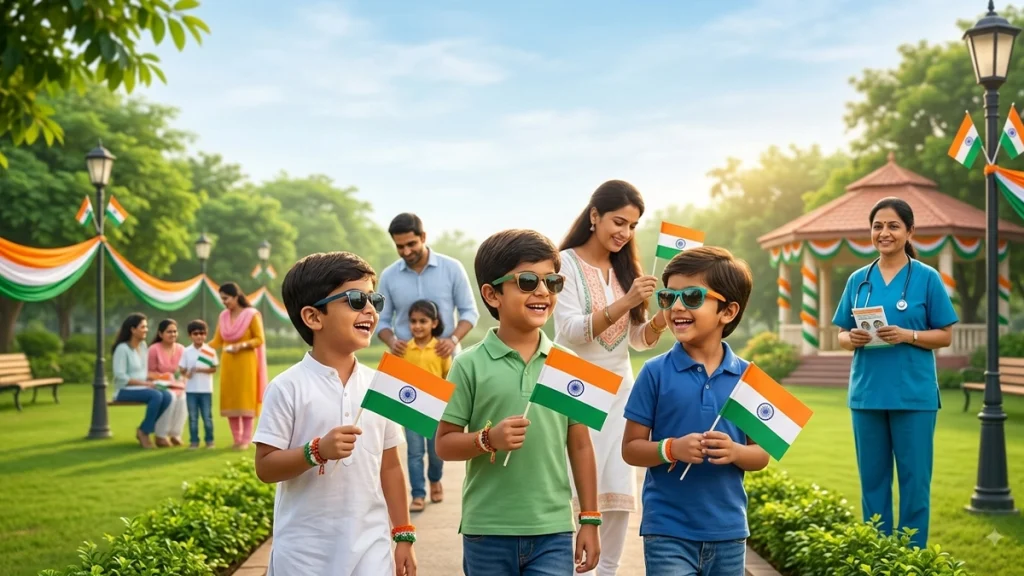
Independence Day has flag raising ceremonies, school stage shows, outdoor games and neighborhood get togethers. Kids may spend hours in packed grounds, carry flags, work with crafts, play energetic games or watch bright displays. Although these do create great memories, there are also risks of eye issues from sharp objects, dust, smoke, projectiles and fireworks. Planning Eye Safety for Kids before the event helps families enjoy 15 August without unnecessary risk.
Good Children’s Eye Care during a celebration does not mean stopping children from participating, and it also supports Healthy Eyes. We mean to include age appropriate activities, close supervision and teaching kids to report on pain, watering or blurred vision right away. A simple Eye Injury Prevention plan, supported by sensible Kids Vision Care, can protect sight while keeping the day enjoyable.
Why Eye Safety for Kids Deserves Attention on Independence Day
Children often become excited at public programmes. They may run, turn suddenly, or imitate older children without recognising the danger. A flag stick, shuttlecock, broken decoration, or spark can reach the eye within seconds. Since some eye injuries appear minor on the outside, parents might underestimate them. That is why Eye Safety for Kids should be discussed before leaving home.
The National Eye Institute reports that most sports related eye injuries may be prevented with the use of proper protective eyewear and also notes that what we wear as everyday glasses and sunglasses do not in fact serve as a substitute for impact resistant protection. For when kids are out there in play which includes fast moving objects, polycarbonate sports goggles or activity specific face guards may be used. These also play a role in Healthy Eyes during celebrations and throughout childhood. rds During 15 August Celebrations.
Some at Independence Day events firecrackers and sparklers are used. Heat, sparks, smoke and fragments from them may injure the eyelids, cornea or internal eye structures. It is for proper fireworks eye safety that children should not light, hold, relight or go near to fireworks. Instead have an organized display run by responsible adults and view it from a safe distance.
In the home craft area flag sticks, decorative rods, pencils, scissors and toy arrows may present danger to children who are running or play fighting. For Safe Children’s Eye Care we use soft and rounded materials for younger children and require that adult supervision be present at all times during craft. Also remove damaged decorations before they have a chance to break into sharp pieces.
Outdoor sports may put kids in contact with balls, shuttlecocks, stones, insects or in the path of accidental collisions. For Eye Injury Prevention we require enough play area, safe equipment and protective eyewear that is right for the sport. Also into the picture should be included prescribed glasses, a cap and UV-blocking sunglasses in their Kids Vision Care preparation. Sunglasses can help protect Healthy Eyes from ultraviolet radiation, but they do not replace sports goggles. er, powder colours, aerosol sprays and face paint may cause burning, redness or watering. Children should wash their hands after crafts and avoid rubbing their eyes. Cosmetics or paint intended for the skin should not be applied inside the eyelids or along the inner lash line.
| Celebration activity | Possible eye hazard | Safer approach |
| Fireworks or sparklers | Sparks, heat, smoke and fragments | Keep children away from ignition areas and follow Fireworks Eye Safety guidance |
| Flag march | Pointed sticks and crowd movement | Use rounded sticks, maintain spacing and explain Eye Safety for Kids rules |
| Craft session | Scissors, glue, glitter and broken decorations | Use child-safe materials and include Eye Injury Prevention supervision |
| Outdoor game | Balls, shuttlecocks, stones and collisions | Use suitable protective eyewear as part of Kids Vision Care |
| Daytime programme | Sunlight, wind and dust | Use a cap, UV-blocking sunglasses and habits that support Healthy Eyes |
Preparing Children Before the Programme
Parents can turn Eye Safety for Kids into three easy instructions: do not run with pointed objects, do not touch the eyes with dirty hands and report any discomfort immediately. Children should know which adult is responsible for them and where to go if something enters or strikes the eye.
A small set of items for Eye Safety for Kids may include clean water, sterile gauze, tissues, prescribed glasses and medicines which have been recommended by the child’s doctor. Do not use random antibiotic, steroid or redness relief drops after an injury. For proper Children’s Eye Care it is important to identify if the issue is of irritation, a scratch, chemical exposure, infection or deeper trauma.
Glasses improve vision but for some activities they are not enough. If your child is going to be in a ball sport, cycling event or any activity which includes flying objects, get in touch with an eye care professional about getting your child into proper polycarbonate protection. This practical Eye Injury Prevention step is a strong component of Kids Vision Care.
Fireworks Eye Safety That Parents Should Follow
The Petroleum and Explosives Safety Organization reports that small children should not handle fireworks, people should not bend over those which are lit and in case of misfired devices do not approach or play with them. Also from the Maharashtra Fire and Emergency Services we have that which put forth the recommendation of adult supervision and that which states that it is not right to allow kids to light fireworks without an adult.
Thus these government issues put out the base for what we know today as Firework Eye Safety during any celebration. do not think of fireworks as harmless toys which they are, they put out heat and sparks which can burn the hands and face. For kids’ eye safety which is very good means to keep young children away from the ignition areas, out of crowded terraces or narrow lanes and never to point a device at another person.
Bystanders are also at risk of injury from fragments which is why we see that each child must stay behind the set boundary and is to be under adult supervision. The CPSC reports on to date in the thousands the number of fireworks related injuries we see also that include the use of sparklers that end up in emergency rooms. That which also supports the case for thorough Eye Safety measures even when the firework in question may seem small. for instance children with allergies or sensitive eyes. Get the child to a less smoky area if they begin to burn, water or cough. Also do not encourage them to rub which may only push a particle in further. Clean hands and early attention is key to Healthy Eyes.
First Aid and Eye Safety for Kids After an Injury
Stay put and stop the child from rubbing or putting pressure on the eye. Do not try to open the eyelids, remove an embedded object or put in turmeric, honey, rose water, oil, cream or un-prescribed drops. Responsible Eye Injury Prevention includes avoiding home remedies which may delay proper care.
For loose dust, rinse gently with clean water and get the individual to blink. The National Eye Institute says to avoid rubbing an eye that has particles in it and instead to flush it out with water. After a blow to the eye from a ball or elbow which causes swelling apply a cold compress but the child should still see a health care provider if pain or vision issues persist. ash or firework material, start rinsing right away with large amounts of clean water. PESO says to wash out an eye burn with tap water for 10 minutes and to take the injured person to the emergency room. Do not delay trying to neutralize the chemical. Immediate irrigation followed by medical evaluation is very important in Fireworks Eye Safety.
Warning Signs Under Eye Safety for Kids Guidance
Seek prompt ophthalmic care for vision loss, severe pain, light sensitivity, blood in or around the eye, an irregular pupil, persistent watering, increase in swelling, double vision, inability to open the eye, a visible cut or an embedded object. Headache, vomiting or atypical drowsiness which follows a forceful impact also may require emergency assessment.
Do not leave it until the next day when symptoms have worsened or vision is affected. Timely in Child Eye Health we have that an ophthalmologist be made available for your child which includes examination of the cornea, lens, retina, eye pressure and the surrounding tissues. For each family we recommend having a plan in place for Eye Injury Prevention which includes the location of the nearest emergency eye service.
How Schools and Organisers Can Reduce Risk
Schools can go a long way in improving Eye Safety for Kids by removing stones from play areas, separate out games zones from the stands, trade out damaged equipment and put trained adult supervisors at each activity area. Also, we have children go over a brief training on safe flag handling, craft tools and symptoms to report before the program begins. This is how we make Children’s Eye Care and Eye Injury Prevention a part of the event plan.
A short course on Fireworks Eye Safety is also useful for when the school doesn’t have a display planned, in which case kids may still be exposed to crackers at home. We repeat Fireworks Eye Safety information which in turn helps children to remember it. For sports events organizers should go for activity based protection. Also by including this safety gear in Kids Vision Care we see that children are able to partake more safely and confidently.
Outdoor programs can have shaded rest areas and access to drinking water. As for the kids, they should stay away from the sun, wear UV protective sunglasses when we can’t avoid it and take breaks when their eyes feel tired. These are the habits which promote Healthy Eyes during long events.
Routine Kids Vision Care Checks Also Matter
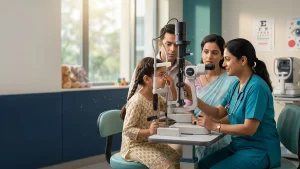
Holiday care is a piece of what we do in Children’s Eye Care. Also many kids do not know that they have poor vision in one eye or that they have an uncorrected refractive error. They may sit close to the TV, hold books very near to their face, squint or have trouble during play. Routine Kids Eye checkups can bring out these issues and we advise on which may include spectacles, more in depth testing or just close monitoring.
An ophthalmic exam is a good idea when you see a child with recurring headaches, frequent eye rubbing, persistent tearing or a family history of ophthalmic issues. This preventive Kids Vision Care measure is for timely intervention. Healthier eyes we support through prevention of injuries and identification of vision issues at an early stage which in turn protects learning and development.
How ASG Eye Care Can Support Your Child
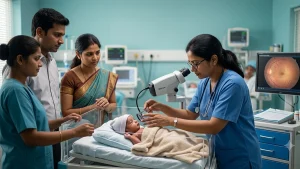
At ASG Eye Care, we see children with red eyes, pain, excessive tearing, foreign body sensation or vision changes in which case we do an ophthalmic assessment based on their symptoms and injury history. Parents should describe what happened, when it happened and if any substance or eye drop was used.
A surface scratch, chemical exposure, or blunt impact may have to be evaluated which may not present with a visible wound. For issues related to Eye Safety in Kids we do prompt professional Children’s Eye Care and follow up as per advice which in turn will protect your child’s comfort and sight.
Conclusion
Independence Day is a day to create happy memories for kids, not to add to the chance of eye injury. With careful supervision, safe activity planning, responsible Fireworks Eye Safety and quick first aid we can reduce risk without putting a stop to participation. By including Eye Safety for Kids in every school and family plan we can support confident celebrations, consistent Kids Vision Care and Healthy Eyes through childhood. Protection of Healthy Eyes is a shared responsibility.
Frequently Asked Questions
1. What is the most important rule for Eye Safety for Kids on Independence Day?
Active adult supervision at all times is what is most important. Also keep it out of kids’ reach which includes the use of fireworks and the use of flag sticks that have points or use of sharp tools which must be supervised. If there is any pain, eye discharge or change in vision, report that right away.
2. Can children safely use sparklers?
Sparklers produce heat and flying sparks which is why they should not be considered as toys. For a safe fireworks experience keep young children away from the ignition and handling areas.
3. Are normal spectacles enough during outdoor games?
Normal glasses improve vision but may not protect from impacts. For your Kids Eye Safety plan which matches the activity. Based on the activity, proper fitting sports goggles or a face guard may be included as part of Kids Vision Care.
4. What should I do if dust enters my child’s eye?
Ask that the child does not rub and instead rinse gently with clean water. See care if there is pain, redness, watering or blurred vision. This approach supports Healthy Eyes better than the use of unsupervised eye drops.
5. Should antibiotic drops be used after a minor injury?
Do not start eye medicine only because the eye appears red. Safe Children’s Eye Care requires the right diagnosis. Different injuries need different treatment, and some drops can delay diagnosis. Appropriate Children’s Eye Care begins with an examination when symptoms persist.
6. How can schools improve Eye Injury Prevention?
Schools may check out activity areas, get rid of hazards, use rounded edges, separate sports from large groups, present briefings to the kids and have an emergency response plan. These actions improve Eye Injury Prevention.
7. When is an eye injury an emergency?
Sudden vision loss, severe pain, bleeding, chemical exposure, large amounts of swelling, an irregular pupil or an embedded object is a reason to seek care immediately. Immediate Eye Safety for Kids action may protect vision.