
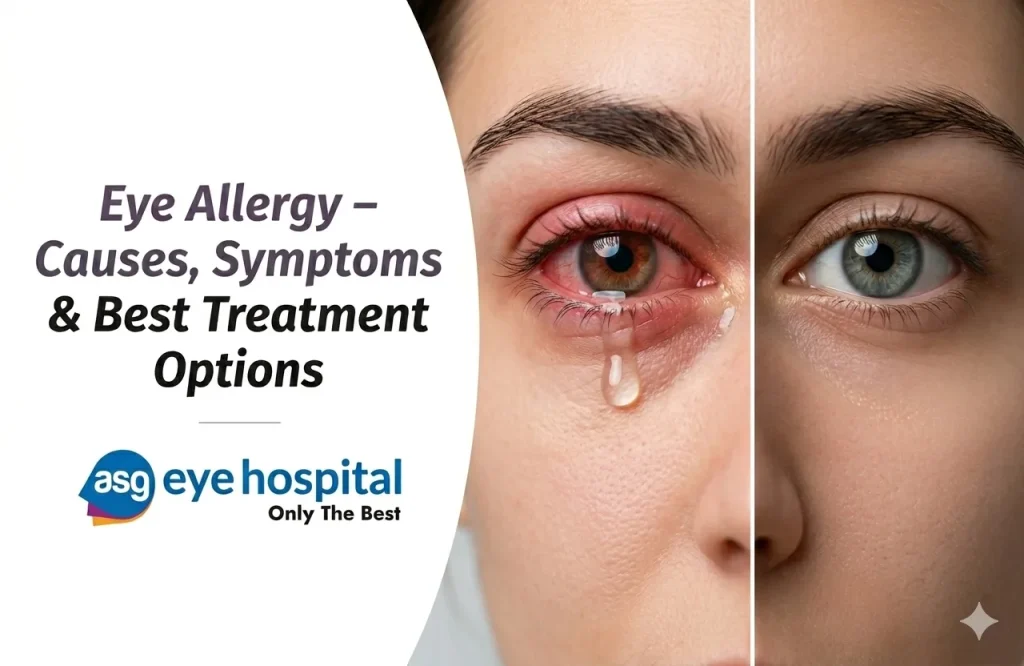
Most people know this feeling: eyes that itch relentlessly, water constantly, and stay red no matter what you try. It worsens in some seasons, in certain rooms, or around pets. You rub your eye, which makes it worse. You use drops from the pharmacy, which help for an hour and then wear off.
Eye allergy is among the most common conditions seen in eye clinics and also one of the most undertreated. Most people manage it reactively rather than addressing what is driving it. Understanding the cause changes what you do about it.
Eye allergy symptoms and how to recognise them
The hallmark of eye allergy symptoms is intense, persistent itching that is rarely this pronounced in other causes of red eyes. Rubbing gives momentary relief but releases more histamine, which deepens the itch cycle.
Other common eye allergy symptoms include:
- Watery, clear discharge – not thick or coloured
- Redness in both eyes, usually at the same time
- Burning or gritty sensation alongside the itch
- Swollen or puffy eyelids, particularly after waking
- Sensitivity to light in more severe cases
These symptoms tend to appear or worsen in specific environments or seasons. That pattern is often the clearest indicator that allergy is the cause rather than infection or dry eye.
Itchy eyes causes and the triggers behind the reaction
Itchy eyes trace back to allergen exposure. When a susceptible person’s eye contacts a trigger, mast cells in the conjunctiva release histamine and inflammatory chemicals that dilate blood vessels and sensitise nerve endings – producing the itch, redness, and watering.
The most common triggers include:
- Pollen – tree pollen in spring, grass pollen in summer, weed pollen through monsoon transition months in India
- Dust mites – present year-round in mattresses and upholstery; a major cause of perennial eye allergy
- Pet dander – proteins from cats and dogs that remain airborne long after the animal has left a space
- Mould spores – more prevalent in humid climates and monsoon season; a significant trigger in coastal Indian cities
- Cosmetics and eye care products – preservatives in eye drops, mascara, and contact lens solutions are frequent contact allergens
- Air pollution and smoke – particulate matter lowers the conjunctiva’s threshold for allergic response
Why do my eyes itch more indoors than outside, or the other way around?
An indoor itch that is worse year-round points to dust mites or pet dander. An outdoor itch that peaks in specific seasons points to pollen. That pattern narrows the trigger considerably.
Types of eye allergy and why the distinction matters
Seasonal allergic conjunctivitis is triggered by outdoor allergens at specific times of year. Perennial allergic conjunctivitis is driven by indoor allergens and is present throughout. The third form worth knowing is vernal keratoconjunctivitis – a more severe type, more common in children and young adults in warm climates, including much of India. It tends to flare in hot weather, produces a mucous discharge with intense itch, and can involve the cornea if left unmanaged. The type matters because the treatment approach and urgency differ across the three.
Allergic conjunctivitis treatment: what works and in what order
Allergic conjunctivitis treatment works best when it targets both the trigger and the inflammatory response. Using only Drops, without reducing allergen exposure, is a partial solution.
First line: antihistamine eye drops. The newer combination antihistamine-mast cell stabiliser drops – olopatadine or ketotifen – are significantly more effective than older antihistamines for sustained control. They block the immediate histamine response and, with regular use, reduce the magnitude of future reactions. These are the best eye drops for allergies for most people in the mild-to-moderate range.
For severe cases or vernal keratoconjunctivitis: short courses of steroid eye drops under specialist supervision. These should not be self-prescribed – prolonged steroid use in the eye raises intraocular pressure and can cause cataracts in susceptible individuals.
Also read: Why Do Eyes Turn Yellow? Causes, Symptoms & Treatment Explained
Best eye drops for allergies and how to choose
For occasional mild reactions: topical antihistamine drops provide faster, more localised relief than oral antihistamines, which also tend to worsen dryness. For regular, predictable flares: combination antihistamine-mast cell stabiliser drops used twice daily offer the most sustained control.
Are vasoconstrictor drops – the redness-relief type – useful for eye allergy?
No. They reduce redness cosmetically but do nothing for itch or the allergic mechanism. Regular use causes rebound redness. They are not appropriate for managing eye allergies.
Eye allergy home remedies that provide genuine relief
Eye allergy home remedies work as a complement to treatment, not a replacement. For mild cases or as supportive care during flares:
- Cold compress over closed eyes for five to ten minutes – more effective than warm for allergy because cold constricts vessels and slows histamine release; warmth can worsen swelling
- Preservative-free lubricating drops – flush allergen particles from the eye surface and dilute histamine concentration in the tear film
- Reduce allergen load – keep windows closed during high-pollen periods, change pillowcases frequently, shower before bed to remove pollen from hair
- Avoid rubbing – rubbing releases more histamine from mast cells and worsens symptoms within minutes
When eye allergy needs a specialist
Mild, seasonal eye allergy often responds to over-the-counter drops. See an eye specialist if:
- Symptoms are present most days and are not controlled by standard antihistamine drops
- There is vision blurring that does not improve with blinking
- The eye is painful rather than just itchy
- A child has persistent itch, light sensitivity, or squinting – these can indicate vernal keratoconjunctivitis
- You wear contact lenses and have a persistent eye allergy – giant papillary conjunctivitis needs a different management approach
Final thoughts on eye allergy symptoms and treatment
Eye allergy responds well to treatment when the approach is right. Identifying the trigger, choosing the correct drop type, and reducing allergen exposure together produce substantially better results than any single measure alone.
ASG Eye Hospital, with centres in Mumbai, Delhi, Pune, Jaipur, and more, evaluates allergen patterns, symptom severity, and corneal involvement to determine the right level of management – from simple antihistamine drops to structured treatment plans for more persistent cases.
FAQs
1. What are the most common eye allergy symptoms?
Intense itching, watery, clear discharge, redness in both eyes, and swollen eyelids. The itching is usually the dominant symptom and more persistent than in other causes of red or irritated eyes.
2. Why do my eyes itch more at certain times of year?
Seasonal patterns indicate outdoor allergens – pollen from trees, grass, or weeds that peak at different times. Year-round itch without seasonal variation usually points to indoor triggers like dust mites or pet dander.
3. What are the best eye drops for allergy?
Combination antihistamine-mast cell stabiliser drops, such as olopatadine or ketotifen provide the most sustained relief. They block the immediate histamine response and reduce future reactions when used regularly.
4. Can eye allergy damage vision?
Standard allergic conjunctivitis does not. However, vernal keratoconjunctivitis can involve the cornea and cause scarring if untreated. Persistent, aggressive rubbing also raises the risk of keratoconus over time.
5. Are eye allergy home remedies safe alongside prescribed drops?
Yes. Cold compresses, lubricating drops, and allergen reduction all complement treatment without interfering with prescribed drops. They reduce symptom load and improve day-to-day comfort.