A cataract may go slowly from a point where it doesn’t affect daily activities at all to a stage where vision is impaired in which newspaper print is blurred, head lights may cause a painful glare, colors may become pale and lost of intensity and also there may be many changes in the prescription of your glasses. Once these issues start to impact reading, driving, work or independent movement a complete evaluation can tell if it is time for cataract surgery in Pune.
Modern cataract care includes eye evaluation, measurement of the replacement lens, and arrangement of follow up care. At ASG Eye Hospital in Pune we provide cataract treatment in Pune at Shivajinagar and Kokane Chowk locations in Pimpri-Chinchwad which also include diagnostic and surgical services.
What Is a Cataract?
A cataract develops when the eye’s natural crystal lens becomes transparent. As the cloudiness increases light is blocked from passing through the lens. Vision may begin to blur, which in turn causes an increase in glare, a decrease in contrast, colors to appear faded and difficulty seeing at night. The Indian Council of Medical Research reports that progressive vision loss, glare, monocular double vision, and lens opacity are the most common symptoms ophthalmologists report.
Ageing is a common cause which we see, also reported is diabetes, eye injury, inflammation and the use of steroids in the long term. We see glasses as a solution in the early stages of the disease which is only a temporary fix, but eye drops do not break up a formed cataract. When vision begins to interfere with day to day function we recommend cataract surgery in Pune which consists of removal of the cloudy natural lens and in its place we put in a clear artificial intraocular lens.
When Should Cataract Surgery Be Considered?
There is no set age for cataract operation in Pune. What is important is the degree to which the cataract is affecting a person’s vision and daily activities. We may discuss surgery if reading, cooking, walking up or down stairs, recognizing faces, using computers, or driving which with the use of correct glasses still is difficult.
Government of India health guidelines report that they have made difficulty in performing one’s daily routine tasks a primary reason for which we will recommend surgery, if at all it is going to improve vision. Also if the lens is cloudy and it is blocking out of the picture evaluation of the retina or the treatment of it, or when it is a factor in inflammation or glaucoma which also may be brought on by the lens we may go ahead with the surgery.
See a cataract doctor in Pune if your vision has quick decline, glare is a issue which is affecting your day to day life, or one of your eyes is much weaker than the other. Also we advise a visit to the doctor for patients with diabetes, glaucoma, corneal disease or a retinal condition as these issues may play a role in the results of cataract surgery in Pune.
How Cataract Treatment in Pune Is Planned
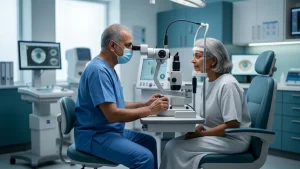
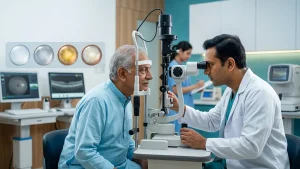
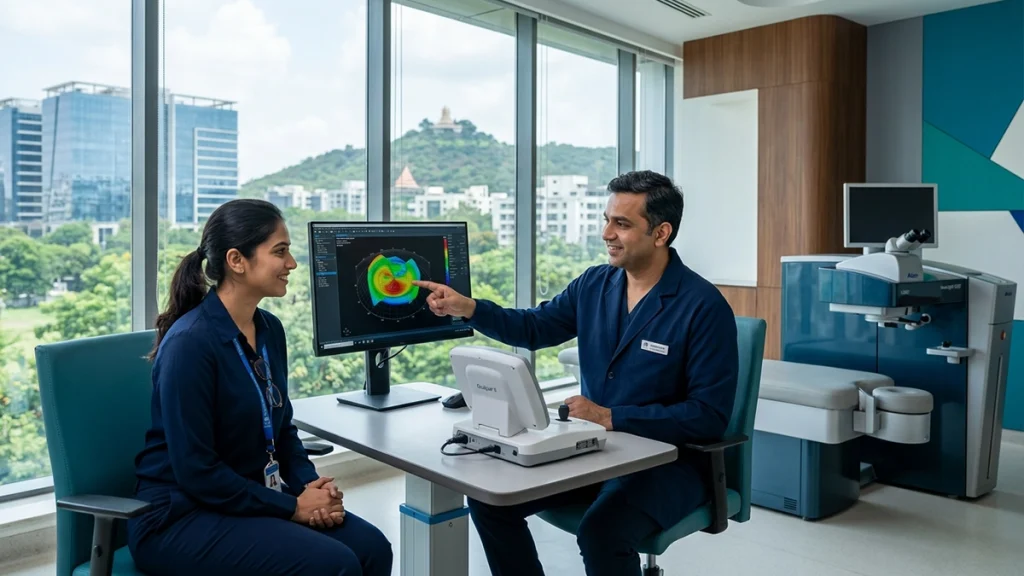
The first stage of cataract treatment in Pune begins with a full ophthalmic assessment. This typically includes visual acuity test, refraction check, slit lamp examination of the eye, measurement of eye pressure, and if the cataract allows it we do a dilated retinal exam. We also do biometry and keratometry which in turn measures the eye out to determine the intraocular lens power.
It reports on systemic health history, takes blood pressure and blood sugar readings, does ophthalmic biometry which we then use to see if there is any corneal or retinal disease. With that info in hand a cataract surgeon in Pune will choose the best procedure, set realistic expectations for the patient, and also determine if the patient should see another specialist.
Before cataract operation in Pune, report to your health care team any diabetes, hypertension, allergies, prior eye surgery, blood thinning medications, and all current medicines or eye drops which you are using. Do not stop any prescribed medication without first checking with a health care professional.
Methods Used for Cataract Surgery in Pune
Phacoemulsification is widely used for cataract surgery in Pune. What the surgeon does is make a small incision in the cornea and using ultrasound energy breaks up the cloudy lens into tiny pieces which are then removed. Also a foldable artificial lens is put in. Usually stitches are not required because the incision is so small, although the final approach may vary by eye.
Manual small incision cataract surgery is a known option which does well for some patients which include those with hard or mature cataracts. The government health guidelines report it to be an accepted procedure along with routine extracapsular extraction and phacoemulsification. What we should be looking at is cataract density, corneal health, pupil size and any other associated eye disease which the patient has, not what sounds more marketable.
Laser assisted cataract surgery which does at times use a femtosecond laser for some steps is to be noted as not for all eyes. During counselling for cataract surgery in Pune, the ophthalmologist should go over why this method has been chosen and what the patient can expect in terms of cost and recovery.
Cataract Surgery Cost in Pune
The cataract surgery cost in Pune does not have a set price as the procedure is tailored for each patient. At ASG Eye Hospital’s website which has the info on their Pune cataract service the present range is around Rs 20,000 to Rs 1,20,000. The exact amount will also depend on the type of surgery, lens used and health of the eye and can be determined only after an exam.
| Cost factor | How it can influence the estimate |
| Surgical method | Small-incision surgery, phacoemulsification and laser-assisted procedures can have different package structures. |
| Intraocular lens | Standard monofocal lenses generally cost less than toric, multifocal, trifocal or extended-depth-of-focus lenses. |
| Clinical complexity | A dense cataract, small pupil, weak lens support, glaucoma, corneal disease or retinal disease may require extra planning or devices. |
| Tests and consultations | Biometry, corneal measurements, retinal scans or specialist opinions may be advised according to the eye condition. |
| Package inclusions | Medicines, consumables, investigations, surgeon fees and follow-up visits may be included or billed separately. |
| Insurance terms | Network status, pre-authorisation, lens limits and copayment can change the amount paid by the patient. |
Here is what we have in the list of factors which we have put forth based on ASG Eye Hospital’s Pune cataract info and also what is put forth in the preop assessments which we use in government cataract care protocols. When you are looking at the cost of cataract surgery in Pune ask for in writing what the lens type is, which surgical approach will be used, what investigations will be done, what medicines will be prescribed, what consumables will be used and what follow up visits are included. An ad which has a lower price may not include what you need, also the most expensive lens may not be your best option.
Patients preparing for cataract operation in Pune should check that their chosen cataract hospital in Pune is part of the insurer’s network. Also they should put forth that which aspects of their policy cover premium lens upgrades as at present the out of pocket cost of cataract surgery in Pune is determined by the results of the consultation.
Lens Options for Cataract Surgery in Pune
Choosing a replacement lens is a key decision in cataract surgery in Pune. Several factors shape it: corneal astigmatism, the health of the retina and optic nerve, occupation, reading habits, night driving, any previous eye surgery, and whether the patient is willing to wear spectacles after treatment.
| Lens option | Main purpose | Points to discuss |
| Monofocal IOL | Usually provides clear vision at one main distance | Reading glasses are commonly required, and some patients may still need distance correction. |
| Toric IOL | Corrects cataract and suitable regular corneal astigmatism | Accurate measurements and stable lens positioning are important. |
| Multifocal or trifocal IOL | Aims to provide vision at more than one distance | Halos, glare, contrast sensitivity and retinal suitability should be discussed. |
| Extended-depth-of-focus IOL | Extends the useful range of vision, often from distance to intermediate | Near glasses may still be required, and suitability differs between patients. |
| Monovision plan | Targets one eye more for distance and the other for near or intermediate vision | Not everyone adapts comfortably, so careful counselling is needed. |
In the process of cataract surgery a man made lens is put in place of the eye’s cloudy natural lens. Also some of the options out there may reduce the use of glasses at certain distances, but every choice does have it’s pros and cons that are a must to go over before hand.A responsible cataract doctor in Pune begins by checking whether the cornea, macula, retina and optic nerve are in good health enough to benefit from a premium lens. For people who drive at night or do fine detailed work, and also for those with glaucoma or retinal disease a more conservative approach may be best.
During cataract treatment in Pune, ask the surgeon what distance the lens is to target, what astigmatism will remain post op, what the chances are that you will require glasses after surgery, and what optical issues may present in low light. It is best to make the lens choice in consultation with your cataract surgeon in Pune.
What Happens During a Cataract Operation?
In most of present day cataract surgery in Pune it is done as day care. After the eye is numbed with drops or local anesthetic the cloudy lens is removed and an artificial lens is put in. Patients usually go home that day with prescribed medicine and instructions. At ASG’s Pune cataract page it is reported that most of the procedures at their centers are day care.
Patients have to set aside time for admission, pupil dilation, and observation. Also bring along a companion, do not drive immediately after the cataract surgery in Pune.
Recovery After Cataract Surgery in Pune
Vision in the early days may see an improvement. At the same time some patients report mild blur, tearing, irritation or light sensitivity. What we see is that recovery is a variable thing based on cataract density, state of the cornea, retinal health, surgical complexity and how well the patient does with post op care. In the weeks that follow ICMR recommends the use of post op medications and attendance at scheduled review appointments.
After cataract surgery in Pune follow the care instructions given for your eye drops very closely. Keep the area around the eye clean, and do not touch or put pressure on it. Your surgeon will let you know when it’s ok to go back to your job, exercise, bathing, and screen use which will differ for each person. For issues like severe pain, redness that is growing fast, vision loss, flashes of light, a curtain like shadow over vision or heavy discharge report back to the cataract hospital in Pune where you had the procedure done. Also if you notice that your recovery isn’t what was discussed with you, in that case arrange for a check up as soon as possible.
How to Choose a Cataract Doctor and Surgeon in Pune
Choosing a cataract doctor in Pune should involve more than comparing prices. Instead see an ophthalmologist who does cataract surgery, which includes a preop assessment of your health and also goes over what your lens options are without pressuring you to choose. Also at your consultation ask about the visual results you can expect, the possibility of still needing glasses post op, what the risks are, the recovery process, and the full cost.
The experience of the cataract surgeon in Pune matters, yet the hospital’s systems deserve the same attention. What is the range of diagnostic tools they have, how is sterility maintained in the operating room, how are lenses tracked, what emergency support do they have in place, and how is follow up care handled. Also per government guidelines which stress accurate biometry, infection prevention measures, and records that include the implanted lens and postoperative vision.
ASG Eye Hospital’s current Pune directory includes cataract and phaco specialists such as Dr Bhupesh P. Jain, Dr Piyush Jain, Dr Anup Ashok Sadafale, Dr Hemant Kamble and Dr Kulharsh Jaiswal. Since doctor availability and centre schedules may change, patients should verify the roster when booking.
Cataract Care at ASG Eye Hospital Pune
Patients looking for a cataract hospital in Pune may visit ASG Eye Hospital at Shivajinagar and in Pimpri-Chinchwad at Kokane Chowk. We do cataract evaluations, perform phaco and other cataract procedures, offer lens counseling and also provide follow up care.
The at which we also determine if another condition is playing a role in reduced vision. Although Cataract surgery in Pune removes the cloudy lens, but that post op vision may still be impaired by diabetic retinopathy, macular disease, glaucoma, corneal damage or optic nerve disease. We tailor our treatment plan to the patient which includes in an accurate diagnosis, which we pair with the best surgical technique and lens choice, we also provide clear pricing info and we schedule follow up visits.
Conclusion
Cataract surgery does best when it is tailored to the patient’s needs as opposed to being a standard package. We do thorough work up to see if the cataract is the cause of the visual issue and we do precise lens calculations in addition to which we do in depth counseling that helps patients set realistic expectations.
ASG Eye Hospital we have cataract treatment in Pune at our Shivajinagar and Pimpri-Chinchwad locations. In Pune consult a cataract specialist which will confirm your diagnosis, which procedure is best for you and also we will give you a personal estimate of the cataract surgery cost in Pune. Once your eyes are evaluated, the type of lens is chosen and follow up is arranged, cataract surgery in Pune may put clear vision back in to your day to day life. It is always best to have an individual exam before you choose to go ahead with cataract surgery in Pune.
Frequently Asked Questions
1. Is cataract surgery painful?
Because the eye is numbed, most patients in cataract surgery in Pune experience little or no pain during cataract surgery. Some may feel pressure, see bright lights or be aware of what is going on. Post surgery any temporary irritation is usually remedied with the prescribed medication.
2. How Much Does Cataract Surgery Cost in Pune?
At ASG Eye Hospital,cataract surgery cost in Pune may cost range from ₹20,000 to ₹1,20,000 as per the present details on their Pune page. What you will end up paying in the end is a function of the surgical technique used, type of intraocular lens, required tests, the clinical issue at hand and what is included in the package.
3. Which Lens Is Best for Cataract Surgery?
There is no universally best lens.The cataract surgeon in Pune weighs corneal astigmatism, retinal health, what the patient does for a living, their night driving issues, reading requirements, and what they expect out of corrective glasses before they recommend a monofocal, toric, multifocal, trifocal or extended depth of focus lens.
4. How Soon Can I Return to Work?
The natural lens which we remove does not grow back. What may happen is that the capsule which holds the artificial lens may become cloudy at a later date. A cataract doctor in Pune is able to assess the issue and may determine that a simple laser procedure is the solution.
5. Is Cataract Surgery Safe for People With Diabetes?
Many people with diabetes undergo cataract surgery in Pune.Before surgery, doctors need to assess retinal health and check how well blood sugar is controlled, since diabetic retinopathy or macular swelling can affect both the treatment plan and the expected recovery.