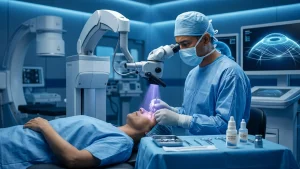
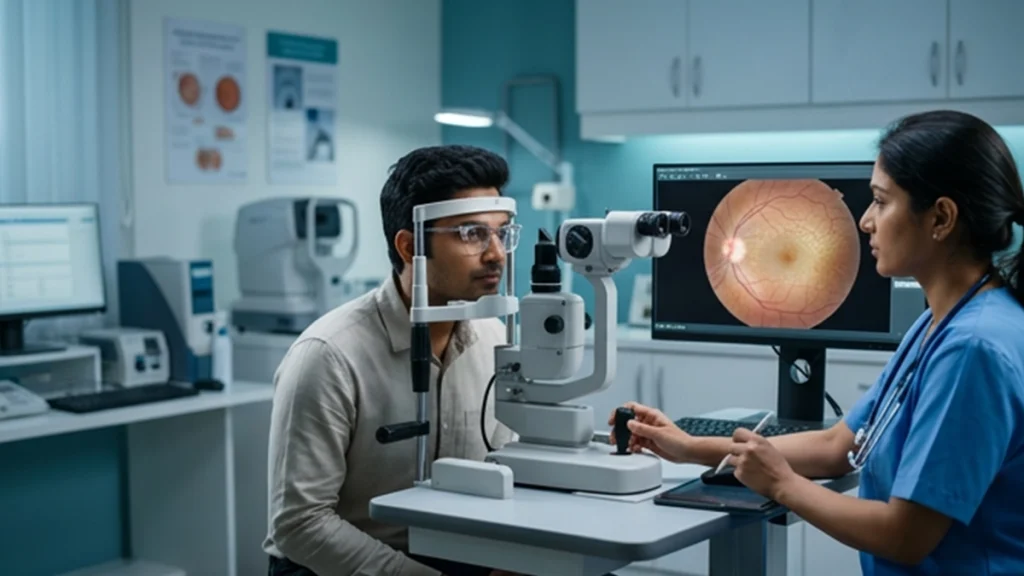
Keratoconus is a condition which may see the progressive transformation of corneal shape which in turn may cause blurry, distorted vision or trouble in correction of vision with routine glasses. Treatment is based on what stage the condition is in and if it is still progressing. CAIRS, or Corneal Allogenic Intrastromal Ring Segments is a growing surgical option that uses donor cornea tissue to remodel an irregular cornea. In some patients CAIRS keratoconus may improve corneal shape and visual quality at the same time as preserving the patient’s own cornea.
What Is CAIRS Eye Surgery?
CAIRS is a procedure where we place donative corneal tissue in the patient’s cornea. Unlike with ICR surgery in which artificial intracorneal ring segments are used in CAIRS we use a person’s live tissue.
Implanted tissue which changes the cornea’s curvature and in turn may improve its surface regularity. In PubMed indexed research we see that CAIRS keratoconus treatment does well to improve uncorrected and corrected vision as well as important corneal topography measures in certain eyes.
| Treatment | Main Purpose | Basic Approach |
| CAIRS | Reshape an irregular cornea | Donor corneal tissue segments are implanted |
| ICR surgery | Improve corneal shape | Synthetic ring segments are implanted |
| C3R surgery procedure | Slow keratoconus progression | Riboflavin and controlled UV-A strengthen corneal tissue |
Who May Be Considered for CAIRS Keratoconus Treatment?
An ophthalmologist may turn to CAIRS when keratoconus is the cause of large scale corneal irregularity which in turn is causing vision to not correct properly with the use of glasses or contact lenses. Which cases of this treatment are suitable depend on corneal thickness, topography, disease severity, age, visual needs, and also past treatment.
CAIRS keratoconus is not a universal solution for all patients. We do in depth corneal evaluations first. Also we may bring up the C3R surgery procedure to patients which is a primary topic when we see that the disease is progressing.
How Is the CAIRS Procedure Performed?
Before CAIRS we have the ophthalmologist do detailed corneal mapping and out other tests which also help to identify the cone pattern and to determine the appropriate position, size and orientation of the tissue segment.
During the operation the surgeon forms a passage within the cornea stroma. In the research report we see that femtosecond laser assisted methods are very much in use, although what is done varies. The prepared CAIRS element is then put into this passage.
Unlike what is done in traditional ICR surgery which uses synthetic implants we use donor corneal tissue. Also in modern CAIRS keratoconus we may custom tailor treatment to an individual patient’s corneal topography.
Research reported in the Indian Journal of Ophthalmology and in PubMed details our experience with customized CAIRS in asymmetric keratoconus. In the JCRS and other ophthalmology journals we also report on the growth of evidence which is present for corneal ring procedures and keratoconus management.
What Are the Potential Benefits of CAIRS?
The CAIRS’ goal is to regularize the corneal surface as opposed to just fixing a glasses prescription. We have reported that there is an improvement in visual acuity and corneal topography post CAIRS keratoconus treatment. At the same time results do vary by individual.
Because of the use of allogeneic corneal tissue, CAIRS presents a biological option to synthetic ICR surgery. Also it’s customizable which may in turn allow surgeons to tailor treatment to various keratoconus patterns.
| Potential Benefit | What It May Mean |
| Improved corneal regularity | The cone may become flatter or more regular |
| Better visual function | Some patients may achieve improved corrected or uncorrected vision |
| Biological material | CAIRS uses donor corneal tissue |
| Customization | Segments may be tailored to individual corneal topography |
CAIRS vs C3R Surgery Procedure
CAIRS and the C3R surgery procedure do not have the same goal. Corneal cross linking which is also known as C3R or CXL mainly aims to strengthen the cornea and also to stop further progression.
In some cases we see doctors put CAIRS keratoconus together with the C3R surgery procedure. The treatment we present is to which the patient’s condition is at, is it stabilization of the cornea that is a priority, repair of vision or does the patient want both.
Recovery After CAIRS Eye Surgery
Recovery time from CAIRS varies between patients. We see that mild irritation, watering, light sensitivity, or which the vision may fluctuate a little during the early stages of healing. It is important that patients use their prescribed eye drops as directed and to avoid rubbing the eyes.
Follow up examinations enable the ophthalmologist to assess healing, vision, and corneal topography. Vision may also change as the cornea stabilizes. Thus it is important for patients to attend all of their scheduled reviews instead of judging the final results in the early days
Conclusion
CAIRS is a growing field in the area of visual rehabilitation for keratoconus. We put donor corneal tissue into the cornea which in turn improves corneal regularity and visual function. Also it presents a biological option to traditional ICR surgery. In some patients we may combine CAIRS keratoconus treatment with the C3R surgery procedure which in turn addresses the corneal shape and disease progression. Any person looking at this as a treatment option should have an in depth corneal evaluation by an experienced eye specialist. At ASG Eye Hospital we base our treatment decisions on the patient’s corneal measurements, disease progression, visual needs, and over all eye health.
Frequently Asked Questions
1. Is CAIRS a cure for keratoconus?
No. CAIRS is a therapy which improves corneal shape and visual function in certain patients. Keratoconus also requires ongoing follow up.
2. Is CAIRS better than ICR surgery?
Neither option is always the best. In ICR surgery we use synthetic elements, in CAIRS we use donor corneal tissue. What is right is based on the patient’s corneal condition and the ophthalmologist’s evaluation.
3. Can CAIRS be combined with C3R?
Yes in some cases we see patients that have CAIRS which is presented at the time of the C3R surgery procedure when we are looking to both reshape and stabilize the cornea. This is a very individual decision which also has to do with the timing.
4. How long does recovery take?
Early recovery is fast to happen but visual stabilization takes more time. Your ophthalmologist will watch for changes in vision and corneal shape at follow up visits.
5. Is CAIRS suitable for advanced keratoconus?
CAIRS keratoconus may be a consideration for some moderate to severe cases, however severity is not the only factor in which to base eligibility. Corneal thickness, scarring, topography and other clinical features play a role.
Reference
PubMed – Customized Corneal Allogenic Intrastromal Ring Segments (CAIRS) for Keratoconus
https://pubmed.ncbi.nlm.nih.gov/37991313/
PubMed – Corneal Allogeneic Intrastromal Ring Segments for Treating Keratoconus: Systematic Review and Meta-Analysis
https://pubmed.ncbi.nlm.nih.gov/41901604/