
Seeing a black spot in eye vision is disturbing at times when it comes on suddenly or moves as you move your eyes. Some report it is a little speck. Also you may see a thread, a web, a shadow or what seems like many black dots in eyes which become more noticeable while looking at a bright background or out at the sky.
In most instances what we see are eye floaters which are the result of changes in the vitreous, the clear gel which fills the eye. As we age floaters tend to appear more frequently and usually do not affect vision. That said, a new black dot in eye vision may be a sign of retinal tear, retinal detachment, bleeding or inflammation in the eye.
Knowing the difference between a common floater and a warning sign can help you decide when to visit an eye specialist.
What Does a Black Spot in Eye Vision Mean?
A black spot in eye there may present itself as a dark area in your field of view which is as opposed to a physical mark on the surface of the eye. Also it may move with the movement of your eye and also drift away when your eye does.
These at birth may be in the vitreous. As we age this gel within the eye changes in consistency. Tiny fibers may clump up and cast shadows on the retina. You see those shadows as dots, lines, strands, rings, or cobweb like shapes. The U.S. National Eye Institute reports that floaters which may appear as small dark spots, threads, wavy lines, or cobwebs. They also tend to become more noticeable against bright backgrounds.
National Eye Institute – Floaters
A single black dot in eye vision that has remained unchanged for a long time may not indicate an emergency. A sudden change deserves more attention.
Why Do I See Black Dots in Front of My Eyes?
There is no single cause for black dots in front of eyes. What you present with in terms of age, eye health, medical background, recent injuries, and associated symptoms is very important. The most common cause is a change in the vitreous. With age the gel-like substance of the vitreous changes to a more watery form, also small fibers within it may clump together. These fibers cast shadows on the retina which in turn present as black spot in eye vision.
Another that may happen is posterior vitreous detachment which is also known as PVD. This is when the vitreous separates from the retina. PVD becomes more common as we age. In many cases it doesn’t affect sight at all, but the pulling action in some instances may cause a retinal tear.
That is why a sudden shower of black dots in eyes, especially with flashes, should never be ignored.
Common Causes of Black Spots and Floaters
| Possible Cause | What May Happen to Vision | Level of Concern |
| Age-related vitreous changes | Moving dots, strands or cobwebs | Often harmless |
| Posterior vitreous detachment | New floaters or occasional flashes | Needs eye examination |
| Retinal tear | Sudden floaters and flashes | Urgent |
| Retinal detachment | Floaters, flashes, shadow or curtain | Eye emergency |
| Vitreous haemorrhage | Sudden dark spots or hazy vision | Requires prompt assessment |
| Eye inflammation | Floaters with pain, redness or blurred vision | Requires medical evaluation |
Age-Related Changes in the Vitreous
Age degeneration is a common cause of black spot in eye. Over time the vitreous changes. What may happen is small clumps form within it which in turn cast shadows that you see as floaters which cross your field of vision. These floaters tend to move as you move your eyes. Also try not to look directly at them as they will seem to disappear.
In many cases you may also see black dots in front of eyes which become more visible while you are reading from a white page out at a pale wall or looking at a bright blue sky. Also what we see is that the brain for many people does in time get to pay less attention to these floaters. But still it is important for an eye exam to be done when floaters are a recent development or are changing.
Posterior Vitreous Detachment
Posterior vitreous detachment is a condition which occurs when the vitreous separates from the retina. It may produce a new black dot in eye, multiple floaters, cobweb type shapes, or flashes of light.
PVD which doesn’t in itself cause visual impairment. What brings about the issue is when the vitreous peels away with great force thus retinal tears. Then fluid may enter through the tear and cause the retina to detach from the base tissue. A sudden appearance of a black spot in eye vision should therefore be brought to prompt attention also when flares of light are present.
Retinal Tear and Retinal Detachment
A retinal tear is a also a very serious cause of sudden black dots in eyes. The retina is the light sensitive tissue at the back of the eye. When a tear forms it may go on to cause retinal detachment. Retinal detachment requires prompt treatment which if delayed may cause permanent loss of vision.
Warning signs may include the sudden appearance of many black dots in front of eyes, flashes of light which repeat, loss of side vision, or a dark curtain or shadow that moves within your field of vision. Do not wait for these symptoms to go away on their own.
Vitreous Haemorrhage
Blood in the eye from the vitreous also causes black spot in eye vision. As to the degree of the bleed the person may see a few dark spots, many floaters, haziness, or a large reduction in vision. Vitreous hemorrhage may present with retinal conditions, eye trauma, abnormal blood vessels, and in diabetic eye disease.
People who have diabetes should pay attention to black dots in eyes as diabetic retinopathy will affect retinal blood vessels. In the late stage of the disease fragile vessels may bleed into the vitreous.
Inflammation Inside the Eye
In the eye we see inflammation which includes some types of uveitis that causes cells and debris to get into the vitreous. We may notice this as a black dot in eye or as groups of what seem like moving floaters. Also unlike what is seen in age related floaters which is a simple issue this inflammation may go along with other symptoms which include pain in the eye, redness, light sensitivity, or blurred vision. A eye specialist has to identify the cause of it before they will recommend a treatment.
When Are Black Dots in the Eyes a Warning Sign?
An occasional stable black spot in eye vision is different from a sudden burst of new floaters. The pattern of symptoms matters.
| What You Notice | What You Should Do |
| One or a few long-standing, unchanged floaters | Discuss them during an eye examination |
| New black dot in eye without other symptoms | Arrange an eye assessment |
| Sudden increase in black dots in eyes | Seek prompt eye care |
| Floaters with repeated flashes | Seek urgent evaluation |
| Dark curtain or shadow over vision | Seek emergency eye care |
| Sudden loss or major reduction in vision | Seek immediate medical attention |
A rapid increase in black dots in front of eyes can indicate that something has changed inside the eye. Also it is very important to seek care if you notice flashes of light or loss of vision in parts of your field of view.
Who Has a Higher Risk of Eye Floaters?
Anyone is at risk for getting a black spot in eye vision but some factors increase the chance of vitreous or retinal changes.
Age is a factor which plays in as the vitreous within the eye goes through natural changes as we age. Also people with great nearsightedness may see these changes happen at an earlier age. Previous eye surgery, eye trauma, diabetes, retinal disease and inflammation play into this also. It is important to note that risk factors do not in and of themselves mean that you will develop black dots in eyes. What they do mean is that should you see sudden changes in your vision that you seek out a careful assessment.
How Are Black Dots in the Eye Diagnosed?
An ophthalmologist will ask at what point the black dot in eye appeared, also if it is moving and if the number of them or their appearance has changed. Also the doctor will ask about flashes, blurred vision, injuries, past eye surgery, and health conditions like diabetes.
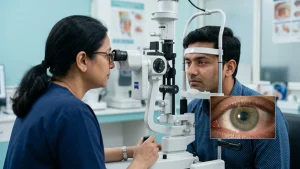
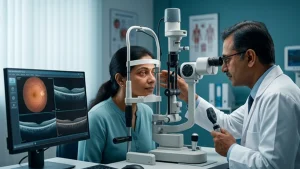
A dilated eye exam is an important element of the evaluation for floaters. Pupils are dilated which in turn allows the ophthalmologist to see the vitreous and retina better. Also the National Eye Institute reports that a dilated eye exam is the primary tool used for the diagnosis of floaters.
Depending on what we find, an eye specialist may order more retinal studies or other tests. These may include evaluation of black dots in front of eyes which may be from normal vitreous changes or which may be related to another eye issue.
How Are Black Dots in Eyes Treated?
Treatment will depend on the cause of the black spot in eye vision. Many a time floaters are left untreated. They may still be present but over time people get used to them. Routine check up may be sufficient when the retina is healthy and symptoms are stable.
Treatment is required when an underling disease is the cause of the black dot in eye. For instance retinal tears may require specialist treatment to reduce the risk of retinal detachment. Retinal detachment requires prompt management. Inflammation and bleeding also need treatment of their underlying causes.
For those which have serious persistent floaters that do in fact impact daily vision an ophthalmologist may bring up the option of a procedure or surgery. These treatments do have risks which is why doctors don’t put them forth as a routine solution for mild floaters.
Can Black Spots in Vision Go Away?
The answer depends on their cause.
Some black dots in eyes may fade over time as they settle in or as the brain gets used to them. In some cases they may be present for a very long time. It is the disappearance of a floater which is not the only indicator of eye health. What really counts is the condition of the retina and other internal eye structures. Do not try home remedies to get rid of a persistent black spot in eye. An eye exam is the best option when symptoms come on suddenly or change greatly.
Can Black Dots in Front of Eyes Be Prevented?
Not every floater can be prevented because ageing-related vitreous changes occur naturally. However, protecting your overall eye health remains valuable.
Regular eye checkups may identify retinal and other eye issues before they cause large symptoms. In the case of diabetes and other health issues, managing them may also reduce the risk of related eye complications. Use of protective eyewear is also a great way to prevent eye injury during activities which put the eyes at risk. Also do not ignore the sudden appearance of black dots in front of eyes. Early assessment gives an ophthalmologist the chance to identify a retinal issue before it progresses.
When Should You Visit an Eye Specialist?
When you see a new black spot in eye which is different from what you are used to (floaters), arrange for an eye exam.
Immediate medical care is required if you notice many black dots in eyes, flashes of light, a retina like shadow, loss of side vision, or a sudden change in your vision. These issues may be related to retinal tears or retinal detachment. Also at the first sign of what may seem to be mild symptoms an ophthalmologist should be seen to check out the retina and to determine what is the best treatment or monitoring approach.
Conclusion
Seeing a black spot in eye vision does not mean that you have a serious problem. Age related vitreous changes and simple floaters are the cause in many cases. Also the timing and pattern of symptoms is important.
A sudden appearance of black dots in eye, a quick increase in number of black dots in eyes, or many black dots in front of eyes which may come with flashes or a curtain like shadow may be a sign of retinal issue. These symptoms require prompt medical attention.
If you notice a new or changing black spot in eye, an examination by an eye specialist can identify its cause and determine whether you need monitoring or treatment. Early evaluation is particularly important when retinal disease is suspected because timely care can help protect your vision.
Frequently Asked Questions
1. Why am I suddenly seeing a black spot in my eye?
A sudden black spot in eye vision may present as a new floater or vitreous change. Also retinal tears or bleeding may cause sudden spots. If the symptom is new, especially if it is accompanied by flashes or reduced vision, see an ophthalmologist urgently.
2. Is a black dot in the eye dangerous?
A black dot in eye vision is usually a harmless floater but that is not true in all cases. A new spot which also brings about flashes, many floaters, blurred vision, or a dark curtain requires prompt evaluation by an eye specialist.
3. Why can I see black dots in front of my eyes when looking at the sky?
Black dots in front of eyes often become more noticeable against a bright background. Floaters which cast small shadows on the retina make them stand out while looking at a blue sky, white wall, bright screen or sheet of paper.
4. Can black dots in eyes be caused by retinal problems?
Yes. Black dots in eyes may present with retinal tears, retinal detachment, diabetic retinal disease, or internal eye bleeding. Sudden onset of floaters which may also be accompanied by flashes should be evaluated by a medical professional at once.
5. Can a black spot in eye vision disappear naturally?
A black spot in eye which is a result of a floater may fade with time. The brain also has the ability to adapt to permanent floaters. As for new or very variable spots they should be checked out to rule out retinal issues.
6. Should I visit an eye doctor for one black dot?
A new black dot in eye is recommended, especially if it is a sudden appearance. Go to the emergency room if the spot is present with flashes, blurred vision, a shadow, loss of side vision, or if you note several new floaters.
Reference Links
National Eye Institute (NIH) – Floaters
https://www.nei.nih.gov/eye-health-information/eye-conditions-and-diseases/floaters
National Eye Institute (NIH) – Vitreous Detachment
https://www.nei.nih.gov/eye-health-information/eye-conditions-and-diseases/vitreous-detachment