
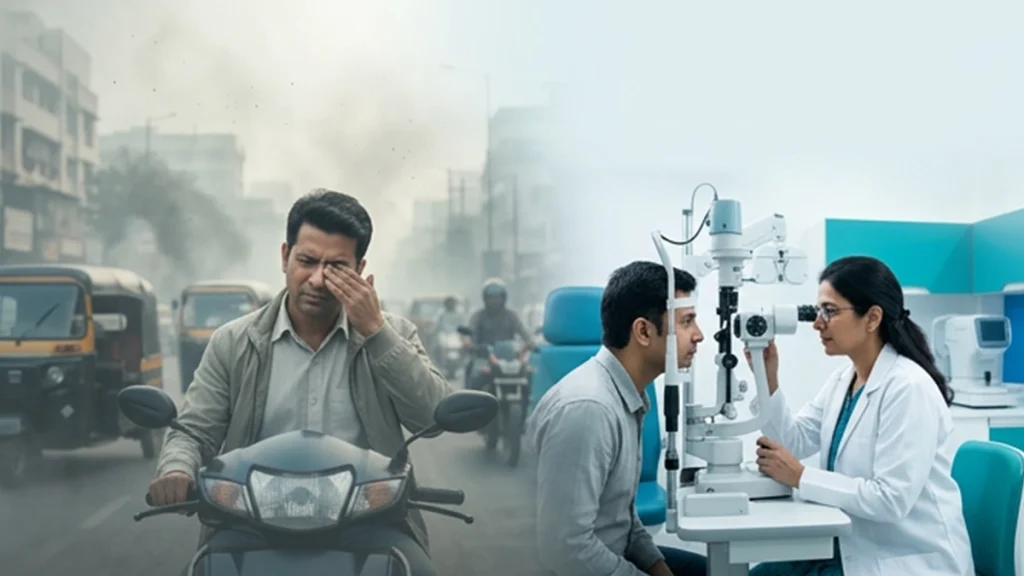
How Air Pollution Affects Your Eyes
Air pollution is not just a matter of what we breathe. Also it affects the delicate eye’s surface. Dust, smoke and other pollutants in the air can disrupt the tear film which in turn causes all day discomfort. Air pollution eye irritation is more noticeable during smog filled mornings, heavy traffic and when the air quality is poor.
The eyes have a natural protective tear film which keeps the surface moist and which helps to wash out small particles. But air pollution eye irritation which results from environmental irritants which break down this protection. You may see redness, watering, stinging or a gritty feeling. These symptoms present in the course of going about your day, while commuting, working out doors or using digital screens.
Why Smog Can Trigger Burning and Watering
Smog contains pollutants that can harm exposed tissue. When they reach the eye’s surface, they may trigger inflammation, discomfort, redness, and excessive tearing. Bright light can also become uncomfortable. Some people report issues almost immediately upon going outdoors, others only notice issues after long term exposure.
The term burning eyes pollution is used for a common issue which presents during times of poor air quality. You may notice your eyes stinging or feeling hot in particular when the wind is blowing. Watering is not a sign of the eyes’ proper lubrication. Irritation may cause production of extra tears which in fact do not do a good job at eye surface protection.
People which experience dry eye pollution related symptoms may see that smog aggravates the issue. In smoky or dry settings tears evaporate at a faster rate which in turn leaves the eye surface in a more uncomfortable state.
Common Symptoms to Watch For
Air pollution eye irritation may present itself to people in various ways. Some may notice mild redness of the eyes, others will have persistent issues with watering or dryness. What we see may improve once inside, but with repeat exposure symptoms tend to return.
| Symptom | What it may feel like |
| Burning or stinging | A hot, irritated sensation |
| Redness | Bloodshot or inflamed-looking eyes |
| Excessive watering | Tears appearing despite discomfort |
| Dryness or grittiness | A scratchy feeling, as if dust is present |
| Light sensitivity | Discomfort in bright outdoor conditions |
Smog eyes issues present with the same set of symptoms as do allergies and infections and other eye problems. Thus, symptoms by themselves are not enough to determine that pollution is the cause. Persistent burning eyes pollution is an issue which does require attention, in particular when it interferes with day to day activities.
Who May Be More Affected?
People which put in many hours outside may see an increase in their traffic emissions, dust and smoke exposure. For outdoor workers, daily commuters, and those that live by busy roads you may see repeated instances of discomfort. Also during poor air quality days we see that children and elderly also require extra care.
Existing dry eye, allergies, and eyelid problems can produce an especially sensitive eye. In such conditions, people notice increased air pollution eye irritation in association with other symptoms. It is best for people who have dry eye pollution to bring up to date issues with their eye doctor instead of using at home remedies only.
How to Protect Your Eyes During Smog
Check in with local air quality reports before spending large amounts of time outside. When pollution is high, avoid unnecessary outdoor activities and pass on the busiest roads. Wrap around sunglasses can help reduce what you’re exposed to from the wind and air particles but do remember they don’t filter out all pollutants.
Avoid the irritation of your eyes as rubbing may actually increase the discomfort. If foreign material gets into the eye, try gently rinsing out with clean water or sterile saline. Preservative free lubricating drops will help some people, but a pharmacist or an ophthalmologist can recommend what will work best for your case. Do not put in an antibiotic or steroid drop without medical advice.
Reduce to a minimum what you are exposed to in order to control air pollution eye irritation, but it may not eliminate all root causes. In home environments keep as clean an atmosphere as possible and away from cigarette smoke. If you have repeated cases of smog related eye issues see to it that you get a check up of your tear film and also in general of your eye health.
When Should You See an Eye Specialist?
Mild irritation will go away with reduced exposure. As for persistent redness, recurring burning eyes pollution related symptoms or unrelenting dry eye pollution issues you may need an exam. An ophthalmologist may check out the eye surface to diagnose what has you in issue, it could be dry eye, an allergy, an infection or some other problem. Go see a doctor immediately if you have very bad eye pain, a sudden change in vision, marked redness, or light sensitivity. Don’t assume all of your symptoms during smog are from pollution. Timely assessment is key to determine the cause and treatment.
Conclusion
Air pollution related eye irritation is a issue we are seeing to grow in smog, dust and heavy traffic areas. Simple steps like reducing time spent outside and not rubbing your eyes may help with the discomfort. If symptoms persist it is best to see a professional as pollution is not the only cause.
Frequently Asked Questions
1. Can air pollution make eyes water?
Yes. Air born allergens can bring on increased tear production. Also eyes may report a dry, gritty sensation which is due to the tear film not fully protecting the eye surface.
2. Can smog worsen dry eye symptoms?
Yes. Wind in dry smoke filled settings increases tear evaporation rate. In the present of preexisting dry eye condition people report more stinging, redness, and discomfort on bad air quality days.
3. Should I use eye drops for pollution-related irritation?
Lubricating drops can bring relief for some but the right kind for your case is based on what is causing your symptoms. Do not play doctor in that which drop to use if you are still in pain see a health professional.
4. When does eye irritation require medical attention?
Severe pain, sudden changes in vision, or very red eyes are reason to go to the emergency. If symptoms persist, come back frequently, or interfere with your daily routine then you should see an eye care professional.
References Link
National Eye Institute: https://www.nei.nih.gov/eye-health-information/eye-conditions-and-diseases/dry-eye
United States Environmental Protection Agency:https://www.epa.gov/air-research/research-health-effects-air-pollution
ASG Eye Hospital:
https://www.asgeyehospital.com/specialities/cornea/mumbai/