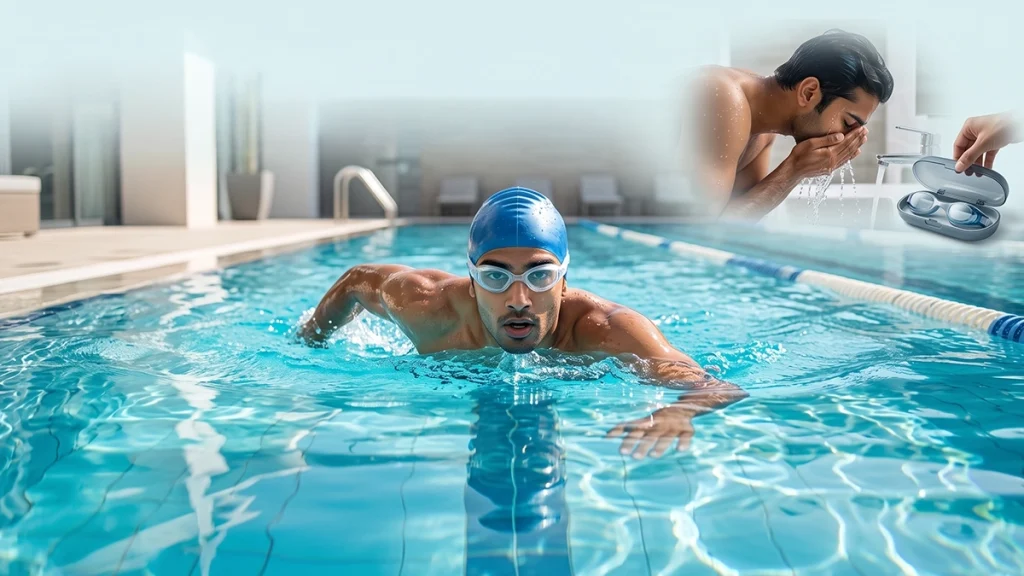
Swimming is great for activity, to cool off and to spend time with the family. But also it’s a place where you may come into contact with pool water, chemicals, germs, and which if you wear contact lenses may affect them. By some easy measures for swimming eye protection before you go in the water you can reduce the irritation and have a more comfortable time.
Good for your eyes when you are a frequent swimmer is proper eye care. Also by being aware of the interaction between chlorine and eyes it is to see why sometimes redness or burning occurs after pool time.
Why Do Eyes Become Irritated After Swimming?
Pool water is treated with disinfectants which in turn control harmful germs. But chlorine does react with sweat, dirt, urine and other materials to produce what are known as chloramines. These chloramines in turn irritate the eyes. The CDC reports that chloramines may cause red, itchy eyes and other issues in swimmers.
Thus it is a bit more complex for what is effective in terms of eye protection while swimming to just avoid chlorine. Water quality, pool maintenance, how long you are in the pool and individual eye health also play a role. Don’t dismiss persistent eye irritation from swimming as a normal thing.
| Swimming-related factor | Possible effect on the eyes |
| Chloramines | Redness, itching or burning |
| Poor water quality | Greater exposure to germs |
| No swimming goggles | More direct water contact |
| Contact lenses in water | Increased risk of serious infection |
1. Wear Well-Fitting Swimming Goggles
Goggles present a physical barrier between pool water and eye surface. They are the basic level of swimming eye protection. Choose goggles which fit well around the eyes without putting in too much pressure. Proper goggle fit is key in daily swimming eye care by which it is meant that they reduce exposure to chemicals, contaminants, and microorganisms.
2. Avoid Swimming With Contact Lenses
Contact which wearers put in the use of swimming eye protection. Water is a medium for microorganisms which may get caught between the lens and the cornea. The CDC reports that contact lens wearers should take out their lenses before going in the water. Water exposure increases the risk of infection which includes Acanthamoeba keratitis. For those that require vision correction while swimming prescription goggle are a better alternative.
3. Rinse After Leaving the Pool
After each swim gently wash your face and closed eyes with fresh clean water. This easy swimming eye care trick is to remove from the eyes the environmental pollutants that you have accumulated. Do not rub the eyes at the first sign of discomfort. Rubbing will in fact increase eye irritation when the tissue is already dry or sensitive.
4. Understand Chlorine and Eye Irritation
Chlorine’s role is often a point of misinterpretation. What chlorine does is it helps out with the growth of pool bacteria. Issues arise when it reacts with impurities to form chloramines. The CDC reports that chloramines are the cause of red and itchy eyes. We may put this by saying proper swimming eye protection includes choosing clean and well run pools.
5. Choose a Well-Maintained Pool
Water which has a cloudy appearance, unusual smell, or is of poor quality should be avoided. For safe swimming eye care health the quality of the swimming environment is key. The CDC reports that proper maintenance which includes right levels of disinfectants and pH is important in reducing health issues. Very low or high pH levels may cause skin and eye irritation.
| Healthy swimming habit | Why it matters |
| Wear goggles | Supports swimming eye protection |
| Remove contact lenses | Reduces water-related infection risk |
| Avoid rubbing the eyes | Helps prevent additional irritation |
| Choose maintained pools | Reduces exposure to contaminants |
| Seek care for persistent symptoms | Helps identify infection or corneal problems |
6. Give Irritated Eyes Time to Recover
If mild eye irritation from swimming develops,it will pay to get out at once. With continuous contact the redness and pain may increase. Frequent swimmers should include eye protection as a staple in each of their sessions instead of turning to it only after problems arise.
7. Use Eye Drops Only When Appropriate
Dry out of the water after a swim can cause grittiness and discomfort in the eyes. An ophthalmologist may put forward which over the counter eye drops to use when it happens. Do not use random antibiotics, steroids or redness reducing drops without a prescription. Good swimming eye care involves treating the actual cause rather than masking symptoms.
8. Know When to Visit an Eye Doctor
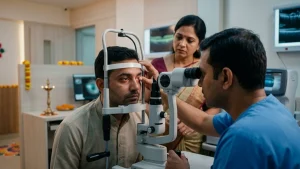
Most of the time what you will see is that mild eye irritation from swimming will go away once you get out of the water. But if you have severe pain, persistent redness, discharge, light sensitivity, swelling, or blurred vision you should see a doctor.
Prompt evaluation is especially important for contact lens wearers. Also in the case of swim wear which eyes should be protected properly it is to recognize when to seek professional help.
Conclusion
Swimming is a safe and enjoyable activity which is easy to make a routine of safety. Goggles, removal of contact lenses, use of well maintained pools, and refraining from eye rub are what support better swimming eye protection.
Understanding of chlorine and eyes also which is useful to swimmers in identifying what causes discomfort. We see that consistent eye care while swimming may reduce unnecessary irritation, also if you have persistent or severe symptoms it is best to see an ophthalmologist.
Frequently Asked Questions
1. Can chlorine damage the eyes while swimming?
Chlorine isn’t the only factor in play regarding eye issues. Chloramines which are a result of chlorine which has reacted with organic matter may cause redness, itching and irritation.
2. Do goggles provide enough swimming eye protection?
Well designed goggles which is what you want for swimming eye protection as they reduce the amount of pool water that comes into contact with the eye.
3. Why do my eyes become red after swimming?
Eye irritation from swimming may be caused by chloramines, improper pool pH, extended water exposure, or contaminants.
4. Can I swim while wearing contact lenses?
It is better to remove contact lenses prior to swimming. This is an important practice in swimming eye care as water exposure may increase the risk of serious corneal infections.
5. When should I consult an ophthalmologist?
Seek medical attention for eye issues which include redness that persists, pain, discharge, light sensitivity, swelling, or changes in vision.
References link
Centers for Disease Control and Prevention (CDC) – Preventing Eye Irritation from Pool Chemicals:
https://www.cdc.gov/healthy-swimming/prevention/preventing-eye-irritation-from-pool-chemicals.html?
CDC – Healthy Contact Lens Wear and Care:
https://www.cdc.gov/contact-lenses/about/healthy-habits-keeping-water-away-from-contact-lenses.html?
CDC – Guidelines for Healthy and Safe Swimming:
https://www.cdc.gov/healthy-swimming/safety/?